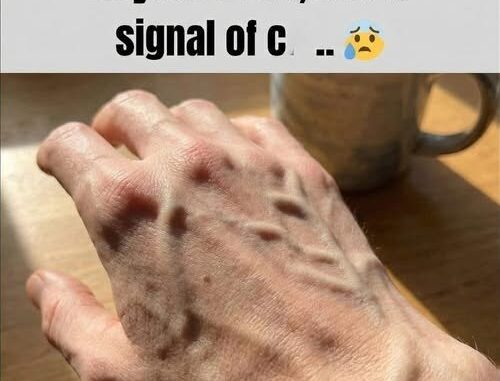
From time to time, you might notice something about your body that makes you pause and wonder what it means. One common observation people make is seeing veins on their hands more clearly than usual. You may have come across statements like, “If your veins are visible in your hand, it is a signal of…” followed by a dramatic or unclear claim. While such phrases can be attention-grabbing, they often lack proper explanation and can lead to unnecessary concern.
In reality, visible veins in the hands are quite common and are usually a natural part of how the human body works. Instead of assuming it signals something serious, it’s important to understand the different factors that influence vein visibility and what they may or may not indicate.
Why Do Veins Become More Visible?
Veins are responsible for carrying blood back to the heart, and they exist throughout the body just beneath the surface of the skin. In certain areas—like the hands, arms, and feet—they can become more noticeable. This visibility is influenced by several normal and harmless factors.
One of the most common reasons is skin thickness. The skin on the hands is relatively thin compared to other parts of the body. When the skin is thinner, it becomes easier to see the veins underneath, especially in natural lighting.
Another factor is body composition. People with lower levels of body fat often have more visible veins because there is less tissue covering them. This is particularly noticeable in individuals who are physically active or maintain a lean physique.
Temperature can also play a role. In warm conditions, veins may expand slightly as the body works to regulate heat, making them appear more prominent. On the other hand, in colder temperatures, veins may become less visible as they constrict.
Age and Natural Changes
As people get older, it’s normal for veins to become more noticeable. Over time, the skin naturally loses some of its elasticity and thickness, which can make underlying structures like veins stand out more clearly. This is a natural part of aging and does not necessarily indicate a health problem.
Additionally, long-term exposure to sunlight can affect the skin, making veins more visible over the years. These gradual changes are common and generally harmless.
Physical Activity and Lifestyle
Regular physical activity can also contribute to more visible veins. During exercise, blood flow increases, and veins may expand temporarily to accommodate the higher circulation. Over time, consistent activity can make veins appear more defined, especially in the hands and arms.
Hydration levels can influence appearance as well. When the body is well-hydrated, circulation functions efficiently, which may affect how veins look. Dehydration, on the other hand, can sometimes make veins appear slightly more pronounced.
When Should You Pay Attention?
While visible veins are usually normal, there are certain situations where it may be worth paying closer attention. If you notice sudden or unusual changes—such as swelling, discomfort, or a change in color—it could be a good idea to seek professional advice.
For example, veins that become unusually enlarged, painful, or accompanied by other symptoms might require evaluation. However, it’s important not to jump to conclusions based on appearance alone. Most of the time, visible veins without any additional symptoms are simply a normal variation.
Avoiding Misleading Claims
Statements that suggest visible veins are a clear “signal” of a specific condition can be misleading. The human body is complex, and no single visual sign can provide a complete picture of health. It’s always better to consider multiple factors rather than relying on simplified claims.
In many cases, these types of statements are designed to create curiosity rather than provide accurate information. Understanding the context and looking at reliable sources can help you avoid unnecessary worry.
A Balanced Perspective
Instead of viewing visible veins as something to be concerned about, it’s more helpful to see them as part of your body’s natural structure. Just like skin tone, eye color, or hair type, vein visibility varies from person to person.
For some, veins may always be noticeable, while for others, they may only appear under certain conditions. Both situations can be completely normal.
Tips for Maintaining General Health
While visible veins are usually harmless, maintaining overall health is always beneficial. Simple habits such as staying active, eating a balanced diet, and keeping hydrated can support good circulation and overall well-being.
Taking care of your skin by protecting it from excessive sun exposure can also help maintain its natural appearance over time. These general practices contribute to a healthier lifestyle rather than focusing on a single visual detail.
Final Thoughts
So, what does it really mean if the veins in your hands are visible? In most cases, it’s simply a normal and natural feature influenced by factors like skin thickness, body composition, temperature, and age.
Rather than viewing it as a warning sign, it’s more accurate to understand it as part of how your body is built and how it functions. Only in rare cases, when accompanied by other unusual symptoms, might it require further attention.
By looking beyond dramatic or incomplete statements and focusing on balanced information, you can better understand your body without unnecessary concern. Visible veins are typically nothing more than a reflection of normal human variation—and in many cases, they’re simply a sign of healthy circulation and natural physiology.
Leave a Reply