Nature has a way of surprising us with shapes, colors, and textures that seem almost too unusual to be real. Every now and then, people come across an object outdoors that looks so strange it sparks curiosity and plenty of questions.
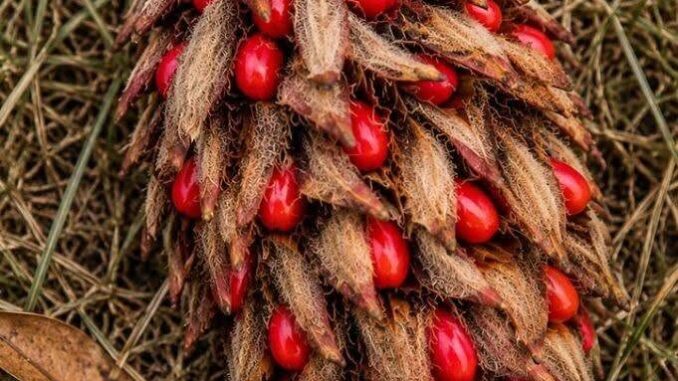
One such discovery is a fuzzy, cone-like structure covered with bright red seeds. At first glance, it may appear exotic or even mysterious, but this fascinating object is actually a magnolia seed pod—a completely natural part of one of the oldest flowering trees on Earth.
What Is a Magnolia Seed Pod?
Magnolia trees produce seed pods after their flowers have been pollinated. Following the blooming season, the tree begins developing these unique structures, which slowly mature over several months.
When young, the pods are typically green and blend in with the surrounding foliage. As they age, they gradually turn brown and develop a woody texture. Many species also have a slightly fuzzy or bumpy appearance, giving them a distinctive look.
The most striking transformation occurs when the pod reaches maturity. It begins to split open, revealing bright red seeds hidden inside. This dramatic contrast between the brown pod and vivid red seeds is what often catches people’s attention.
Why Are the Seeds Bright Red?
The brilliant red color serves an important purpose in nature.
Many plants rely on animals to help spread their seeds, and magnolia trees are no exception. The colorful outer coating acts as a visual signal that attracts birds and small wildlife.
After eating the fleshy seed covering, animals may carry the seeds away from the parent tree. This natural process helps magnolias reproduce and establish new growth in different locations.
In other words, the bright red color is part of the tree’s survival strategy.
When Do Magnolia Seed Pods Appear?
Seed pods typically begin developing after the flowering season ends.
Throughout the summer months, they continue to mature until they eventually open during late summer or fall. The exact timing can vary depending on climate, weather conditions, and the specific magnolia species.
When the pods split apart and expose their seeds, it signals that the tree has completed another reproductive cycle.
For many gardeners and nature enthusiasts, this stage is one of the most interesting parts of the magnolia’s annual growth process.
Are Magnolia Seed Pods Dangerous?
Magnolia seed pods are generally considered harmless when left undisturbed.
While the seeds are not known for being highly toxic, they are not commonly consumed by people. Eating unfamiliar plant material can sometimes cause digestive discomfort, so it’s best to avoid consuming them.
As a precaution, pet owners and parents of small children may want to discourage accidental ingestion of any seeds or plant parts found outdoors.
Simply appreciating them as a natural curiosity is usually the safest approach.
What Animals Eat Magnolia Seeds?
A variety of wildlife benefits from magnolia trees.
Bird species are among the most common visitors. The colorful seeds attract birds searching for seasonal food sources, especially during the fall months.
Small mammals such as squirrels may also feed on the seeds, contributing to their dispersal throughout the environment.
This relationship between plants and animals helps maintain healthy ecosystems and supports natural regeneration.
Can You Grow a Magnolia Tree From the Seeds?
Yes, it is possible to grow a magnolia tree from its seeds.
However, patience is required. Magnolia seeds often need a period of cold treatment, known as stratification, before they will successfully germinate. This process mimics the natural winter conditions that seeds experience outdoors.
Once prepared correctly, the seeds can be planted and nurtured into young trees. Although growth may be slow at first, many gardeners find the process rewarding.
Watching a tree develop from a tiny seed into a mature flowering magnolia can be a satisfying long-term project.
A Living Link to Ancient History
One of the most remarkable facts about magnolia trees is their age.
Scientists believe magnolias have existed for more than 95 million years, making them one of the oldest groups of flowering plants still living today.
These trees appeared long before bees evolved, which is why their flowers developed unique characteristics suited to pollination by beetles and other early insects.
Their unusual seed pods are just one example of the fascinating adaptations that have helped them survive through millions of years of environmental change.
Final Thoughts
If you ever come across a strange brown pod covered with bright red seeds, there’s no need for concern. What may initially seem mysterious is actually a magnolia seed pod—a beautiful and important part of the tree’s life cycle.
Beyond its unusual appearance, the pod plays a vital role in reproduction, supports local wildlife, and represents a living connection to Earth’s distant past. Sometimes the most fascinating discoveries in nature are not rare at all—they’re simply things we’ve never stopped to notice before.
Leave a Reply