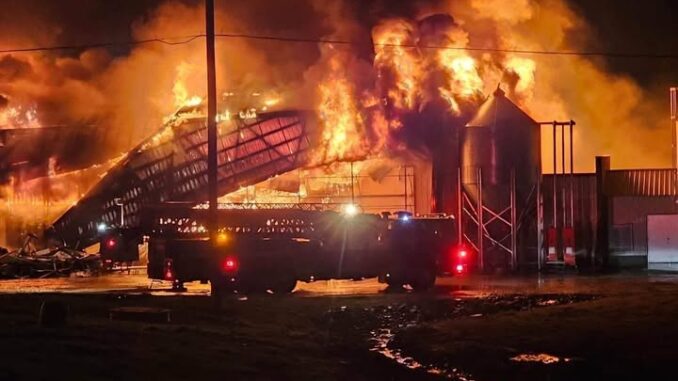
A devastating fire swept through a densely populated neighborhood in Lima, Peru, causing extensive damage and forcing hundreds of residents to evacuate as emergency crews worked tirelessly to bring the situation under control.
The blaze erupted in the Pamplona Alta sector of San Juan de Miraflores, a district located in the southern part of the Peruvian capital. What began as a localized emergency quickly escalated into a large-scale disaster as flames spread rapidly through closely packed homes, generating thick smoke that could be seen from considerable distances.
Officials continue to assess the full extent of the damage, but early reports indicate that a significant number of homes were affected, leaving many families temporarily displaced and in need of support.
Fire Spreads Rapidly Through Residential Area
Witnesses described scenes of urgency and confusion as residents rushed to protect their loved ones and salvage belongings while the fire expanded through the neighborhood.
Many homes in the area are located close together, a factor that can make firefighting operations particularly challenging. As flames moved from structure to structure, emergency responders faced difficult conditions while attempting to contain the growing blaze.
Residents reported hearing sirens and seeing emergency vehicles arrive shortly after the fire was first detected. Despite the quick response, the intensity of the flames made suppression efforts difficult during the initial stages of the incident.
Local authorities praised firefighters and emergency personnel for their efforts in preventing the fire from spreading even further into neighboring sections of the community.
Emergency Crews Mobilize Resources
Firefighters from multiple units were reportedly dispatched to the scene as officials worked to coordinate emergency operations.
Large fires in densely populated urban areas often require significant resources, including specialized equipment, water supply support, and coordinated communication between emergency agencies.
Teams focused on protecting nearby structures while simultaneously working to bring the main fire under control.
Officials stated that containing the blaze became the immediate priority in order to minimize additional property damage and ensure public safety.
Emergency medical personnel were also positioned nearby to assist residents who required help during the evacuation process.
Families Forced to Evacuate
As the fire intensified, many residents were forced to leave their homes with little warning.
Families gathered in open areas while authorities monitored conditions and worked to secure the neighborhood.
For many residents, the experience was both frightening and emotional.
Community members described watching emergency crews battle the flames while hoping their homes would remain untouched.
Unfortunately, numerous properties sustained significant damage, and some families lost much of what they had accumulated over many years.
Local organizations and volunteers quickly began discussing ways to support those affected by the disaster.
Challenges Faced by Emergency Responders
Experts note that fires involving densely packed housing can present unique challenges.
When buildings are constructed close together, heat can transfer rapidly between structures, increasing the likelihood that flames will spread before firefighters can establish containment lines.
In addition, certain construction materials may contribute to faster fire growth depending on environmental conditions.
Fire officials explained that the combination of closely situated homes and combustible materials likely played a role in the speed at which the blaze expanded.
These factors can significantly complicate firefighting operations and increase the risk of widespread property damage.
Investigation Underway
Authorities have launched an investigation to determine the exact cause of the fire.
As part of the process, investigators are examining multiple factors that may have contributed to the incident.
Officials have emphasized that determining the origin of a large fire requires careful analysis and should not be based on speculation.
Investigators will review physical evidence, witness statements, and other available information before reaching formal conclusions.
Several areas within the affected zone have become points of interest for investigators seeking to reconstruct the sequence of events that led to the disaster.
Authorities have stated that additional findings may be released once the investigation progresses.
Community Response and Support Efforts
In the aftermath of the fire, local residents, community organizations, and public officials have begun coordinating relief efforts.
Disasters of this scale often create immediate needs for temporary shelter, food, clothing, and essential supplies.
Volunteers have already stepped forward to assist families affected by the incident, demonstrating the resilience and solidarity often seen during challenging times.
Community leaders have encouraged residents to support relief initiatives and remain informed through official channels regarding assistance programs.
Many individuals who were not directly impacted by the fire have expressed sympathy and a willingness to help their neighbors recover.
The Importance of Fire Safety Awareness
Although investigators have not yet completed their assessment, fire safety experts frequently emphasize the importance of preparedness and prevention.
Simple measures such as maintaining safe electrical systems, following local safety regulations, and ensuring access to emergency exits can help reduce risks in residential areas.
Public education programs also play an important role in helping communities understand how to respond effectively during emergencies.
Experts encourage families to develop evacuation plans, identify safe meeting points, and remain aware of potential hazards within their surroundings.
While not every emergency can be prevented, preparedness can improve safety outcomes and reduce the impact of unexpected events.
Recovery Efforts Begin
As emergency operations transition into recovery efforts, attention is turning toward helping affected families rebuild their lives.
Government agencies, humanitarian organizations, and local groups are expected to continue assessing needs and providing assistance in the coming days and weeks.
Recovery from a large fire can be a lengthy process, particularly for families who have experienced significant property losses.
However, community leaders remain optimistic that coordinated support efforts will help residents navigate the challenges ahead.
The focus now is on ensuring that displaced families have access to essential resources while longer-term recovery plans are developed.
Looking Ahead
The fire in Pamplona Alta serves as a reminder of how quickly emergencies can develop and how important community preparedness can be during times of crisis.
While authorities continue investigating the cause of the incident, the immediate priority remains supporting those affected and helping the community move forward.
Residents, emergency responders, volunteers, and local officials have all played important roles throughout the response effort, demonstrating determination and cooperation in the face of adversity.
Although the damage is substantial, many community members are already working together to begin the recovery process.
Conclusion
The devastating fire that swept through the Pamplona Alta area of Lima has left a lasting impact on hundreds of families and highlighted the challenges emergency responders face when battling large urban fires.
As investigations continue and recovery efforts expand, attention remains focused on providing assistance to displaced residents and helping the affected community rebuild.
While the road ahead may be difficult, the response from emergency personnel, volunteers, and neighbors has shown the strength of community support during times of hardship. For many families, that support will play an important role as they begin the process of recovery and renewal.
Leave a Reply