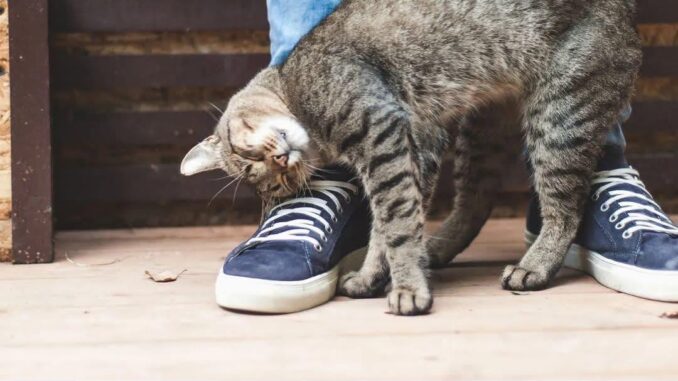
Have you ever wondered why your cat insists on weaving between your legs, nearly tripping you, or jamming their furry forehead directly into your face? It might look like a simple nuisance or a random quirk, but you are witnessing one of the most powerful displays of feline affection in the animal kingdom. If you ignore these signals, you are missing out on the secret, silent communication that binds you to your pet. This isn’t just about demanding food or attention—it is a sophisticated, instinctive ritual that defines your place in their world. Discover why your cat’s behavior is the ultimate sign of love.
While it is easy to interpret a cat rubbing against your legs as a demand for a meal or a bid for attention, the reality is far more profound. This behavior is a cornerstone of feline social life, rooted in evolutionary instincts that date back to their wild ancestors. When your cat initiates this “head-butting” or leg-weaving dance, they are engaging in a complex performance that serves as both a greeting and a claim of ownership. To a cat, you are not just a roommate or a provider; you are a vital, inseparable member of their pack, and the rubbing is their way of cementing that bond.
The first and most immediate reason for this behavior is simple: they are saying hello. Much like humans shake hands or embrace to signify friendship, cats utilize contact to acknowledge trust. When you return home after a long day, that eager cat winding through your ankles is their version of a hug. They are expressing relief at your arrival and affirming that you are a safe, welcome presence in their territory. In the wild, cats greet other members of their social circle by rubbing their faces together or along their bodies. By doing the same to you, they are essentially welcoming you back into the shared fold of their family unit.
However, the science behind this gesture is even more fascinating. Cats are profoundly scent-oriented creatures, possessing specialized pheromone glands located on their cheeks, chin, forehead, and even the base of their tails. These glands release chemical signals that communicate identity, familiarity, and a sense of “home.” When your cat rubs their head against you, they are leaving behind a unique scent trail. They are literally marking you with their chemical signature. In their eyes, this is the ultimate act of inclusion. By “anointing” you with their pheromones, they are identifying you as part of their inner circle—a safe space that is protected and known. You are not just human; you are officially part of their territory.
This shared scent is a biological anchor. In multi-cat households, you will frequently see cats rubbing against one another, which creates a “family scent” that permeates the group. This olfactory identity helps them distinguish between family members and outsiders. When your cat marks you, they are layering your scent with theirs, creating a harmonious environment where everyone feels relaxed and secure. Because these pheromones naturally fade over time, your cat will periodically revisit the ritual, reapplying their mark to ensure that the bond remains strong and the scent of “home” stays constant.
Of course, we cannot ignore the practical aspect of feline behavior: they are master manipulators. Sometimes, the rubbing is far more tactical than it is emotional. Your cat is a creature of habit, and they have learned that head-butting is an incredibly effective tool for getting what they want. If they have previously head-butted you and received a treat, a pat on the head, or a moment of play, they have successfully reinforced a behavior pattern. They know that this specific physical interaction triggers a positive response from their human. It is a polite, albeit persistent, request for engagement. Whether they are hungry, bored, or simply craving the comfort of your touch, they know that the “rub and weave” strategy rarely fails to capture your attention.
While this behavior is a hallmark of a healthy, happy cat, there are rare occasions where a change in frequency or intensity should prompt a closer look. If your cat suddenly begins rubbing against objects or people with an unusual, frantic, or aggressive intensity, it could be a sign that something is amiss. In some instances, excessive rubbing can be linked to underlying medical issues, such as skin allergies, flea infestations, or ear infections that cause itching and irritation. If your cat’s behavior deviates from their normal baseline—especially if it is accompanied by other symptoms like lethargy or changes in appetite—a quick consultation with a veterinarian is always the wisest course of action. Ruling out health concerns ensures that your cat’s affectionate gestures remain exactly what they are intended to be: a expression of joy.
You may have also experienced the “rub-and-bite” maneuver, where an affectionate head-butt is suddenly followed by a sharp nip. This common, albeit confusing, signal usually indicates that your cat has reached their threshold for stimulation. Cats are hunters by design, and their play instincts are highly reactive. If you are petting them and they become overexcited, that hunting drive might kick in, resulting in a playful bite. To avoid this, watch your cat’s body language closely. If their tail starts to flick rhythmically, if their ears pull back slightly, or if they tense their muscles, they are telling you that they are becoming overstimulated. Gently disengaging before they feel the need to nip will keep the interaction positive and stress-free.
Ultimately, your cat is speaking a language that transcends words. When they wind around your legs, they are not just looking for a snack; they are expressing a deep, primal sense of trust. They have invited you into their world, an invitation that they extend to very few. The next time you find yourself navigating a path through your kitchen while your cat attempts to weave through your ankles, don’t view it as an obstacle. Take it as the profound compliment that it is. You are the center of their social universe, the anchor of their comfort, and the person they have chosen to mark as their own. It is a tender, persistent reminder that in a world of uncertainty, you are exactly where they want to be.
Leave a Reply