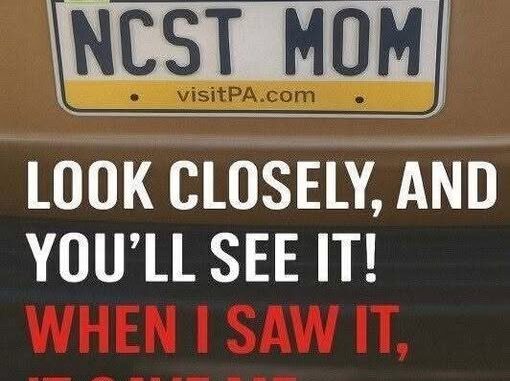
What started as a personalized license plate on a Nevada vehicle eventually became the center of a surprisingly large public discussion. What appeared to be a simple attempt at humor quickly evolved into a debate about free expression, community identity, population growth, and the challenges that come with rapid change.
At first, the plate attracted attention mainly because of its unusual wording. Vanity plates are often used to showcase personality, jokes, hobbies, or memorable phrases, and many people viewed it as just another example of creative self-expression. However, as more people saw it, interpretations began to vary widely.
For some observers, the message represented a lighthearted joke reflecting concerns that many long-term residents have expressed in recent years. Nevada has experienced significant population growth, with new residents arriving from other states in search of jobs, lower taxes, housing opportunities, and a different lifestyle. While growth can bring economic benefits, it can also create challenges, including increased housing costs, traffic congestion, and pressure on local infrastructure.
As a result, some people saw the plate as a humorous reflection of frustrations surrounding these changes. They viewed it as commentary on local issues rather than an attack on any particular group.
Others interpreted the message differently.
Critics argued that even when presented as humor, certain messages can feel unwelcoming to newcomers. They pointed out that people move for many reasons—career opportunities, family needs, affordability, or a desire for a better quality of life. From this perspective, the plate appeared less like a joke and more like a statement about who belongs in a community.
The disagreement highlighted an important reality: the same message can carry very different meanings depending on a person’s experiences and perspective.
The discussion grew even larger when Nevada officials decided to revoke the personalized plate. What might have remained a local curiosity suddenly became a topic of public debate. Once news of the decision spread online, people across the country began weighing in.
Ironically, the attempt to address concerns surrounding the plate may have increased its visibility. Images circulated widely on social media, where users debated not only the plate itself but also broader questions about free speech and government oversight.
Many people questioned where the line should be drawn when it comes to personalized license plates. Because license plates are issued by the government and displayed in public, states typically maintain rules regarding what messages are permitted. Authorities often restrict language considered offensive, misleading, or inappropriate.
Supporters of the plate argued that the message fell within the bounds of harmless personal expression. They believed individuals should have significant freedom to express opinions, even if others disagree with them.
Those who supported the recall argued that publicly displayed messages can influence how communities are perceived and that officials have a responsibility to maintain standards that promote inclusion and respect.
As the debate expanded, the conversation moved beyond the plate itself.
Many people began discussing larger issues affecting communities throughout the United States. Population growth has transformed numerous cities and towns over the past decade. New residents bring fresh perspectives, economic activity, and cultural diversity, but growth can also create concerns among longtime residents who feel their communities are changing too quickly.
Housing affordability became one of the most frequently mentioned topics connected to the controversy. Rising home prices and rental costs have affected many regions, making it harder for some residents to remain in areas where they have lived for years. These economic pressures often create frustration, which can sometimes surface through symbols, slogans, or public expressions like vanity plates.
The incident also highlighted how quickly social media can transform a local issue into a national conversation. In previous decades, a personalized license plate might have been noticed by a few drivers and forgotten within days. Today, a single photograph can reach millions of people within hours.
Once that happens, the original context often becomes secondary to the broader discussion it inspires.
What made this situation particularly interesting was how a relatively small object became a symbol for much larger concerns. The license plate itself contained only a brief message, yet people connected it to debates about migration, affordability, identity, belonging, and free expression.
This is something that happens frequently in modern public discourse. Everyday objects, signs, slogans, and images can take on meanings far beyond their original purpose. Different groups may view the same symbol in completely different ways, each bringing their own experiences and assumptions to the interpretation.
In the end, the controversy was never really about a license plate alone.
It was about how communities adapt to change. It was about the tension between humor and interpretation. It was about balancing individual expression with public responsibility. And perhaps most importantly, it was about the emotions that often emerge when economic and social changes affect people’s daily lives.
The license plate may have started as a personal statement, but it ultimately became a reflection of larger conversations taking place across many communities today. Its significance came not from the words themselves, but from the questions those words prompted people to ask.
Sometimes the smallest symbols reveal the biggest stories.
Leave a Reply