For many couples planning a wedding today, money is no longer a topic whispered about behind closed doors. It is front and center. With rising venue prices, catering costs, photography packages, and the general expectation of a “picture-perfect” celebration, weddings have become one of the most expensive life events many people will ever organize.
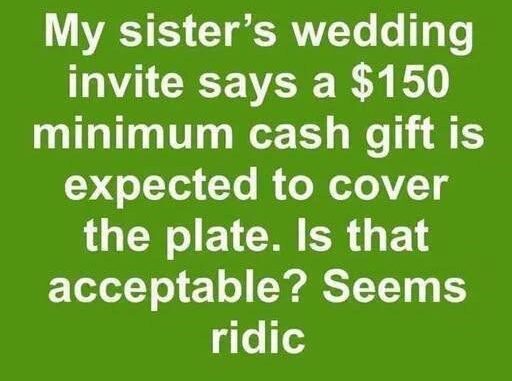
So it’s not surprising that some couples are beginning to rethink traditional gift etiquette. Instead of vague registries filled with household items they may not need, or gifts that may be duplicated, some are openly considering—or even requesting—cash gifts. In more direct cases, a growing number of discussions online revolve around whether it is acceptable to ask guests for a minimum cash contribution to attend.
For some couples, this approach feels practical and even honest. Weddings cost money, and guests are not just passive observers—they are participants in a carefully curated experience. They are served food, drinks, entertainment, seating, décor, and often transportation or accommodation. From this perspective, a cash gift can feel less like a demand and more like a way of contributing to an event that requires significant financial investment.
Some hosts argue that transparency reduces stress. Instead of silently hoping guests will “cover their plate,” they prefer to communicate expectations upfront. In their eyes, it avoids ambiguity, helps with budgeting, and ensures that the couple does not start their married life burdened by debt from a single evening of celebration. For couples paying for most of their wedding themselves, this logic can feel especially compelling.
However, the moment the conversation shifts from suggesting gifts to setting a minimum requirement, the tone changes significantly—and that is where the debate becomes complicated.
For many guests, weddings are not transactions. They are invitations to witness and celebrate a milestone in someone’s life. When a minimum cash gift is requested, some people interpret it as a price of entry rather than a voluntary gesture of love or support. That perception can create discomfort, even resentment, particularly if guests feel they are being financially evaluated before they are emotionally welcomed.
Not everyone has the same financial flexibility. A $150 or $200 expectation per guest may be manageable for some, but for others it can be a genuine hardship. Students, young professionals, retirees on fixed incomes, or families attending multiple weddings in a short period may feel pressured or excluded. Even when guests manage to pay, they may do so quietly, without comfort or enthusiasm, which can subtly alter the emotional tone of the celebration.
This is where etiquette experts often step in with a consistent perspective: gifts are traditionally meant to be optional expressions of goodwill, not obligations tied to attendance. Once a gift becomes a requirement, it stops functioning as a gift in the social sense and begins to resemble a fee. And that shift, while sometimes subtle in wording, can have a lasting impact on how people perceive the event—and even the relationship.
At the heart of the debate is a deeper tension between modern practicality and traditional social norms. Weddings today exist in a very different landscape than they did a generation or two ago. Costs have risen dramatically, social media has amplified expectations for aesthetic perfection, and many couples feel intense pressure to create an “unforgettable” experience. In that environment, financial strain is real, and the desire to recoup costs is understandable.
At the same time, weddings also carry symbolic meaning that goes beyond economics. They are rooted in community, celebration, and shared joy. Guests are often invited not because of what they can contribute financially, but because of their emotional significance in the couple’s lives. Parents, childhood friends, mentors, and relatives attend as witnesses to a union—not as contributors to a financial balance sheet.
This is why requests for minimum cash gifts can feel emotionally loaded. Even when framed politely, they introduce a transactional layer into a space that many people expect to be relational. A guest may begin to wonder: Am I valued for my presence, or for my payment?
Another layer of complexity comes from cultural differences. In some cultures, cash gifts are not only common but expected, often given in envelopes at weddings as a standard practice. In those contexts, the amount may be guided by social norms, relationship closeness, or local customs, and it is generally understood without resentment. In other cultures, however, direct discussions about gift amounts are considered inappropriate or even disrespectful.
Because of this variation, what feels normal in one social setting may feel offensive in another. This is part of why the debate continues to intensify online, where people from different backgrounds interpret the same request in very different ways.
There is also the emotional reality for couples themselves. Many are not trying to be demanding—they are trying to be realistic. A wedding can easily cost tens of thousands of dollars, and even with careful planning, unexpected expenses can arise. For some couples, the idea of receiving cash gifts is not about profit, but about breaking even or avoiding long-term debt. From that point of view, the request feels less like entitlement and more like survival.
Still, communication is where everything becomes delicate. Etiquette professionals often emphasize that the way something is said matters as much as what is said. A softly worded note expressing appreciation and suggesting that contributions toward a honeymoon fund are welcome can feel very different from a strict “minimum gift required” instruction. One invites generosity; the other enforces obligation.
Guests also play a role in shaping this dynamic. In recent years, there has been a growing openness about financial boundaries. Some guests now feel more comfortable RSVPing “no” if attendance would be financially stressful, rather than stretching their budget to meet expectations. This shift reflects a broader cultural change toward transparency and self-protection.
Ultimately, the question of whether it is rude to ask for a minimum cash gift does not have a simple answer. It depends on tone, culture, context, relationships, and expectations on both sides. What remains consistent, however, is the emotional truth behind weddings themselves: they are meant to bring people together, not create pressure or division.
The healthiest approach often lies in balance. Couples planning within their means, being mindful of the financial diversity among their guests, and expressing gratitude rather than conditions. Guests, in turn, offering what they can comfortably give, without comparison or guilt.
Because at its core, a wedding is not supposed to feel like a transaction. It is supposed to feel like a celebration—one where presence matters more than payment, and where the memory of the day is shaped by connection rather than cost.
And when both sides hold onto that idea, even imperfectly, the celebration tends to feel exactly like what it should be: a shared moment of joy, not a financial equation.
Leave a Reply