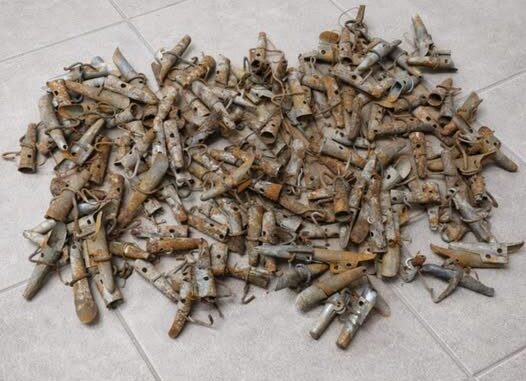
What You’re Looking At in the Photo
At first glance, they don’t look like anything particularly meaningful—just small, oddly shaped metal fittings with a simple, utilitarian design. Found together in a bucket in an old attic, they can easily feel like leftover plumbing parts, forgotten hardware, or even some kind of obsolete mechanical pieces.
But they’re actually something much more specific and surprisingly interesting:
These are maple sap taps, also called “spiles.”
They were used in the traditional process of collecting sap from maple trees to make maple syrup.
What a Maple Tap (Spile) Actually Is
A spile is a small tube-like tool—usually made of metal, aluminum, or sometimes plastic—that is inserted into a drilled hole in a maple tree trunk.
Its job is simple but essential:
- It creates a controlled channel for sap to flow out of the tree
- It directs the sap into a bucket or collection system
- It prevents the sap from running down the bark and getting contaminated
Think of it as a tiny faucet for a tree.
Without spiles, sap would just drip randomly down the bark and be difficult to collect cleanly or efficiently. The spile turns that natural flow into something harvestable.
Why Maple Sap Even Flows
The reason these tools exist at all comes down to a fascinating bit of tree biology and seasonal physics.
Maple trees don’t always “bleed” sap. The flow only happens during a very specific window in late winter and early spring, when temperatures swing above and below freezing.
Here’s what’s happening inside the tree:
- Cold nights (below 0°C / 32°F): Pressure builds inside the tree as fluids contract and gases compress
- Warm days (above freezing): The pressure releases, pushing sap upward and outward through the tree’s vascular system
That pressure cycle is what causes sap to flow out of a drilled hole—and why timing is everything.
If it’s too cold, nothing moves. If it’s too warm, the season ends quickly or the sap quality drops.
The spile doesn’t create the flow. It simply captures what the tree is already doing naturally.
How These Metal Pieces Were Used
Once you drill a small hole into a healthy maple tree, the spile is gently inserted into that hole. It is usually tapped in just enough to stay snug and airtight.
Then:
- A bucket is hung directly underneath (classic method)
- Or tubing is attached to carry sap to a central collection tank (modern method)
In older systems—like the kind these attic finds likely came from—buckets were far more common. You’ve probably seen photos of rows of trees with metal buckets hanging from them, often with lids to keep out rain, bark, and insects.
Those setups are exactly what these spiles were designed for.
Why Someone Would Have a Bucket Full of Them
Finding a whole container of spiles in an attic usually points to one thing: someone in the home used to produce maple syrup or worked in a related agricultural trade.
Depending on the era, these could have been used for:
- Small family maple syrup production
- Farm operations in rural areas
- Seasonal harvesting as a side income
- Or simply hobby syrup-making that stopped years ago
Spiles are durable, reusable, and easy to store in bulk. So when a sap season ended, it wasn’t uncommon to clean them and toss them into a bucket until the next year.
If the house is older or located in a region with maple trees, this discovery actually fits a long rural tradition.
Bucket Spiles vs Modern Systems
There are two main styles of spiles:
1. Bucket Spiles (older style)
- Designed to hold or support a metal bucket
- Simple hook or lip for hanging containers
- Common in older farms and traditional syrup production
2. Tubing Spiles (modern style)
- Connect directly to plastic tubing
- Sap is transported to a central collection tank
- Much more efficient and used in commercial operations today
The metal ones found in attics are most often the older bucket-style spiles, which were standard before tubing systems became widespread.
What Happens After the Sap Is Collected
One of the biggest surprises for people discovering these tools is learning that maple sap is not syrup.
Fresh sap is:
- Mostly water (over 90%)
- Slightly sweet
- Very thin and almost clear
To turn it into maple syrup, it must be boiled down for a long time. Large amounts of sap are reduced until only concentrated sugar remains.
Roughly speaking, it takes 40 liters of sap to make 1 liter of syrup.
So the spile is just the very beginning of a long process.
Do These Tools Harm the Tree?
A common concern is whether tapping damages maple trees.
When done correctly:
- The hole is small
- The tree naturally heals after the season
- Healthy trees can be tapped again year after year
However, over-tapping or improper use can stress a tree, which is why modern practices are more regulated and careful.
Most healthy mature maples can handle tapping without long-term harm if the process is done responsibly.
Why These Feel So Strange When You Find Them Today
Finding spiles in an attic feels odd because they sit at the intersection of two very different worlds:
- Modern life, where syrup comes in plastic bottles from a store
- Old rural life, where syrup was something you physically harvested from trees
They’re a reminder that not long ago, food production was far more seasonal, hands-on, and local.
What looks like “weird metal junk” is actually a piece of a very specific agricultural system that many households once depended on.
Final Answer
Those “weird metal things” in the bucket are:
maple sap taps (spiles), used to collect sap from maple trees for making maple syrup.
They were inserted into drilled holes in trees during late winter, allowing sap to flow into buckets before being boiled down into syrup.
So instead of random attic junk, you’ve actually found tools from a surprisingly rich and very real piece of food history.
Leave a Reply