The bitter winter wind rattled the thin glass of the state-funded wing, and the wheezing radiator offered no real warmth against the chill. I sat quietly by the window of my cramped, shared room, watching the manicured courtyard stretch toward the glowing penthouse suites where the affluent residents lived. That courtyard was the only place our two entirely different worlds ever touched, and it was under the shade of an old oak tree that my life changed forever.
He was Arthur, an elegant eighty-two-year-old man who arranged chess pieces with the poise of someone who believed nothing in the world could ever rush him.
“You look like someone who understands a good game,” he said to me one afternoon, his eyes bright with intelligence.
“I understand losing gracefully,” I replied, looking down at my worn slippers. “That is what poverty teaches you.”
He chuckled warmly and gestured to the empty iron chair across from him. “Then sit. I have not lost gracefully in years. I could use the practice.”
We played chess for hours that first afternoon. He had his private chef send out imported tea, which I sipped slowly, deeply embarrassed by my patched clothes and minuscule pension.
“You keep apologizing for your shoes,” Arthur noticed.
“They are all I have.”
“Shoes carry people to interesting places,” he said softly. “Yours carried you to me. That makes them valuable.”
Day after day, we returned to that oak tree, listening to old jazz records on his portable player and trading the quiet regrets of our autumn years. He spoke of his late wife, while I shared stories of the children I never had. When I asked about his own three children, a dark shadow crossed his face.
“They don’t care about me,” Arthur confessed bitterly, moving his bishop across the board. “They are just waiting for me to die.”
“You don’t know that,” I urged gently.
“I know Gregory. He is patient, polite in person, and entirely ruthless. He is planning something, and I can feel it coming.”
His daughter Evelyn visited once during those weeks, lingering at the edge of the courtyard with a conflicted expression before turning away.
“She does what Gregory tells her,” Arthur sighed. “She always has.”
As the winter deepened, Arthur’s health rapidly deteriorated. A severe cough wracked his frame each morning, and by the third week, he could barely lift a heavy chess piece. I sat beside his bed holding a warm cup of tea when the door burst open without warning. Gregory strode into the room, tall, cold, and flanked by three expensive corporate lawyers carrying leather folders.
“Father, we need to talk about your care,” Gregory announced coldly. “This nursing home is bleeding money you can no longer spare.”
One of the lawyers stepped forward, waving a legal document. “Mr. Arthur, your family has concerns regarding your mental capacity. We intend to petition the court to appoint your eldest son as your medical and financial guardian.”
“He is perfectly capable of thinking for himself,” I interjected firmly.
Gregory turned on me with absolute contempt. “And who exactly are you? The charity case from the state-funded wing? This is a family matter. Leave.”
“She stays,” Arthur said, his voice weak but laced with steel. “She is the only one who visits me because she wants to.”
Faced with mounting pressure and threats of forced isolation in a cheap facility upstate, Arthur looked at me with desperate clarity once the lawyers departed.
“Marry me,” he whispered.
I stared at him in shock. “Arthur, people will say I am after your money.”
“Let them say it. If we marry, I can sign a healthcare directive naming you as my legal medical agent while I am still of sound mind. It will guard my final days from Gregory. There is no one I trust more.”
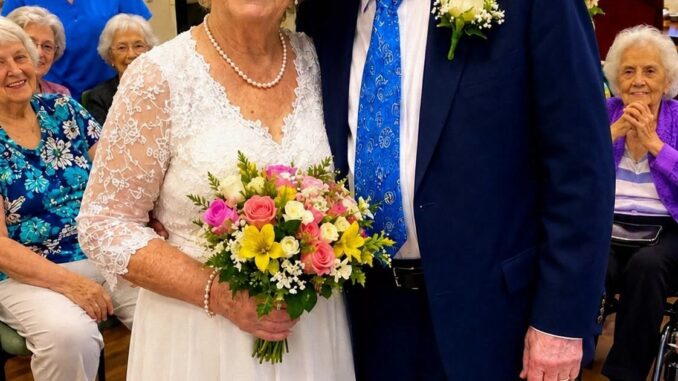
Three days later, we were quietly married in his suite. When Gregory’s lawyers returned with their guardianship petition, Mr. Vance, Arthur’s longtime attorney, stopped them cold at the door. The marriage and medical directive legally superseded any family claims.
For two wonderful years, we lived as husband and wife, reading poetry in the evenings and watching the sun set over the courtyard. Last week, he passed away peacefully in his sleep. I believed my grief was the final chapter, but a week after the funeral, Mr. Vance arrived with a thick manila envelope and a heavy expression.
“I have served your late husband for thirty years,” Mr. Vance said softly, sliding the documents across the table. “He trusted me with everything. This may change everything about how you see the last two years.”
My hands trembled as I read the dense legal text. Arthur hadn’t just been an ordinary resident; he had purchased the entire nursing home eleven years prior, living anonymously in the penthouse to see who was genuinely kind to people without wealth. Furthermore, he had placed the entire facility into a legal trust naming me as the sole beneficiary, permanently shielding the state-funded wing from Gregory’s secret plans to demolish it for luxury condominiums.
Evelyn stepped into the room, offering her support and confirming the truth of her father’s grand design. When Gregory later stormed the penthouse brandishing an eviction notice, Mr. Vance and Evelyn stood firmly by my side. Gregory stared at the deeds in stunned disbelief, realizing his father had outsmarted his greed completely before marching out in defeat. Weeks later, as I watched workers repair the warm state-funded wing from the courtyard window, I whispered into the cold air, knowing Arthur’s legacy of kindness was finally safe.
Leave a Reply