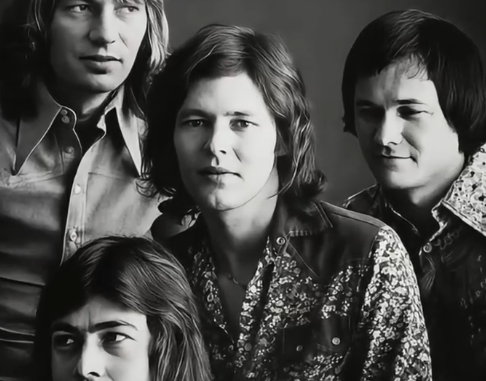
Released in 1971, “Baby I’m-A Want You” by Bread arrived during a period when music was often dominated by louder, more experimental rock sounds. In contrast, Bread took a different approach—focusing on simplicity, warmth, and emotional sincerity. This softer style quickly resonated with listeners who were drawn to its calm and heartfelt tone.
The song soon became one of the standout soft rock hits of the early 1970s, reaching high positions on music charts and helping define the band’s identity. Beyond its commercial success, however, its lasting impact comes from its emotional depth and timeless quality. Many listeners describe it as feeling like a personal message rather than a traditional pop song.
At the center of Bread’s sound was David Gates, whose vocal style emphasized restraint and honesty rather than vocal intensity. Born in Oklahoma in 1940, Gates developed a strong musical foundation early in life and worked as a songwriter, producer, and session musician before forming Bread in the late 1960s with Jimmy Griffin, Robb Royer, and Mike Botts. Together, they created a signature sound built on gentle arrangements and emotionally direct lyrics.
“Baby I’m-A Want You” reflects that approach clearly. Instead of relying on complex production or dramatic instrumentation, the song uses simplicity to highlight emotional vulnerability. Its lyrics focus on love, emotional dependence, and the fear of losing someone important. This straightforward expression of feeling is part of what makes the song so relatable across generations.
Many listeners connect with the track because it reflects real emotional experiences in a simple and honest way. Whether associated with relationships, personal memories, or moments of reflection, the song has become a meaningful backdrop in people’s lives for decades.
Musically, the arrangement is soft and carefully balanced. Gentle piano, subtle percussion, and layered harmonies create a smooth and calming atmosphere. Each element of the song is designed to support the emotional message rather than overpower it. This restraint is one of the key reasons the track continues to feel fresh and relevant even today.
When it was released as a single and later included on the album of the same name, “Baby I’m-A Want You” performed strongly on the Billboard Hot 100, further establishing Bread as leaders in the soft rock genre. The band had already achieved success with earlier hits such as “Make It with You” and “If,” but this song demonstrated a deeper emotional maturity and complexity.
Over time, the song became part of a broader cultural memory. It has been featured in films, television programs, and nostalgic music collections, often used to represent themes of love, memory, and reflection. Its influence can also be seen in later soft rock and adult contemporary music, where emotional clarity and gentle arrangements remain important elements.
While some critics in the past underestimated soft rock as a genre, songs like this highlight its artistic value. The strength of “Baby I’m-A Want You” lies in its understatement. Rather than telling listeners exactly what to feel, it allows space for personal interpretation. This openness is one of the reasons it continues to resonate with audiences of different ages.
As musical styles have evolved over the decades, from rock and disco to electronic and digital production, Bread’s music has maintained a steady presence among listeners who appreciate emotional storytelling. David Gates’ songwriting continues to be recognized for its simplicity and sincerity, qualities that give the band’s music its lasting appeal.
More than fifty years after its release, “Baby I’m-A Want You” still appears on radio stations, curated playlists, and nostalgic music collections. Its continued presence is a reminder that music does not need to be loud or complex to be powerful. Sometimes, the most enduring songs are those that express emotion in the simplest and most honest way.
Leave a Reply