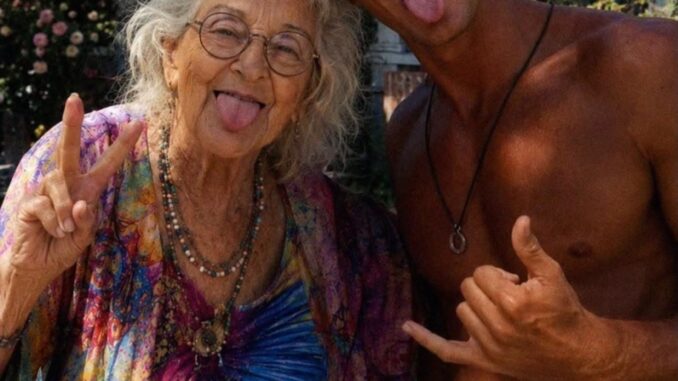
For years, I thought helping the elderly woman next door had simply been the right thing to do.
I carried her groceries.
I mowed her lawn.
I drove her to doctor’s appointments.
I fixed whatever broke in her old blue house.
Then she died.
Five years later, a handmade wooden box appeared on my porch with my name carved into the lid.
Inside was an antique key and a note written in her unmistakable handwriting.
It said:
“If you’re reading this, they finally know I chose you.”
Before I could understand what she meant, someone began pounding on my front door.
And then a stranger behind me whispered:
“Charlie, whatever you do, don’t open it.”
Part One: The Woman Next Door
I was twenty-five when I moved onto Hawthorne Street.
I had bought a small house that needed far more work than I could afford.
The roof leaked.
The back fence leaned dangerously toward the neighbor’s yard.
The pipes groaned whenever I turned on the shower.
Still, it was mine.
And next door lived Mrs. Eleanor.
She was ninety years old, lived alone in a blue house surrounded by overgrown roses, and had the kind of personality that made you forget her age.
The first time I helped her was on a hot Tuesday afternoon.
I had just returned from work when I saw her beside an old sedan.
Four grocery bags sat on the pavement.
She lifted one.
Took two steps.
Stopped.
“Do you need some help?” I asked.
She looked at me over her glasses.
“I have been carrying groceries longer than you have been alive.”
“I believe you.”
I pointed toward the bags.
“But I’m already here.”
She studied me.
Then pointed toward the heaviest ones.
“Take those two.”
I laughed.
“Yes, ma’am.”
I carried everything into her kitchen.
The house smelled like cinnamon, furniture polish, and old books.
Photographs covered the walls.
Some were so old that the faces had faded almost completely.
“Milk in the refrigerator,” she instructed. “Bread goes in the wooden box.”
I followed her directions.
When I finished, she reached into her purse.
“No,” I said.
“You carried four bags.”
“It took two minutes.”
“Two minutes still belong to you.”
I smiled.
“Keep your money.”
She frowned.
But I caught the tiny smile she tried to hide.
That was how it started.
A few days later, I noticed her grass had grown too high.
So I mowed her lawn.
She came outside halfway through.
“What do you think you’re doing?”
“Mowing your lawn.”
“I can see that.”
“Then why did you ask?”
She shook her head and disappeared inside.
Ten minutes later, she returned carrying a glass of lemonade.
That became our Saturday routine.
I mowed.
She made lemonade.
Then we sat on her porch and talked.
She told me stories about growing up during the Great Depression.
Her family saved everything.
Jars.
Buttons.
String.
Wrapping paper.
“Nothing useful was ever thrown away,” she told me.
“What about people?”
Her expression changed.
“People most of all.”
I didn’t understand what she meant.
Not then.
Part Two: Becoming Family
As the months passed, Mrs. Eleanor started calling me whenever something went wrong.
A cabinet hinge broke.
A window wouldn’t close.
Her porch light stopped working.
A pipe began leaking.
I fixed what I could.
When I couldn’t, I found someone who could.
She always tried to pay me.
I always refused.
One afternoon, she became genuinely irritated.
“You are making this difficult.”
“I’m helping my neighbor.”
“Your neighbor has money.”
“Then spend it on something better.”
She tapped her cane against the floor.
“Young people think generosity means refusing everything.”
“What does it mean to you?”
She looked at me.
“Letting someone give something back.”
I never forgot those words.
Eventually, I started driving her to doctor’s appointments.
She hated hospitals.
She hated waiting rooms even more.
“That doctor is too young,” she whispered once.
“He’s older than me.”
“That proves nothing.”
Another time, she nodded toward an elderly man sleeping in a corner.
“He has been snoring for eleven minutes.”
“You counted?”
“I had nothing else to do.”
She was funny.
Sharp.
Stubborn.
And surprisingly lonely.
Her stories became longer as our friendship grew.
She told me about bread lines.
About her father repairing shoes at the kitchen table.
About neighbors sharing food when one family had nothing.
“People were poor,” she told me one rainy afternoon.
“But no one survived alone.”
That sentence stayed with me.
My own parents lived several states away.
My friends were busy with careers and relationships.
But Mrs. Eleanor had somehow become family.
Then one afternoon, while we sat together on her porch, she grew unusually quiet.
“Are you feeling okay?” I asked.
She looked at me.
Then squeezed my hand.
“One day, you’ll understand why I wanted you in my life.”
I laughed.
“I think you’re the one helping me.”
She only smiled.
I didn’t know what she meant.
A few months later, I would.
Because Mrs. Eleanor died.
Part Three: Five Years of Silence
Her funeral was small.
There were no children.
No grandchildren.
No relatives I recognized.
I sat near the front and stared at the closed coffin, unable to understand how someone who had been such a constant part of my life could suddenly be gone.
After the funeral, the house was sold.
Another family moved in.
And life continued.
Five years passed.
I changed jobs.
Repaired my roof.
Replaced the fence.
Paid bills.
Went through the ordinary problems of ordinary life.
I rarely thought about Mrs. Eleanor anymore.
Until one rainy Thursday morning.
I opened my front door and nearly tripped over a wooden box.
It was sitting directly on my porch.
Old.
Handmade.
Dark oak.
Brass hinges.
No shipping label.
No return address.
Only my name.
CHARLIE.
Carved directly into the lid.
I carried it inside.
It was heavier than it looked.
There was no lock.
I lifted the lid.
Inside was a single antique key resting on a folded piece of yellowed paper.
My hands froze.
I recognized the handwriting immediately.
Mrs. Eleanor.
The note contained one sentence.
“If you’re reading this, they finally know I chose you.”
I stared at it.
“What does that mean?”
Then—
BANG!
Someone slammed into my front door.
The entire house shook.
“Charlie!”
I froze.
Another impact.
“Charlie, don’t open the door!”
But the voice wasn’t coming from outside.
It was coming from behind me.
I spun around.
A woman stood near my kitchen.
She looked to be in her late fifties.
Rain darkened her coat.
Silver strands of hair clung to her face.
I had never seen her before.
“How did you get inside?”
“The back door was unlocked.”
My stomach tightened.
“Get out.”
“Charlie, listen to me.”
“Who are you?”
“My name is Judith.”
She looked at the wooden box.
“I knew Eleanor.”
My heart stopped.
“Mrs. Eleanor died five years ago.”
“I know.”
Another blow struck the front door.
“We know you have the box!” a man shouted from outside.
“Open the door!”
Judith’s face went pale.
“They found you.”
“Who?”
“People who have spent years looking for what Eleanor left behind.”
I stared at her.
“Why?”
“Because they believe you have something they want.”
“What?”
Her eyes dropped to the key.
“That.”
Part Four: The Escape
Another blow shook the door.
A thin crack appeared beside the lock.
Judith stepped closer.
“We need to leave.”
“I’m not running out of my house with a stranger.”
“Then ask me one question.”
I thought quickly.
“What did Mrs. Eleanor call the neighbor’s cat?”
Judith didn’t hesitate.
“Jasper.”
I stared at her.
“His real name was Jasper,” she continued, “but Eleanor called him Mayor because he visited every porch.”
Only a handful of people knew that.
I grabbed the box.
“Where are we going?”
“Anywhere but here.”
We slipped through the back door and ran into the rain.
Judith led me to a gray car parked behind the next block.
The moment we got inside, she locked the doors.
“Start talking.”
She started the engine.
“Eleanor was my aunt.”
I stared at her.
“There was no family at the funeral.”
“There was family.”
She swallowed.
“We were told not to come.”
“By whom?”
“My brothers.”
The car accelerated.
I looked through the rear window.
Two men were standing on my porch.
One kicked the damaged door.
Judith turned the corner.
“My grandfather owned several properties and a manufacturing company,” she said. “When he died, Eleanor inherited most of it.”
“What happened?”
“She sold the company but kept the money, land records, and family documents.”
“Why would anyone care about those now?”
“Because some of the land became extremely valuable.”
I looked down at the wooden box.
“My brothers believed Eleanor had hidden proof that certain properties belonged to her.”
“And they spent five years looking for it?”
“Yes.”
I thought about Mrs. Eleanor.
The woman who always seemed calm.
The woman who hated hospitals.
The woman who had never once mentioned being afraid.
“How did you know about me?”
Judith glanced at me.
“She wrote about you.”
“What?”
“In letters.”
“You were in contact with her?”
“Occasionally. My brothers watched her closely. They wanted to know where she kept everything.”
Judith looked at the box.
“She stopped trusting almost everyone.”
“Almost?”
“She trusted you.”
I looked away.
“Why?”
Judith’s answer was quiet.
“Because you never took anything from her.”
Part Five: Room 214
Twenty minutes later, Judith pulled into an old railway station that had been converted into storage units.
She led me downstairs.
The manager studied the number engraved on the key.
Then his expression changed.
“Unit 214.”
He led us down a narrow corridor.
“This unit has been prepaid for years,” he said. “No one has opened it in a very long time.”
I inserted the key.
Click.
The door opened.
I expected money.
Jewelry.
Something valuable.
Instead, there was a desk.
A filing cabinet.
A worn leather suitcase.
And a framed photograph.
Mrs. Eleanor stood in the picture as a young woman beside another woman who looked remarkably like Judith.
Judith covered her mouth.
“That’s my mother.”
I opened the suitcase.
Inside were property deeds.
Bank records.
Photographs.
Legal documents.
And several sealed envelopes.
One had Judith’s name on it.
Another had mine.
I opened mine first.
The letter began:
“Charlie,
If you’re reading this, then the truth has finally reached you.”
My hands began shaking.
“You gave me your time when no one else would. You helped me without asking what I owned. That is why I chose you.”
I swallowed hard.
“My relatives spent years waiting for me to die. You spent years helping me live.”
I had to stop reading.
Judith touched my shoulder.
“Keep going.”
I did.
“I left my house and most of my money to a charitable trust. It will support food banks, senior centers, and young people caring for elderly neighbors.”
Then came the part I hadn’t expected.
“But I left something to you as well. Not as payment. As gratitude.”
The final pages named me as a trustee.
I would help oversee the fund.
I looked at Judith.
She was crying.
“What did she leave you?”
Judith opened her envelope.
She read silently.
Then covered her face.
“She forgave me.”
“For what?”
“For staying away.”
I didn’t know what to say.
Then the storage room door slammed open.
Two men stood there.
One was tall and broad.
The other carried a crowbar.
The taller man looked at me.
“Give us the documents.”
I stepped backward.
“No.”
He smiled.
“You don’t understand what belongs to this family.”
I held Mrs. Eleanor’s letter tightly.
“She made that pretty clear.”
The man stepped forward.
Judith pulled out her phone.
“The police are already coming.”
A siren sounded outside.
The man’s expression changed.
His brother turned toward the exit.
They ran.
They didn’t make it far.
Officers intercepted them near the stairs.
Part Six: What Mrs. Eleanor Had Really Left Me
Later, we learned the men had forced their way into my house.
They had damaged the front door while searching for the box.
They were charged with burglary and attempted theft.
The documents proved what Mrs. Eleanor had known all along.
The disputed property belonged to her.
And the trust had been established legally.
Three months later, the trust officially opened.
Our first project was a senior center with a small food pantry.
Judith helped organize the family records.
I became involved with the trustees.
And slowly, I understood what Mrs. Eleanor had meant years earlier.
She hadn’t chosen me because I was family.
She had chosen me because I had treated her like family.
The trust helped pay for groceries.
Transportation to medical appointments.
Home repairs.
Meals for elderly people living alone.
And support for younger caregivers who were doing what I had once done for her.
One Saturday, I was repairing a loose porch railing for an elderly man when he tried to hand me money.
I almost refused.
Then I remembered Mrs. Eleanor.
“Young people think generosity means refusing everything.”
So I accepted the dollar.
The man smiled.
That evening, I placed it inside the wooden box.
The antique key was still there.
I looked at Mrs. Eleanor’s photograph hanging on the wall.
“You were right,” I whispered.
“I finally understand.”
Part Seven: The Real Inheritance
A year after the trust opened, I visited the center on a Saturday afternoon.
Children were helping pack food boxes.
Volunteers were preparing meals.
An elderly woman sat near the window, telling stories to a teenager who had stopped by to listen.
I stood there for a moment, watching all of it.
And I suddenly realized something.
Mrs. Eleanor hadn’t left me wealth.
She had left me responsibility.
She hadn’t given me a fortune to spend.
She had given me a reason to keep doing what I had once done for her.
The groceries.
The lawn.
The broken windows.
The doctor’s appointments.
The lemonade on Saturday afternoons.
At the time, I thought those were small things.
I thought I was simply helping an old woman next door.
But she had been teaching me something the entire time.
That kindness doesn’t always announce itself.
Sometimes it looks like carrying someone’s groceries.
Sometimes it looks like fixing a porch light.
Sometimes it means sitting quietly beside someone who has no one else to talk to.
And sometimes, without realizing it, you become part of a person’s final plan.
I looked at the wooden box one last time.
The key rested beside that single dollar.
I smiled.
Mrs. Eleanor had spent years surrounded by people who wanted to know what she owned.
I had been the one person who never asked.
And in the end, that was exactly why she trusted me with everything.
She hadn’t chosen me because I was family.
She had chosen me because I treated her like she was.
Leave a Reply