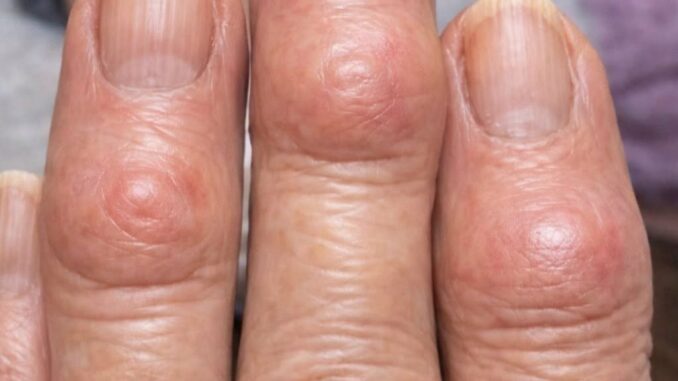
Small, hard bumps on the fingers or hands can be unsettling, especially when more than one appears. The cause is not always dangerous, but persistent or unexplained changes should not be ignored. Their location, texture, growth, and accompanying symptoms can offer clues, although a healthcare professional is needed for an actual diagnosis.
Common warts are one possibility. Caused by certain types of human papillomavirus, they often appear as firm, rough, flesh-colored or gray growths on the hands and fingers. They may occur in clusters and can spread when irritated or picked. Calluses and corns are different: they are areas of thickened skin produced by repeated pressure or friction from tools, sports equipment, instruments, or other activities.
Lumps near a joint may come from structures beneath the skin. Ganglion cysts are fluid-filled and often feel smooth, rounded, firm, or rubbery. They are usually benign but can become uncomfortable with movement. Digital mucous cysts commonly develop near the last finger joint and nail. They may create a groove in the nail and can be associated with osteoarthritis.
Hard enlargements that seem to be part of the finger joint may reflect arthritis. Osteoarthritis can produce bony bumps around the middle or end joints, sometimes with stiffness, pain, swelling, reduced flexibility, or a change in finger shape. Knuckle pads, meanwhile, are thickened areas over the joints that may be related to repeated pressure and are generally benign.
Not every bump is solid or truly hard. Dyshidrotic eczema can create tiny, intensely itchy blisters along the fingers or palms. The skin may later crack, peel, or burn. A firm nodule in the palm, particularly when a finger gradually becomes difficult to straighten, may be an early sign of Dupuytren’s disease involving connective tissue beneath the skin.
Old injuries can also leave clues. A splinter or small fragment of wood, metal, or glass may remain under the skin and cause inflammation or scar tissue. A healed cut, burn, or puncture may produce a firm area of collagen. These possibilities are especially relevant when the bump sits exactly where an earlier injury occurred, even if the incident has nearly been forgotten.
Certain warning signs make evaluation more important. Rapid growth, changing color or shape, an irregular border, spontaneous bleeding, an open sore, persistent pain, warmth, redness, drainage, numbness, weakness, or restricted movement should not be dismissed. Most unusual bumps are not cancer, but some concerning lesions can initially resemble harmless growths.
Trying to cut, puncture, squeeze, burn, or smash a lump at home can cause infection, bleeding, scarring, nerve damage, or injury to nearby structures. It may also make a proper diagnosis harder. A suspected cyst, embedded object, or wart is safer left intact until its nature is clearer.
Observing the pattern can help. Note whether bumps appear near nails, on joints, across the palms, or along areas exposed to friction. Consider whether they affect one hand or both and whether they are stable, multiplying, or changing. Taking a dated photograph can make gradual changes easier to recognize.
A clinician may begin with a visual examination and gentle palpation to decide whether the lump appears skin-based, fluid-filled, solid, bony, connected to a joint, or located below the skin. Depending on the findings, observation, topical care, imaging, removal, or further testing may be recommended. Many hand bumps are benign, but getting persistent or changing ones examined replaces frightening guesses with an informed plan.
The useful response is neither panic nor neglect. Notice the bump, protect it from further injury, watch for changes, and seek qualified advice when the cause is unclear or warning signs appear. That measured approach respects the fact that ordinary warts, calluses, cysts, and joint changes are common while still allowing a potentially important problem to be recognized early.
Leave a Reply