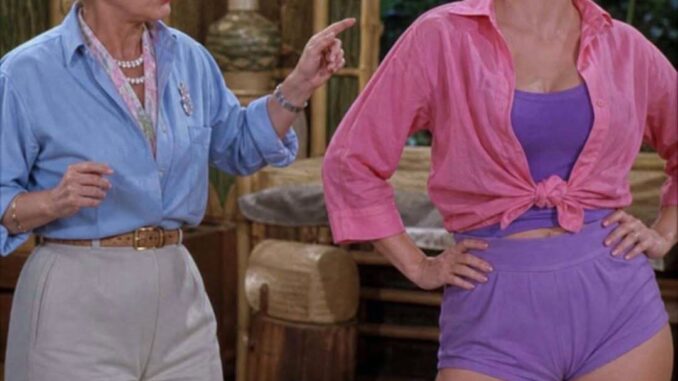
Gilligan’s Island remains one of television’s most recognizable comedies. Its tropical setting, broad characters and uncomplicated humor made the stranded passengers familiar to generations of viewers. The series is remembered for its jokes and personalities, but fans who look closely can also see evidence of how quickly and practically television was produced in the 1960s.
The island was never a single untouched paradise. It was assembled from studio sets, outdoor locations, painted backgrounds and carefully placed props. The S.S. Minnow and the castaway camp had to appear convincing within the frame even though a working crew, cameras and equipment stood only a short distance away. Occasionally, an object or structure that did not belong in the fictional world slipped into view.
Those details were not meant to become part of the story. A piece of production equipment might be visible for a moment, or the edge of a constructed environment could remind viewers that the island was being created rather than discovered. Modern audiences can pause, replay and enlarge every shot, making imperfections far easier to notice than they were during an original broadcast.
Continuity errors offer another kind of game. Clothing may sit differently from one angle to the next. A prop can change position between shots, and an object may disappear before returning without explanation. Jewelry and personal details sometimes shift during a scene. The changes occurred because sequences were filmed in separate takes, often from multiple camera positions, and then edited together.
Television crews of the period worked under demanding schedules. Their priorities were performances, lighting, usable sound and completing enough material for an episode. Correcting a tiny inconsistency could require resetting the entire scene or using expensive film for another take. If the joke landed and the actors delivered their lines, a momentary mismatch was unlikely to justify the delay.
The limitations were also creative tools. Designers had to suggest a much larger island with a manageable number of sets. Props were reused, locations were framed from different angles and practical effects created situations that digital technology would handle today. The charm came partly from watching skilled people solve problems with what they had.
Period details add another reason to revisit the show. Hairstyles, fabrics, furniture and color choices capture the visual style of the 1960s. Camera movement, lighting and editing reveal the conventions of television comedy at the time. Even when a viewer notices a mistake, that mistake can become a small lesson in how the program was assembled.
The famous castaways helped make those artificial surroundings feel complete. Their sharply defined personalities turned every prop and repeated location into part of a comic rhythm. Audiences accepted the Professor’s inventions, Gilligan’s accidents and the group’s endlessly postponed rescue because the characters were more important than realism.
Rather than damaging the show, the visible imperfections now strengthen its nostalgic appeal. Fans can enjoy a familiar episode while searching for clothing changes, wandering props or background details that escaped the final edit. Each discovery creates a connection between the fictional island and the real crew working just outside the shot.
Gilligan’s Island did not endure because it was technically flawless. It lasted because it was friendly, memorable and easy to share across generations. The small production mistakes show the human labor behind that success. They invite viewers to look again, appreciate the ingenuity of an earlier television era and smile at details that were never supposed to become part of the entertainment.
Repeated broadcasts helped create this second life for the series. A viewer who already knows every joke can focus on the background, compare shots and share discoveries with other fans. What once passed in seconds during a weekly episode can now become the subject of affectionate discussion. The errors add another layer without replacing the comedy that made people return.
Leave a Reply