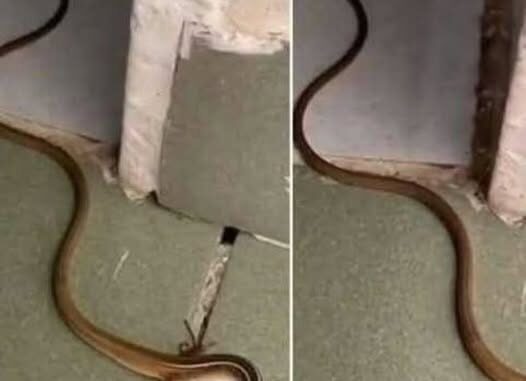
Discovering a snake inside your home can be startling, especially when you don’t know what kind it is. Your first instinct might be to chase it away or try to remove it yourself, but that can increase the risk of being bitten.
The safest approach is usually simple: stay calm, keep your distance, and give the snake space.
Keep Your Distance
Don’t approach the snake to get a closer look or try to identify it. If you’re not certain whether it could be venomous, treat it cautiously and avoid getting close enough to examine its markings, head, or behavior.
Instead, move yourself and everyone else away from the animal.
If possible, leave the room and close the door behind you. A towel placed along the bottom of the door can help limit the snake’s movement while you arrange for professional assistance.
Keep children and pets away from the area. Dogs and cats may try to investigate or attack a snake, potentially putting themselves and anyone trying to intervene at risk.
Don’t Chase or Corner It
Resist the temptation to poke, trap, chase, or kill the snake.
A snake that feels threatened may become defensive. Many bites occur when people attempt to handle, capture, or kill a snake rather than simply leaving it alone.
If the snake is in a room that can be safely isolated, that’s often the best temporary solution.
Call a Professional
If the snake is inside your home and you’re uncomfortable dealing with it, contact local animal control or a qualified wildlife-removal professional.
Professional assistance is particularly important if the snake is large, difficult to reach, trapped somewhere inaccessible, or potentially venomous.
There’s generally no reason to approach the animal simply to determine its species. Let someone with appropriate training and equipment handle the situation.
If someone has actually been bitten, however, treat that as a medical emergency and seek immediate medical attention.
What If You Think It’s Venomous?
If you suspect the snake may be venomous, don’t attempt to capture or kill it.
Keep people and pets away from the area, isolate the room if you can do so safely, and contact an appropriate professional.
Trying to deal with a potentially venomous snake yourself can turn an unsettling situation into a dangerous one. Giving the animal plenty of space is usually the safer choice.
After the Snake Is Gone, Look for the Reason It Got Inside
Once the snake has been safely removed, take some time to figure out how it entered your home.
Inspect areas such as:
- Foundation gaps
- Spaces beneath doors
- Window openings
- Pipe and utility penetrations
- Vents
- Crawl spaces
- Garage doors
- Other openings around the exterior
Even a relatively small opening can provide access to a determined animal.
Sealing potential entry points can help reduce the chance of another snake finding its way indoors.
Don’t Forget About Food Sources
Snakes may enter properties because they’re looking for shelter or following available prey.
Rodents are an important food source for many snakes, so reducing mouse and rat activity around your home can make the property less attractive.
Keep food stored securely, avoid leaving pet food outdoors, and address signs of rodent activity promptly.
Your yard can also influence whether snakes are attracted to the area. Keep grass and vegetation reasonably maintained, and remove unnecessary piles of wood, debris, or other materials that provide places for wildlife to hide.
Pay Special Attention to the Garage
Garages can be particularly attractive to snakes because they often provide darkness, shelter, clutter, and access to rodents.
Check the seal beneath the garage door and repair gaps around windows and side entrances. Keep stored belongings organized, and consider using sturdy plastic storage containers instead of piles of cardboard boxes.
Reducing clutter makes it easier to spot potential entry points and removes some of the hiding places wildlife may use.
One Snake Doesn’t Necessarily Mean You Have a Problem
Finding one snake inside your home doesn’t automatically mean you have an infestation.
Snakes are generally solitary animals, and a single snake may simply have wandered indoors while searching for food, shelter, or a suitable place to hide.
However, if snakes repeatedly appear, that’s a good reason to investigate the property more carefully. Recurring sightings may indicate an accessible entry point or an underlying food source, such as a rodent problem.
Be Cautious With Snake Repellents
You may come across products claiming to keep snakes away through odors, vibrations, or other methods. However, many commercial snake-repellent products have limited or inconsistent evidence behind them.
Rather than relying entirely on a repellent, focus on practical prevention.
Seal openings, reduce clutter, maintain the yard, and address rodent problems.
These measures can make your property less attractive to snakes and other unwanted wildlife.
The Safest Response Is Usually the Calmest One
A snake inside the house can certainly be frightening, but panicking or rushing toward it can make the situation more dangerous.
Instead, step away and give the animal plenty of room. Keep children and pets out of the area, isolate the room if it’s safe to do so, and contact a trained professional when necessary.
Afterward, inspect your home and property for possible entry points and food sources.
Most snakes aren’t looking for a confrontation with people. They’re simply wild animals trying to find food, shelter, or a safe place to move through.
You don’t have to be comfortable around snakes to respond responsibly. Keep your distance, avoid handling the animal, protect your family and pets, and let trained professionals take care of the removal when needed.
Leave a Reply