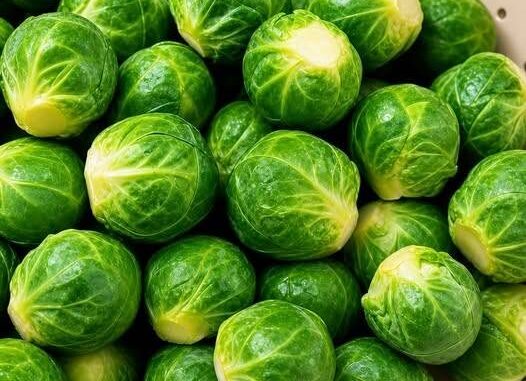
For years, Brussels sprouts had a reputation as the vegetable that children loved to hate.
Many people remember them as soft, watery, and strongly scented vegetables that appeared on dinner plates after being boiled for far too long. But there was a problem: the cooking method may have been responsible for much of that bad reputation.
Today, Brussels sprouts are prepared in completely different ways, and many people have discovered that they can actually be delicious.
Why Did Brussels Sprouts Get Such a Bad Reputation?
Brussels sprouts naturally contain sulfur-containing compounds, which can become particularly noticeable when the vegetables are cooked for a long time.
Traditional boiling could also leave them overly soft and watery. Instead of retaining their natural texture, they could become mushy and develop a strong aroma.
For someone encountering Brussels sprouts prepared this way as a child, it’s easy to understand why the vegetable became associated with unpleasant meals.
But cooking methods have changed considerably.
Roasting Makes a Big Difference
One of the easiest ways to transform Brussels sprouts is to roast them at a relatively high temperature.
Roasting encourages the outer leaves to brown and caramelize, creating crispy edges and a richer, slightly nutty flavor.
The inside can remain tender while the outside develops a satisfying texture.
A simple approach is to trim the sprouts, cut larger ones in half, coat them lightly with oil, and spread them across a baking sheet.
The important part is giving them enough room.
Don’t Crowd the Pan
When too many Brussels sprouts are packed closely together, moisture can become trapped between them.
Instead of roasting and browning, they can begin to steam.
Spreading them into a single layer with some space between the pieces helps the hot air circulate and encourages better browning.
That small change can make a surprisingly noticeable difference.
Seasonings Can Change Everything
Brussels sprouts have a flavor that works well with many familiar ingredients.
Garlic can add savory depth, while lemon can provide brightness. Mustard can bring a little tang, and toasted nuts can add crunch.
Fresh herbs can also complement roasted sprouts nicely.
For those who enjoy meat, small amounts of bacon or another savory ingredient can add additional flavor, although Brussels sprouts certainly don’t require meat to be enjoyable.
Even a simple combination of olive oil, salt, pepper, and lemon can be enough to make roasted Brussels sprouts much more appealing.
They Don’t Have to Be Cooked Until Soft
Roasting isn’t the only option.
Thinly sliced Brussels sprouts can be used in salads, where their crisp texture works particularly well with dressings, nuts, fruit, or other fresh ingredients.
They can also be lightly steamed.
The goal isn’t necessarily to avoid cooking them. Instead, it’s about finding a method that preserves some of their natural texture and flavor.
Different techniques produce very different results from the same vegetable.
The Vegetable Wasn’t Necessarily the Problem
Perhaps the biggest lesson from the Brussels sprout story is that preparation matters.
A vegetable that is boiled until soft and overcooked can taste completely different from the same vegetable roasted until its edges are browned and crisp.
Modern recipes have helped people discover that Brussels sprouts can be savory, nutty, caramelized, crisp, or fresh rather than simply soft and bitter.
That has given the vegetable an entirely new reputation.
So, Does Anyone Actually Eat Them?
Absolutely.
Brussels sprouts have gone from a stereotypical childhood dinner-table complaint to a popular ingredient on restaurant menus and in home kitchens.
If you’ve avoided them because of childhood memories, it may be worth trying them again—but prepared differently.
Roast them instead of overboiling them. Give them room on the pan. Add flavors you already enjoy.
You might discover that you never actually disliked Brussels sprouts.
You may have simply disliked the way they were cooked.
Leave a Reply