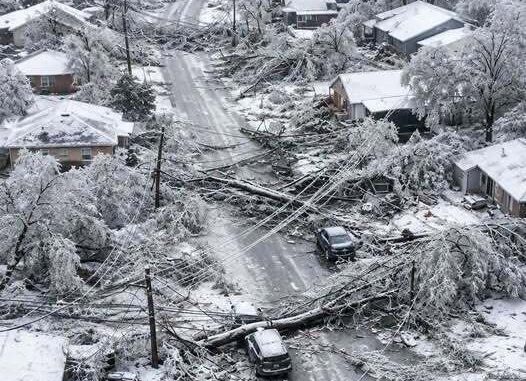
A powerful freezing-rain event can transform an ordinary winter night into a dangerous situation within hours. Roads become slick, tree branches accumulate heavy layers of ice, and power lines can struggle beneath the added weight.
As temperatures fall, communities affected by freezing rain may face a combination of travel problems, power outages, and hazardous conditions around homes and businesses.
Ice Builds Quickly
Freezing rain occurs when liquid raindrops fall onto surfaces that are below freezing. The water immediately freezes, creating a layer of ice on roads, sidewalks, vehicles, trees, and utility equipment.
Even a relatively thin coating can make driving and walking difficult. As more ice accumulates, branches can become heavy enough to break, potentially damaging vehicles, buildings, and power lines.
The effects can become more noticeable after dark, when visibility is reduced and icy surfaces are harder to recognize.
Power Outages Become a Concern
One of the biggest challenges during a major ice storm is the possibility of widespread power interruptions.
Ice accumulation can place significant weight on electrical infrastructure. Falling branches may also damage lines and equipment, leaving some households without electricity until repair crews can safely reach affected areas.
For families experiencing an outage, keeping warm becomes an immediate priority. People may rely on blankets, appropriate clothing, flashlights, battery-powered devices, and other emergency supplies while waiting for electricity to return.
Anyone using a generator should operate it outdoors and away from windows, doors, and ventilation openings because of the risk of carbon monoxide poisoning.
Travel Conditions Can Deteriorate Quickly
Freezing rain can make roads extremely hazardous, particularly on bridges, overpasses, hills, and untreated secondary roads.
Emergency crews may have difficulty reaching locations where trees or power lines have fallen. Drivers who must travel should check local road conditions and weather warnings before leaving and avoid unnecessary trips when authorities advise against travel.
Pedestrians also face risks because sidewalks, steps, and parking areas can become coated with nearly invisible ice.
Communities Often Help One Another
Severe winter weather can also bring out a strong sense of community.
Neighbors may check on older residents, people living alone, and those who require additional assistance. Local organizations and emergency services can provide information and support, while utility crews work to restore damaged infrastructure.
Simple acts such as sharing supplies, helping clear safe walkways, or checking whether a neighbor has heat can become particularly important during prolonged outages.
Preparing for Future Winter Storms
Weather emergencies are easier to manage when households prepare before conditions deteriorate.
A basic emergency kit can include flashlights, extra batteries, portable chargers, blankets, bottled water, nonperishable food, necessary medications, and a battery-powered radio. Keeping vehicles fueled and knowing how to receive local emergency alerts can also help.
Residents in areas that regularly experience freezing rain may want to prepare for the possibility of being without electricity for an extended period.
Waiting for Safer Conditions
Freezing rain can create a landscape that looks beautiful while hiding serious hazards underneath. Trees covered in ice may appear striking, but unstable branches and damaged power lines can create dangerous conditions.
The safest approach is to remain indoors when travel is unnecessary, stay away from downed power lines, and follow instructions from local authorities and emergency services.
Once temperatures rise and the ice begins to melt, cleanup and repairs can begin. Until then, patience and preparation remain essential as communities wait for safer conditions.
Leave a Reply