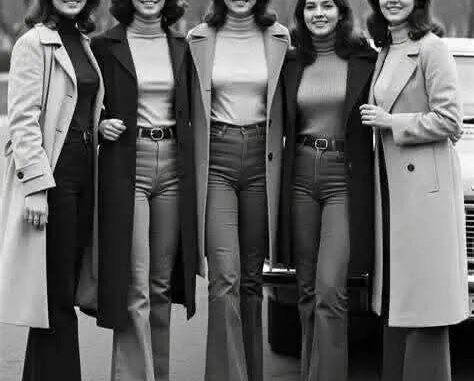
A photograph of girls from the 1970s might first catch your eye because of a hairstyle, a patterned shirt, or the colors of the image itself. Look a little longer, and other questions appear. Where were they going? Who held the camera? Was this a special occasion or an ordinary afternoon that someone happened to record?
Without the people in the picture to answer, we cannot know their full story. We can, however, use the details around them to think about how everyday life has changed. Clothing, familiar objects, and even the way people posed offer glimpses of a decade that was as varied and complicated as our own.
Fashion Was Personal
There was no single look that every girl in the 1970s wore. Styles varied by age, location, family budget, and personal taste. Some favored practical trousers and simple tops. Others enjoyed bold patterns, flared silhouettes, or accessories that reflected the music and trends around them.
Hair could be just as expressive. Longer styles, layers, and natural texture all appeared in photographs from the era. A person might carefully prepare for a picture, while someone else was caught laughing with windblown hair. Those small differences can make an old image feel more personal than a list of fashion trends ever could.
We may recognize certain outfits as distinctly 1970s today. For the people wearing them, they were simply clothes chosen for school, a family visit, a party, or a day with friends. What now looks like a period detail was once part of an ordinary morning.
A Camera Meant Something Different
Most casual photography during the decade used film. A roll offered a limited number of exposures, and the photographer could not check the result immediately. After the pictures were taken, someone had to have the film developed before seeing whether anyone had blinked or moved.
That process shaped the photographs families kept. A birthday or afternoon outing might leave behind only a handful of images. Prints went into albums, envelopes, or frames. Years later, someone could rediscover a picture while looking through a drawer and remember the people who had gathered that day.
Digital photography gives us wonderful advantages. We can take many pictures, share them quickly, and preserve copies. Yet a small set of old prints has its own power. Each image may be one of the few surviving views of a particular moment, including people or places that have changed.
The World Beyond the Frame
A vintage photograph can also remind us of things that do not appear in it. The girls in the picture did not have smartphones or social media accounts. Making plans with friends required different habits: arranging a meeting in advance, speaking on a household telephone, or finding someone when everyone was already in the same place.
Entertainment was available, but choices and access differed from today’s. Radio, records, television, books, cinemas, sports, and neighborhood gatherings all played roles in young people’s lives. Someone might listen to an album repeatedly because it was what they owned, or wait for a favorite program to air.
None of this means every day was quiet or that everyone spent more time outdoors. Families had different rules and resources, and the places where young people lived shaped what they could do. Still, the absence of portable screens changed the practical ways people arranged their time and stayed in touch.
Ordinary Places Become Historical Clues
Look beyond the people in an old photograph and you may find details they barely noticed. A car parked behind them might help date the scene. A living room might show wallpaper, a stereo, or furniture that was common in that household. The shape of a lamp or the design of a pair of shoes can tell us something about what was available and fashionable.
Such clues are interesting, but they have limits. One family photograph cannot represent an entire decade. A carefully posed holiday image may show a cheerful moment without revealing what happened before or after it. The viewer’s job is to stay curious without pretending that a single frame explains everyone’s experience.
This matters especially when nostalgia takes over. Warm colors and smiling faces can make the past appear uncomplicated. The 1970s also included economic pressures, inequality, and social conflicts. The people in old photos had responsibilities and worries alongside their celebrations. Their lives deserve more than a romantic filter.
Why These Pictures Still Matter
Many vintage photographs become valuable because they preserve what seemed too ordinary to describe. A group of friends on a front step, a family near its car, or children at a neighborhood gathering may not have felt historic at the time. Decades later, these scenes show how people dressed, met, and made room for one another in daily life.
They can also spark conversation across generations. Someone who remembers the era may identify a familiar style or explain why a particular place mattered. A younger viewer may ask about an object they have never used. The photograph becomes a starting point for stories that would otherwise be easy to lose.
Our own pictures may one day inspire the same questions. Future viewers could wonder about our phones, clothing, homes, and favorite ways to spend an afternoon. What feels unremarkable now will eventually carry the signs of its time.
So what do you notice first in a photograph from the 1970s? It might be the hair, the clothes, or the expressions. The most interesting detail may be the one that prompts you to ask a question. A picture cannot tell the whole story, but it can invite us to listen for it.
Leave a Reply