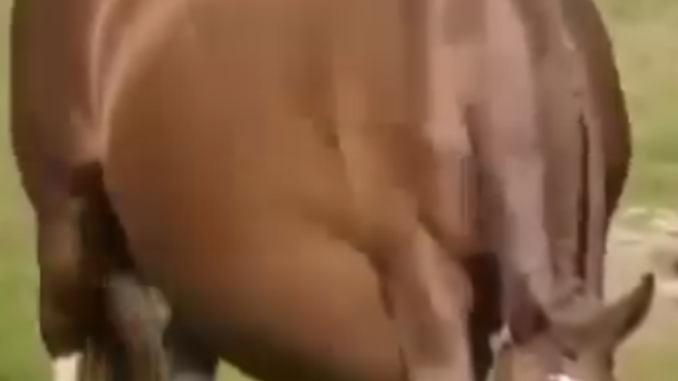
Pregnancy in horses is a long and carefully monitored process. A mare typically carries a foal for around 11 months, giving owners and veterinarians many opportunities to monitor development and prepare for delivery.
Most equine pregnancies progress normally, but complications can sometimes develop during pregnancy or labor. When something appears unusual, recognizing the warning signs and contacting a veterinarian promptly can be extremely important.
An unexpected case involving a pregnant mare can also demonstrate how modern veterinary tools, careful observation, and communication between owners and professionals work together to protect animal welfare.
Understanding Pregnancy in Horses
A healthy pregnancy requires changes throughout the mare’s body as the fetus develops. Nutrition, general health, reproductive history, environment, and veterinary care can all influence the pregnancy.
As the expected delivery period approaches, owners often pay closer attention to changes in behavior and physical condition. Restlessness, changes in appetite, discomfort, abnormal discharge, or other unusual signs may require professional evaluation.
It is important to remember that not every behavioral change indicates an emergency. However, significant or unusual changes in a pregnant mare should not simply be ignored.
When Labor Does Not Progress Normally
Difficult labor in horses is known as dystocia. It can occur for several reasons, including problems with the position or presentation of the foal.
Because a foal and mare can both be at risk during a difficult delivery, dystocia is considered a veterinary emergency. Early recognition can provide the veterinarian with more options for intervention.
In a reported rural case, an owner became concerned after a pregnant mare showed signs of discomfort but did not progress normally toward delivery. Instead of waiting to see whether the situation would resolve on its own, the owner contacted a veterinarian.
That decision allowed the mare to be examined and the unusual situation investigated.
The Importance of Veterinary Examination
A veterinarian evaluating a pregnant mare may begin with a physical examination and a review of the animal’s reproductive history.
Depending on the circumstances, additional diagnostic procedures may be recommended. Ultrasound is one of the most useful tools in equine reproductive medicine because it allows veterinarians to examine reproductive structures and monitor pregnancy without invasive surgery.
The images can provide information about the fetus, uterus, and placenta and may help identify abnormalities that cannot be detected through observation alone.
However, ultrasound findings must be interpreted by a trained professional. An unusual image does not automatically identify a specific condition, and additional examination may be necessary before a diagnosis can be made.
An Unexpected Finding
In the case described, veterinary examination revealed an unusual structure within the reproductive tract rather than the expected findings associated with a straightforward delivery.
Such a discovery can create considerable uncertainty for both the veterinarian and the owner.
An abnormal structure or mass can have different possible explanations, and determining its nature requires careful assessment. Possible reproductive complications in horses can involve fetal abnormalities, pregnancy loss, placental disorders, or other conditions.
Rather than immediately assuming what the finding represented, the veterinary team approached the situation systematically.
This type of caution is important because treatment depends on the actual underlying problem.
Why Diagnostic Imaging Matters
Modern diagnostic imaging has changed the way veterinarians approach complicated pregnancies.
Ultrasound is particularly valuable in equine practice because it can provide real-time images and can be performed without exposing the animal to ionizing radiation.
Veterinarians may use ultrasound at different stages of pregnancy to monitor fetal development and reproductive structures. It can also help identify changes that require closer observation.
Other imaging technologies, including radiography, CT, and MRI, have important roles in veterinary medicine as well, although their suitability depends on the animal, the suspected condition, and the clinical circumstances.
The technology itself is only part of the process. Proper interpretation requires veterinary training and experience.
The Importance of the Owner’s Observations
Veterinarians cannot observe an animal every hour of every day. That makes the owner’s observations particularly valuable.
People who regularly care for a mare are often familiar with her normal behavior, eating patterns, movement, and daily routine. A noticeable change may therefore be an important clue.
Owners can help veterinarians by recording changes in behavior, appetite, physical appearance, and other observations.
Keeping accurate breeding and veterinary records can also make it easier for professionals to understand the animal’s history.
Why Prompt Veterinary Attention Matters
When a pregnant mare appears to be experiencing significant discomfort or an abnormal delivery, waiting too long can potentially complicate the situation.
A veterinarian can determine whether the behavior represents a normal stage of pregnancy or whether further investigation is necessary.
Owners should not attempt to diagnose reproductive complications themselves. In particular, attempts to manually intervene in a difficult birth without professional guidance can put both the mare and foal at risk.
Veterinary emergencies involving pregnancy require appropriate professional assessment.
Care After Veterinary Treatment
Once a mare has received treatment or undergone a veterinary procedure, recovery may require continued observation.
Depending on the situation, aftercare can include monitoring appetite, behavior, temperature, discharge, movement, and other signs identified by the veterinarian.
Pain management, medication, nutrition, and activity restrictions may also form part of the recovery plan.
The exact requirements depend on the condition and treatment, so owners should follow the veterinarian’s individual instructions rather than relying on general advice.
The Role of Nutrition and Preventive Care
Pregnancy management begins long before labor.
Good nutrition helps support the mare’s health during pregnancy, although dietary requirements can change as pregnancy progresses. A veterinarian or equine nutrition professional can help determine whether adjustments are necessary.
Routine veterinary care can also help identify health issues before they become more serious.
Preventive care may include reproductive examinations, vaccination according to veterinary recommendations, parasite management, dental care, and appropriate monitoring throughout pregnancy.
Rural Communities and Animal Care
In rural areas, horses are often an important part of daily life. Owners may develop strong relationships with their animals and become highly familiar with their individual habits.
When an unusual veterinary situation occurs, community knowledge and support can also be valuable. Neighbors may help with transportation, communication, or practical assistance while professional veterinary care is being arranged.
However, community experience should complement—not replace—veterinary expertise.
A story passed from one horse owner to another may not apply to every animal or every pregnancy. Professional assessment remains important when a serious health problem is suspected.
Lessons From Unexpected Pregnancy Complications
An unusual pregnancy can remind horse owners of several important principles.
First, regular observation matters. Changes that seem minor can sometimes provide useful information to a veterinarian.
Second, preparation is valuable. Owners of pregnant mares should know which veterinarian to contact if a problem develops and should have a plan for obtaining emergency care.
Third, diagnostic technology can provide information that is impossible to obtain from external observation alone.
Finally, every case is different. A complication in one mare does not necessarily mean another horse will experience the same problem.
A Partnership Between Owners and Veterinarians
Successful equine healthcare depends on cooperation.
Owners provide daily care and observations, while veterinarians provide clinical knowledge, diagnostic skills, and treatment options.
Clear communication between the two can make it easier to identify problems and respond appropriately.
For pregnant mares, that partnership becomes particularly important as delivery approaches. Knowing what is normal for the individual animal and recognizing when something appears different can help owners seek assistance at the right time.
Looking Ahead
Advances in veterinary medicine continue to improve reproductive care for horses. Better imaging, improved monitoring techniques, reproductive research, and greater understanding of equine health all contribute to more informed care.
At the same time, technology cannot replace attentive ownership. Observing an animal closely, maintaining veterinary records, providing appropriate nutrition, and seeking professional assistance when something appears wrong remain fundamental parts of responsible horse care.
Final Thoughts
Pregnancy is a major physiological process for a mare, and while many deliveries occur without serious complications, unexpected problems can arise.
A mare that appears uncomfortable, fails to progress normally through labor, or develops another concerning change should be evaluated by a qualified veterinarian.
Cases involving unusual findings also demonstrate why modern diagnostic tools such as ultrasound are valuable. They give veterinarians a clearer view of what may be happening internally and can help guide decisions about treatment.
Ultimately, the combination of attentive owners, skilled veterinary professionals, appropriate diagnostic technology, and timely intervention provides the strongest foundation for protecting the health and welfare of pregnant mares and their foals.
Leave a Reply