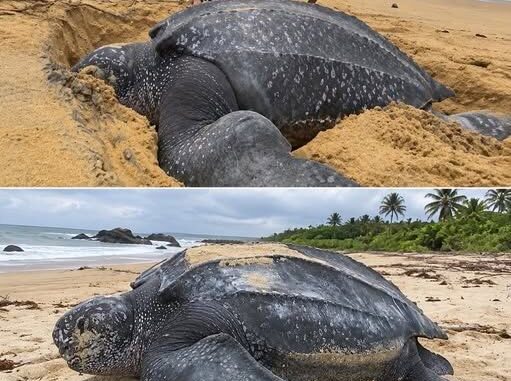
Under the quiet moonlight of Sanibel Island, Florida, an extraordinary visitor has returned: a leatherback sea turtle, the largest living turtle on Earth, coming ashore to nest once again.
Her return is more than a remarkable wildlife sighting. It is a glimpse into an ancient natural cycle—one that has continued for millions of years and now depends, in part, on how carefully humans protect the beaches these turtles need.
An Ancient Journey Begins on the Sand
As the leatherback makes her way across the beach, every movement serves a purpose. She climbs beyond the waves, searches for a suitable place, and carefully prepares a nest in the sand.
When the eggs are laid and covered, she returns to the ocean. The beach appears quiet again, but beneath the surface, a new generation is developing out of sight.
The fate of those hatchlings depends on a delicate combination of conditions, including temperature, tides, and the safety of the nesting area.
Small Disturbances Can Have a Lasting Impact
For nesting sea turtles, a beach can be a vulnerable place. Artificial lights may disorient hatchlings, while vehicles and careless foot traffic can disturb nesting areas or damage nests.
That is why protecting a nesting beach often comes down to simple choices: keeping lights low, staying away from marked nests, avoiding driving on the sand, and observing wildlife from a respectful distance.
These small actions can help reduce disruption during one of nature’s most important stages of life.
Giving Wildlife Room to Thrive
The leatherback’s return to Sanibel Island offers a powerful reminder that protecting wildlife does not always require dramatic gestures.
Sometimes, it means giving an animal space to complete its journey without interference. It means respecting the beach after the turtle has returned to the sea and remembering that what looks like an empty stretch of sand may be sheltering the next generation.
For millions of years, leatherback turtles have followed their own rhythms across the oceans and onto nesting beaches.
Keeping those places safe gives this ancient ritual a chance to continue—and allows future generations to witness the wonder of a giant sea turtle returning home.
Leave a Reply