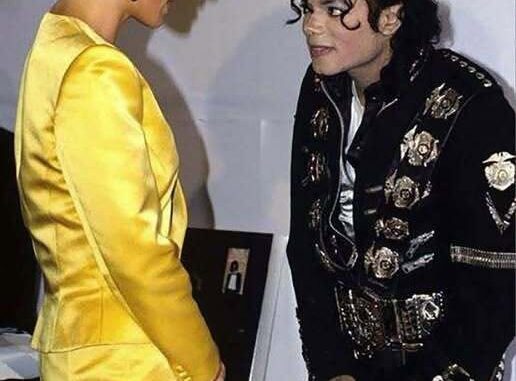
Princess Diana and Michael Jackson came from remarkably different worlds, yet their lives shared an unusual similarity: both experienced what it meant to live under extraordinary public attention.
Their connection became particularly memorable during Michael Jackson’s 1988 performances at Wembley Stadium in London. Jackson’s Bad World Tour brought him to the famous stadium, where his concerts became some of the most remembered performances of his career. His official website records a Wembley concert on July 16, 1988.
For fans of both Diana and Jackson, their encounter has remained an intriguing part of pop-culture history.
A Meeting at Wembley
By 1988, both figures were already internationally famous.
Diana, then the Princess of Wales, had become one of the most recognizable members of the British royal family. Her public appearances attracted enormous attention, and her style, charitable work, and personal life were followed around the world. The Royal Family’s official biography describes the extensive public role she undertook after joining the royal family.
Michael Jackson, meanwhile, was at the height of his career.
His album Bad had been released in 1987, following the enormous success of Thriller, and his Bad World Tour was taking him to major venues around the world. The Wembley concerts became an important part of that tour, with Jackson performing for huge audiences in London.
Against that backdrop, the meeting between the two celebrities naturally attracted attention.
Two Very Different Lives
On the surface, Diana and Jackson could hardly have appeared more different.
Diana belonged to the British royal family and had a highly visible constitutional and charitable role. Jackson was a global recording artist whose performances had transformed popular music and entertainment.
Yet both understood the unusual experience of being constantly watched.
A public appearance could generate photographs, newspaper stories, television coverage, and international discussion. Even seemingly ordinary moments could become subjects of public fascination.
That shared experience of fame is one reason their meeting continues to interest people decades later.
Michael Jackson’s Wembley Era
Jackson’s 1988 Wembley performances took place during one of the defining periods of his career.
The Bad album had produced major hits including “Bad,” “The Way You Make Me Feel,” “Man in the Mirror,” and “Smooth Criminal.” The album and accompanying tour reinforced Jackson’s position as one of the biggest performers in popular music.
His Wembley performance was later released officially as Michael Jackson Live at Wembley July 16, 1988. The concert remains part of the documented history of the Bad era.
For London audiences, seeing Jackson perform at Wembley was a major entertainment event.
For fans looking back today, however, the photographs and memories surrounding those concerts offer something more than a record of a performance.
They also provide a glimpse into the world of celebrity culture during the late 1980s.
Why Their Connection Remains Interesting
The fascination surrounding Diana and Jackson is not necessarily about a dramatic event.
Sometimes, the most memorable celebrity encounters are interesting precisely because they bring together two people who normally occupied completely different spaces.
Diana represented the British royal family.
Jackson represented the world of international pop music.
When those worlds briefly crossed, it created a moment that fans could remember and discuss long afterward.
Their meeting also reflects how much the nature of fame has changed.
Today, celebrities can communicate directly with audiences through social media, while photographs and videos can spread around the world within seconds. In the 1980s, television, newspapers, magazines, and professional photographers played a much larger role in shaping how the public saw famous people.
A Shared Experience of Public Attention
Although their careers were very different, both Diana and Jackson experienced intense media interest.
Diana’s public role involved official engagements, charitable causes, and international travel. The Royal Family records numerous overseas tours and public duties she undertook during the 1980s and 1990s.
Jackson’s career required him to perform before enormous audiences while also dealing with constant attention from the entertainment press.
Their lives therefore illustrate two very different forms of international fame.
One came through royal duties and public service.
The other came through music and entertainment.
Yet both became figures whose images were instantly recognizable around the world.
More Than a Photograph
Images from moments involving famous people can sometimes become more powerful than the original event.
Years later, viewers may look at a photograph and wonder what the people were discussing, what happened immediately before the picture was taken, or what they thought about the encounter afterward.
Those questions can make a simple historical photograph feel much more significant.
But it is also important to distinguish between what is documented and what is speculation.
A photograph can show that two famous people were together. It cannot necessarily reveal their private thoughts, the complete nature of their relationship, or everything that happened outside the frame.
That distinction becomes particularly important with historical celebrity stories, where memories and retellings can sometimes become mixed with later interpretations.
A Moment From a Remarkable Era
The late 1980s produced some of the most recognizable cultural figures of the modern era, and Diana and Michael Jackson were certainly among them.
Their Wembley connection brought together royalty and pop music in a way that naturally captured public attention.
Jackson continued his enormously successful musical career, while Diana remained a globally recognized public figure whose charitable work became an important part of her legacy.
Although their worlds were different, their brief connection remains an interesting snapshot of a period when two extraordinary public figures happened to cross paths.
Ultimately, the fascination comes from the people themselves and the unusual circumstances surrounding their meeting.
It was not necessary for the moment to contain a dramatic secret.
Sometimes, history remembers a photograph simply because of who was standing together when it was taken.
Leave a Reply