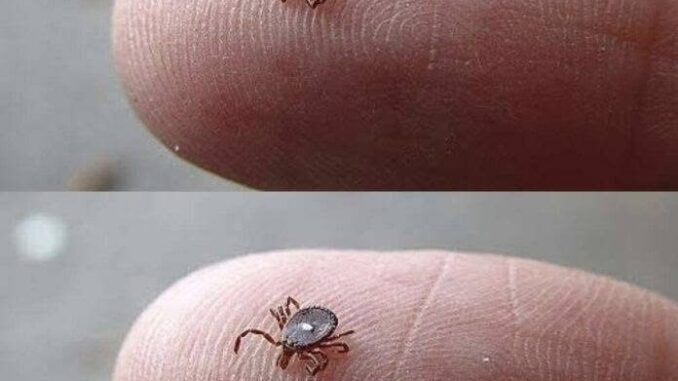
A family walk through a wooded or grassy area can quickly become stressful when a parent discovers a tick attached to a child’s skin. Ticks are small and can be difficult to identify, especially when they are found before anyone has noticed them.
One tick that often catches people’s attention is the Lone Star tick, particularly the adult female, which has a distinctive white or silvery spot on its back.
Recognizing a tick can be helpful, but the most important step after finding one is knowing how to remove it safely and what symptoms to watch for afterward.
What Is the Lone Star Tick?
The Lone Star tick is a species found primarily in parts of the United States. The adult female is recognizable by a light-colored spot near the center of her back.
Not every tick with a light marking is necessarily a Lone Star tick, however. Identification can be difficult without a clear photograph or an expert examination.
Ticks can also vary in appearance depending on their age and stage of development. Young ticks, known as nymphs, can be particularly difficult to spot because of their small size.
Why Does the Lone Star Tick Get So Much Attention?
The Lone Star tick is important because its bite has been associated with several health conditions.
One of the most widely discussed is alpha-gal syndrome, a type of allergy that can develop after a tick bite. Alpha-gal is a sugar molecule found in most mammals but not in humans.
People who develop alpha-gal syndrome can experience allergic reactions after consuming certain mammalian products, including foods containing beef, pork, or lamb. Reactions can sometimes occur several hours after eating, which can make the connection difficult to recognize.
Possible symptoms include hives, stomach discomfort, swelling, vomiting, diarrhea, or breathing difficulties. Severe allergic reactions require immediate emergency medical attention.
Importantly, not everyone bitten by a Lone Star tick develops alpha-gal syndrome, and a tick bite does not automatically mean that a person will develop an allergy.
What Should You Do When You Find a Tick?
If a tick is attached to a child’s skin, removing it promptly and carefully is generally recommended.
The Centers for Disease Control and Prevention recommends using fine-tipped tweezers to grasp the tick as close to the skin’s surface as possible. Pull upward with steady, even pressure.
Avoid twisting, crushing, or squeezing the tick during removal.
After the tick has been removed, clean the bite area and your hands with soap and water, rubbing alcohol, or an appropriate antiseptic.
If you are unsure whether the entire tick was removed, or if the tick is difficult to remove, contacting a healthcare professional can provide additional guidance.
Don’t Panic After a Tick Bite
Finding a tick on a child can understandably cause concern, but most tick bites do not result in a serious illness.
The important thing is to pay attention to the child’s health afterward. Parents should watch for symptoms such as fever, unusual tiredness, rash, headaches, or other changes in how the child feels.
If symptoms develop, tell the healthcare professional about the tick exposure. The timing of the bite and the location where it occurred can also be useful information.
An allergic reaction is a different concern. If a child develops difficulty breathing, swelling of the face or throat, fainting, or other signs of a severe allergic reaction, seek emergency medical care immediately.
How Can Families Reduce Tick Exposure?
Preventing tick bites is easier than dealing with one afterward.
When spending time outdoors in areas where ticks may be present, children can wear long sleeves, long pants, and closed shoes. Clothing can also be treated with appropriate insect-repellent products when suitable for children and used according to the label instructions.
After returning indoors, parents should check children for ticks, paying particular attention to areas such as:
- Behind the ears
- Around the hairline
- Under the arms
- Around the waist
- Behind the knees
- Between the legs
- Around the ankles
Ticks can attach to many parts of the body, so a complete check is better than looking in only one or two places.
Checking outdoor clothing and pets can also help reduce the chance of bringing ticks into the home.
The Takeaway
A small tick with a white spot may look unusual, but finding one does not mean that a child will automatically become sick.
The Lone Star tick is recognizable because adult females commonly have a distinctive white or silvery marking. Its bite has been associated with alpha-gal syndrome, but this condition does not develop after every bite.
The best response is straightforward: remove an attached tick carefully, clean the area, monitor the child for symptoms, and contact a healthcare professional if concerns arise.
With a few simple precautions and regular tick checks after outdoor activities, families can continue enjoying time outside while reducing the risk of tick bites.
Leave a Reply