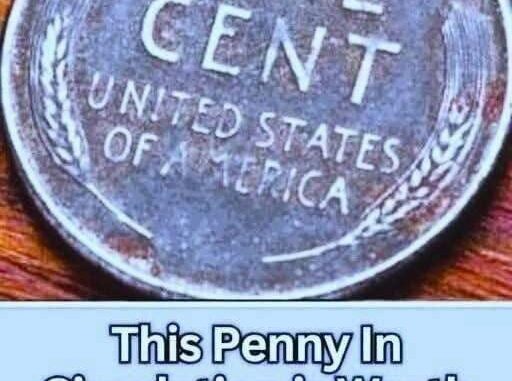
A penny that looks ordinary at first glance could turn out to be one of the most interesting coins in American collecting history. If you happen to come across a 1943 Lincoln wheat penny, it may be worth taking a closer look.
The year 1943 is especially interesting because the United States was in the middle of World War II, and the country needed copper for military equipment and other essential materials. As a result, the U.S. Mint changed the composition of Lincoln cents that year, producing most 1943 pennies from zinc-coated steel rather than the traditional copper-based metal.
But something unusual happened during the transition.
Why 1943 Copper Pennies Are So Rare
A small number of copper planchets, or blank pieces of metal used to make coins, are believed to have remained in the presses when production switched to steel. Some of these copper blanks were accidentally struck with the 1943 design.
That mistake created one of the most famous rarities in American coin collecting: the 1943 bronze or copper cent.
Unlike the millions of ordinary 1943 steel cents, genuine examples are extremely scarce. Because of that rarity, collectors and professional numismatists have paid significant amounts for authenticated examples.
Some auction results for genuine 1943 copper cents have reached tens of thousands of dollars, with particularly important examples selling for considerably more. However, the exact value depends on factors such as authenticity, condition, mint mark, provenance, and the coin’s overall quality.
Could One Still Be Sitting in an Old Coin Jar?
That’s part of what makes these coins so fascinating.
Old wheat pennies can remain in collections, jars, drawers, boxes, or inherited coin accumulations for decades. Someone may have received an unusual-looking penny many years ago without realizing that it deserved closer examination.
However, finding a 1943 penny does not automatically mean you’ve found a valuable rarity.
Most 1943 cents are steel and are relatively common compared with the rare copper examples. The challenge is determining whether a particular coin is actually made from the unusual copper or bronze composition.
A Simple First Check
One commonly mentioned first step is the magnet test.
A normal 1943 steel cent is attracted to a magnet because of its steel composition. A genuine copper example should not be attracted in the same way.
But a magnet test is only a preliminary check. It cannot prove that a coin is genuine because altered, plated, or counterfeit coins can create misleading results.
The date, mint mark, color, weight, surface characteristics, and composition all need to be considered.
A genuine 1943 copper cent should also have the appropriate weight for its composition. Because valuable examples can be counterfeited or created by altering ordinary coins, professional authentication is extremely important before assuming that a penny is worth a large amount of money.
Be Careful With Online Claims
The popularity of rare coins has created plenty of exaggerated stories online. Headlines sometimes suggest that anyone who finds a particular penny is guaranteed to receive tens of thousands of dollars.
The reality is more complicated.
Rare-coin values are determined by the actual market for genuine examples. Condition, authenticity, rarity, demand, and professional grading can all affect the final value.
If you believe you have discovered a genuine 1943 copper cent, avoid cleaning or polishing it. Altering the surface can reduce a coin’s collector appeal and may make professional evaluation more difficult.
Instead, keep the coin in a safe holder and consider having it examined by a reputable coin dealer or professional grading service.
A Small Coin With a Remarkable History
The story of the 1943 copper cent is one reason coin collecting remains so popular. It connects an everyday object with an important period in American history.
Most pennies found in an old jar will simply be ordinary coins. But every once in a while, an unusual date, mint mark, or composition can make a coin worth a second look.
So if you have a collection of old wheat pennies sitting in a drawer, there is no harm in taking some time to examine them. Just remember that a 1943 date alone isn’t enough to make a penny valuable.
The real discovery is determining what the coin is actually made of—and whether it can be authenticated as one of the rare 1943 copper cents that collectors have searched for for generations.
Leave a Reply