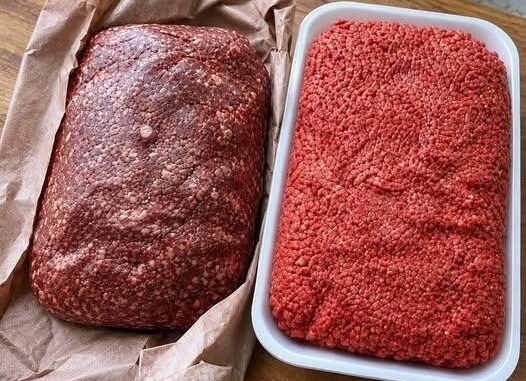
A brightly colored steak can look incredibly fresh under supermarket lighting, but color alone doesn’t tell you whether beef is safe to eat.
The appearance of fresh beef is influenced by several factors, including oxygen exposure, packaging, lighting, and the natural chemistry of the meat. Understanding those differences can help shoppers make safer and more informed choices.
Why Beef Changes Color
Beef gets much of its characteristic color from a protein called myoglobin.
When meat is exposed to oxygen, myoglobin can create the familiar bright red appearance many shoppers associate with freshness. Beef stored in vacuum packaging, meanwhile, can have a darker or purplish appearance because it has had less exposure to oxygen.
Once the package is opened and the meat is exposed to air, its color can change.
Neither a bright red color nor a purplish appearance, by itself, proves that meat is safe or unsafe.
That’s why shoppers should consider more than appearance when selecting beef.
Don’t Judge Meat by Color Alone
Supermarket lighting can make certain cuts appear especially vibrant.
Packaging can also affect how the meat looks through the plastic.
Instead of choosing a package simply because it has the brightest color, check the condition of the packaging and make sure the meat has been properly refrigerated.
Avoid packages that are leaking or have damaged seals. Swollen or unusually compromised packaging can also be a reason to choose another package or ask a store employee for assistance.
Check the Package Information
Date labels can provide useful information, but consumers should understand that different types of dates can have different meanings.
A package date shouldn’t be treated as the only indication of food safety.
Follow the storage instructions provided on the package and pay attention to how the product has been handled.
When shopping, refrigerated meat should remain properly chilled. If you’re buying several items, consider picking up perishable foods toward the end of your trip so they spend less time outside refrigeration.
Get Beef Home Promptly
Food safety doesn’t end at the checkout counter.
Once you get home, refrigerate perishable meat promptly. Your refrigerator should be maintained at 40°F (4°C) or below.
Raw beef should also be stored in a way that prevents its juices from coming into contact with foods that will be eaten without cooking.
A sealed container or leak-proof package can help reduce the risk of cross-contamination.
Spoilage Isn’t Always Obvious
Some spoiled meat may develop an unpleasant odor, unusual texture, or other noticeable changes.
However, potentially harmful bacteria don’t necessarily change the smell, appearance, or taste of food.
That means you should never taste raw or questionable meat to determine whether it is safe.
When in doubt about a product that has been improperly stored or appears compromised, the safest choice is generally to avoid eating it.
Use a Food Thermometer
One of the most reliable ways to check whether beef has reached a safe cooking temperature is to use a food thermometer.
For whole cuts of beef, such as steaks and roasts, the USDA recommends a minimum internal temperature of 145°F (63°C) followed by a three-minute rest.
Ground beef should reach 160°F (71°C).
A thermometer is more dependable than judging doneness by color because the inside of cooked meat can remain pink even when it has reached a safe temperature.
Keep Raw Meat Separate
Cross-contamination is another important consideration when preparing beef.
Use separate cutting boards and utensils for raw meat and foods that are ready to eat, or wash them thoroughly with hot, soapy water between uses.
Wash your hands after handling raw beef, and be careful not to touch refrigerator handles, phones, or other household surfaces with contaminated hands.
These simple steps can significantly reduce the chance of spreading bacteria around the kitchen.
The Bottom Line
That eye-catching red color in the meat case isn’t a guarantee of freshness, and a darker appearance doesn’t automatically mean beef is spoiled.
The color of beef can change naturally depending on oxygen exposure and packaging.
Instead of relying on appearance alone, check the package condition, follow storage instructions, keep meat properly refrigerated, prevent cross-contamination, and cook it to the recommended internal temperature.
The safest approach is simple: look beyond the color and focus on proper food handling from the supermarket all the way to the dinner table.
Leave a Reply