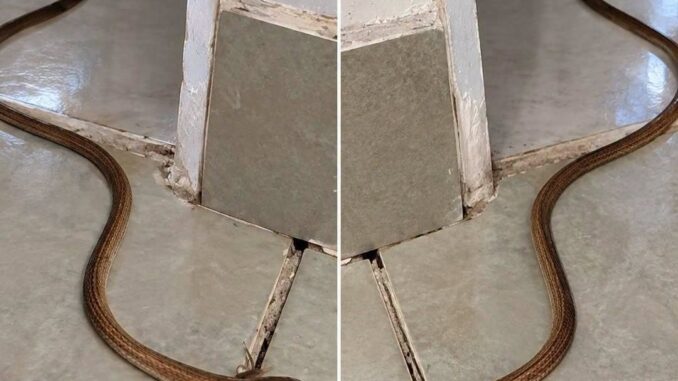
Finding a snake inside your home can be an unsettling experience. Whether you notice one moving across the floor, hiding behind furniture, or disappearing into a small opening, it’s natural to wonder how it got inside and why it chose your home.
While an unexpected snake can certainly be surprising, its presence usually has a simple explanation.
In many cases, a snake may enter a building while looking for shelter, food, or a suitable place to move through its surroundings.
How Could a Snake Get Inside?
Snakes are remarkably capable of moving through small spaces.
A gap beneath an exterior door, an opening around plumbing, cracks near foundations, vents, or other small spaces can sometimes provide access.
A home may appear completely sealed from the outside, yet small openings can develop over time.
In one fictional example, a family repeatedly noticed a long brown snake moving along the edges of their tiled floor. Whenever someone approached, it disappeared behind a cabinet.
At first, they assumed it had simply entered through an open door.
After seeing it more than once, however, they decided to inspect the house carefully.
They discovered several small openings around pipes and beneath exterior doors. These gaps were large enough to provide potential access for small animals.
That discovery helped explain how the snake might have entered.
Why Would a Snake Stay Nearby?
Finding a snake indoors doesn’t necessarily mean that something unusual is happening.
Like other wild animals, snakes generally respond to their surroundings.
Depending on the species, they may search for food such as rodents, lizards, frogs, insects, or other small animals. They may also move toward areas that provide shelter from weather and other environmental conditions.
The family in this example eventually noticed signs of mice in a storage area.
That was an important clue.
If rodents are present around a property, a snake may have a reason to remain nearby because the area provides a potential food source.
This doesn’t mean every snake found near a house is there because of mice. Different species have different diets and behaviors.
However, reducing conditions that attract prey can make a property less appealing to wildlife.
What Should You Do If You Find a Snake?
The most important thing is to avoid approaching or attempting to handle an unfamiliar snake.
Many snakes are harmless, but identifying a species accurately can be difficult, especially when you’re seeing it briefly or from a distance.
Instead, keep a safe distance and move children and pets away from the area.
If possible, close doors leading to other parts of the home without getting close to the snake. Avoid cornering it or trying to catch it yourself.
A qualified local wildlife professional can provide appropriate assistance when a snake needs to be removed.
If you are able to do so safely, noting the snake’s general appearance and location can also help a professional determine what type of animal may be involved.
How Can You Reduce the Chance of Snakes Entering?
After the immediate situation has been handled, inspect your property for possible entry points.
Pay particular attention to:
- Gaps beneath exterior doors
- Openings around pipes and utility lines
- Cracks around foundations
- Damaged screens or vents
- Spaces around garages and sheds
- Areas where walls or structures meet the ground
Sealing appropriate openings can help reduce access for snakes and other wildlife.
It’s also useful to address conditions that may attract small animals.
Keep food stored securely, avoid leaving pet food outside for long periods, and maintain storage areas so signs of rodents can be noticed quickly.
Keeping vegetation and outdoor areas reasonably maintained can also make it easier to identify potential hiding places around the property.
A Snake Doesn’t Necessarily Mean Something Is Wrong
Stories about snakes entering homes sometimes come with mysterious explanations or claims that their appearance predicts something unusual.
In reality, there is usually a much simpler explanation.
A snake may simply be following food, searching for shelter, or moving through an area that happens to provide easy access.
In the fictional example above, the mystery was eventually explained by two ordinary factors: accessible openings around the house and signs of rodents nearby.
Once the family addressed those issues and sought professional help with the snake, the unexpected visits stopped.
What the Experience Can Teach Us
An unexpected animal inside the home can be alarming, but it can also reveal something about the surrounding environment.
A snake may be a clue that there are openings around a building or that other wildlife is active nearby.
Rather than focusing on frightening explanations, it’s more useful to look at the practical reasons an animal may have entered.
With careful observation, appropriate precautions, and professional assistance when necessary, homeowners can address the situation safely and reduce the likelihood of another unexpected visitor.
The next time you hear that a snake has entered a home, remember: it may not be a mystery at all.
Sometimes, nature simply finds the easiest way in.
Leave a Reply