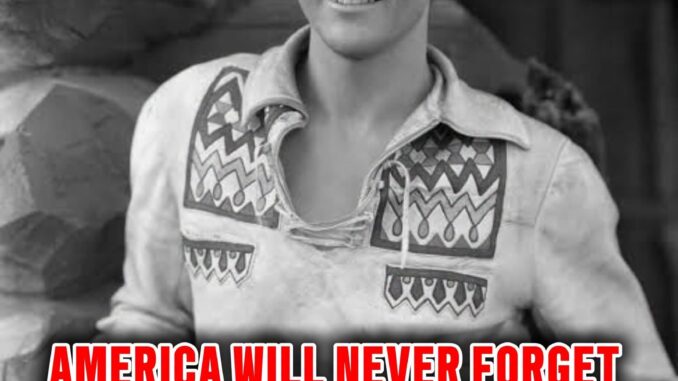
1. A LEGEND WHO WILL NEVER BE FORGOTTEN For generations of Americans, John Wayne was more than a movie star. He represented courage, determination, loyalty, and the spirit of the American West. With his unmistakable voice, confident walk, and iconic cowboy hat, he became one of the most recognizable faces in Hollywood history. Even decades after his passing, millions of fans continue to remember him as “The Duke,” a nickname that became synonymous with American western movies.See more…
2. HIS EARLY LIFE AND CHILDHOOD
John Wayne was born Marion Robert Morrison on May 26, 1907, in Winterset, Iowa. His parents were Clyde Leonard Morrison and Mary “Molly” Brown. When he was still a child, his family moved to California in search of better opportunities. Growing up, he developed an interest in sports, especially football, and became known for his determination and strong work ethic. Few people could have imagined that the young boy from Iowa would one day become one of the greatest stars in American cinema.
3. HOW HE GOT THE NAME “DUKE”
The nickname “Duke” came from a beloved family dog that Wayne often accompanied during his childhood. People began referring to the boy and his dog as “Big Duke” and “Little Duke.” Eventually, the nickname stayed with him throughout his life. Although the world would come to know him professionally as John Wayne, the name Duke became an inseparable part of his identity and the legend surrounding his career.
4. HIS DREAM OF BECOMING AN ATHLETE
Before Hollywood fame, Wayne attended the University of Southern California on a football scholarship. He hoped to build a future through sports and studied while playing football for the university. However, a body-surfing accident injured his shoulder and ended his football scholarship. This unexpected setback changed the direction of his life. Instead of pursuing a career in athletics, Wayne began finding work in the film industry, opening the door to a future that would make him internationally famous.
Wayne initially worked behind the scenes as a prop assistant and appeared in small film roles during the late 1920s. He developed professional connections with filmmakers, including director John Ford, who would become one of the most influential collaborators of his career. In 1930, Wayne received his first leading role in the western film The Big Trail. Although the movie was not a major commercial success at the time, it helped establish his screen identity and gave audiences an early glimpse of the star he would become.
6. THE MOVIE THAT CHANGED EVERYTHING
Wayne’s career reached a turning point in 1939 with the release of Stagecoach. Directed by John Ford, the film featured Wayne as the Ringo Kid, a young outlaw traveling through dangerous frontier territory. His performance attracted widespread attention and transformed him into a major Hollywood star. The film also helped establish the modern western as a powerful genre in American cinema. From that moment forward, Wayne’s name became closely associated with stories of the Old West, justice, bravery, and survival.
7. THE MAN WHO DEFINED THE WESTERN HERO
Throughout the 1940s and 1950s, Wayne appeared in numerous westerns that helped define his legendary screen persona. His characters were often strong, independent men who faced danger without backing down. Films such as Red River (1948), Rio Bravo (1959), and The Searchers (1956) demonstrated different sides of his acting abilities. While many viewers admired his tough exterior, his strongest performances also revealed complicated emotions, difficult decisions, and personal struggles beneath the familiar cowboy image.
8. HIS MOST MEMORABLE FILMS
Wayne starred in an extraordinary range of movies throughout his career. Among his best-known films were Fort Apache (1948), Sands of Iwo Jima (1949), The Quiet Man (1952), The Man Who Shot Liberty Valance (1962), and The Longest Day (1962). Each production introduced him to new audiences and strengthened his reputation as a dependable leading man. Whether playing a cowboy, a soldier, a sheriff, or a man struggling with his past, Wayne brought a recognizable presence to the screen.
9. HIS ROLE AS DAVY CROCKETT IN THE ALAMO
One of Wayne’s most ambitious projects was The Alamo, released in 1960. He produced, directed, and starred in the historical film, portraying the legendary frontiersman Davy Crockett. The movie told the story of the 1836 Battle of the Alamo in Texas and reflected Wayne’s long-standing interest in American history and patriotism. Making the film was an enormous undertaking, requiring substantial time, money, and effort. Although its reception was mixed, the project remains one of the most significant achievements of his career.
10. THE OSCAR THAT CAME LATER IN HIS CAREER
In 1969, at the age of 62, Wayne won his first and only competitive Academy Award for Best Actor for his performance in True Grit. He played Rooster Cogburn, a tough, one-eyed U.S. marshal hired to help a young girl track down her father’s killer. The role allowed Wayne to combine humor, toughness, and vulnerability in a memorable performance. For many fans, the Oscar was a fitting recognition of an actor whose career had already influenced generations of filmmakers and movie lovers.
11. HIS FAMILY AND LIFE AWAY FROM THE CAMERAS
Away from the movie sets, Wayne had a family life that was important to him. He married three times and became the father of seven children: Michael, Toni, Patrick, Melinda, Aissa, Ethan, and Marisa. His children grew up with a father whose public image was larger than life, but who also enjoyed spending time with family and friends. He particularly loved being on the water aboard his boat, the Wild Goose, where he could relax, fish, and escape the demands of Hollywood.
12. HIS MILITARY SUPPORT AND PATRIOTISM
Wayne was widely known for his outspoken patriotism and support for American military personnel. During World War II, he participated in United Service Organizations (USO) activities that entertained and supported troops. He later appeared in military films, including Sands of Iwo Jima and The Green Berets (1968). His political views were often controversial, but his screen portrayals of American servicemen became an enduring part of his public identity. For many admirers, he symbolized a particular era of American filmmaking and national pride.
13. HIS BATTLE WITH CANCER
In 1964, Wayne was diagnosed with lung cancer. Doctors removed his left lung and several ribs, but he returned to acting and continued working on demanding productions. Rather than keeping his diagnosis entirely private, he spoke publicly about his experience and encouraged people to take cancer seriously. His recovery became a major part of his personal story, and he participated in public-service efforts promoting cancer awareness. Years later, he developed stomach cancer, which ultimately claimed his life.
14. HIS FINAL FILM AND PASSING
Wayne’s final starring film was The Shootist, released in 1976. He portrayed J.B. Books, an aging gunfighter facing a terminal illness and hoping to spend his final days in peace. The film also featured Lauren Bacall, Ron Howard, and Jimmy Stewart. Its themes of aging, mortality, dignity, and facing the end of life gave the performance a particularly poignant quality. On June 11, 1979, John Wayne died at UCLA Medical Center in Los Angeles at the age of 72, leaving behind a remarkable cinematic legacy.
15. THE LEGACY OF JOHN WAYNE
John Wayne’s influence continued long after his death. In 1980, he was posthumously awarded the Presidential Medal of Freedom, one of the United States’ highest civilian honors, and his family received the Congressional Gold Medal. His children later established the John Wayne Cancer Foundation to continue supporting cancer research and related programs. Today, his films remain part of Hollywood’s history, and his name continues to evoke memories of classic westerns, unforgettable characters, and an era when movie stars became cultural legends. For millions of fans, “The Duke” will always remain a symbol of the golden age of American cinema.
IN LOVING MEMORY OF JOHN WAYNE (1907–1979)
His films entertained generations, his performances became legendary, and his name remains unforgettable. Though he left this world decades ago, the legacy of John Wayne lives on every time an old western plays on the screen.
Leave a Reply