Chapter 1: Three Empty Chairs
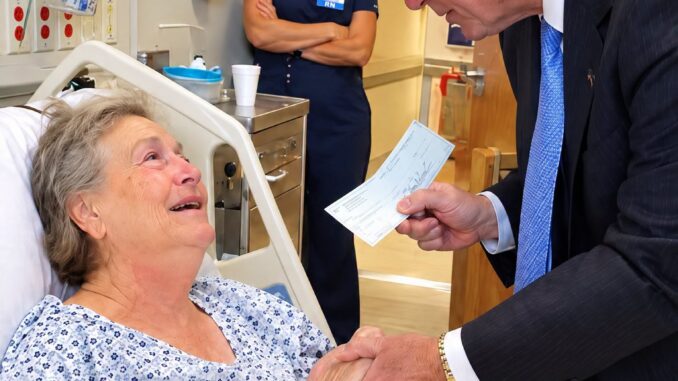
When I opened my eyes after heart surgery, the first thing I noticed was the ceiling above me. The second was the gloomy Seattle sky outside the hospital window. But what caught my attention most were the three chairs beside my bed.
Every one of them was empty.
I slowly turned my head. My body felt weak, my throat was painfully dry, and several medical tubes and wires were attached to me. A heart monitor beeped steadily beside the bed.
“Hello?” I managed to whisper.
A few moments later, a young nurse entered the room. Her name tag read Kayla. She checked my monitor and smiled kindly.
“You’re awake, Mrs. Davis. How are you feeling?”
“Could I have some water?” I asked.
She helped me drink through a straw.
“Where are my children?” I asked.
Her expression changed. She placed the cup on the bedside table and began adjusting my blanket.
“They were here during your operation,” she explained. “All three of them waited in the family lounge.”
“That’s good,” I replied. “Where are they now?”
She hesitated before answering.
“They left about an hour ago.”
I was confused.
“Did something happen? Did they have an emergency?”
Kayla looked uncomfortable.
“They mentioned that the parking charges were becoming expensive. They had already been here for several hours and decided to go home.”
For a moment, I thought I had misunderstood.
“The parking charges?”
She nodded.
Apparently, my children had decided that paying another parking fee was unnecessary because I would probably be sleeping when I woke up.
I was sixty-four years old. I had just undergone a major heart operation, and my doctors had warned me that recovery would take time.
Before the surgery, all three of my children had promised to stay.
David, my oldest, had assured me he would take the day off work.
Sarah had promised to bring my favorite yellow roses.
Michael had said he would arrive after finishing his morning appointments.
Yet, when the moment came, none of them stayed.
I turned toward the window, trying to hide my tears.
I had spent most of my adult life raising those children after their father, Frank, passed away. I worked for decades in the Seattle public school system, paying for their education, helping with their expenses, and supporting them through difficult times.
Now I was lying in a hospital bed, wondering how a small parking expense could become more important than being there for their mother.
Kayla gently offered me a tissue.
“Please try to stay calm, Mrs. Davis. You need plenty of rest.”
Before I could answer, I heard footsteps approaching.
A tall gentleman wearing a dark business suit appeared at the doorway. He had neatly trimmed gray hair, wire-rimmed glasses, and a leather briefcase.
“Excuse me,” he asked politely. “Is this Mrs. Adrienne Davis?”
I wiped my cheeks.
“Yes, that’s me.”
He stepped inside and looked at me with an expression I couldn’t quite understand.
“Mrs. Davis, I don’t believe you remember me. But you once did something for me that I have never forgotten.”
I stared at him, completely puzzled.
Then he smiled gently.
“You bought my lunch when I was a little boy.”
Chapter 2: A Kindness From the Past
The man introduced himself as Malcolm Chen.
He explained that he had once been known as Malcolm Peterson, a young student at Franklin Elementary School in South Seattle.
Suddenly, a distant memory returned.
I remembered a skinny little boy who used to sit quietly at the end of the cafeteria table. His clothes were often too large, and his shoes were badly worn.
Unlike the other children, he rarely had anything to eat.
I had worked as a teaching assistant at that school when I was sixteen. My family was struggling financially, but I still noticed the little boy sitting alone every lunchtime.
One day, I purchased several cafeteria meal tickets with my small earnings.
After that, whenever I passed his table, I quietly slipped one beneath his arm.
“The cafeteria has some extra meals today,” I would tell him. “You should get something before it goes to waste.”
I never wanted him to feel embarrassed.
I continued doing this throughout the school year. It wasn’t much, but I knew he needed it.
Malcolm pulled a chair closer to my bed.
“I was that little boy,” he said.
I looked at him carefully. It was difficult to connect the successful businessman standing before me with the child I remembered.
He reached into his briefcase and removed a small yellow piece of cardboard.
It was an old cafeteria ticket.
“I kept the last one you gave me,” he explained. “You gave me two on the final day of school. I used one and saved the other.”
I held it carefully in my trembling hand.
After all those years, he still remembered.
Malcolm explained that his childhood had been difficult. His mother eventually left, and he spent several years moving between foster homes.
During those lonely times, the little lunch ticket reminded him that someone had once cared enough to notice him.
Fortunately, a kind couple named Robert and Grace Chen eventually adopted him. They gave him a stable home and encouraged him to pursue his education.
He studied at the University of Washington, attended medical school, and eventually built a successful career in healthcare.
Today, he was the owner of a healthcare group operating several hospitals across the Pacific Northwest.
I was amazed.
The boy who once struggled to afford lunch had grown into a successful medical leader.
But what he told me next surprised me even more.
He had established a meal assistance program across his hospitals. Children visiting hospitals, young patients receiving treatment, and siblings waiting with family members could receive food without unnecessary paperwork or embarrassment.
“Last year, we provided meals to thousands of children,” he explained. “I wanted other children to receive the same kindness you showed me.”
I looked down at the little yellow ticket.
“I never imagined something so small could mean so much,” I whispered.
Malcolm smiled.
“To you, it was a lunch ticket. To me, it was proof that somebody cared.”
For the first time since waking up, I felt a little less alone.
Chapter 3: The Documents in His Briefcase
After a few moments, Malcolm glanced at the empty chairs.
“Where are your children, Adrienne?”
I explained what Kayla had told me.
“They left because of the parking expenses.”
His expression became serious.
He gently took my hand.
“I’ve actually been trying to find you for many years,” he said. “I wanted to thank you properly. But there’s something else you should know.”
He opened his briefcase and removed a thick folder.
My curiosity quickly turned into concern.
“What is that?”
“I need to discuss some information I discovered while trying to locate you.”
Malcolm explained that finding me had taken considerable effort. He remembered my first name but not my full identity. Eventually, a researcher helped him locate old school employment records.
He discovered that I had married Frank Davis, raised three children, and spent more than three decades working in public education.
After finding me, he wanted to learn whether I was doing well before approaching me.
During that process, he discovered several concerning details about my finances.
I lived on a modest retirement income and Social Security benefits.
I had also helped my children financially.
David had borrowed $60,000 from my savings when his accounting business experienced difficulties. He had not repaid the loan.
Sarah had accumulated considerable credit card debt, and I had been helping her with monthly payments.
Michael had asked me to co-sign a vehicle loan. He had fallen behind on several payments.
I felt uncomfortable hearing all this from someone outside the family.
“They’re my children,” I explained. “A mother helps when she can.”
Malcolm nodded.
“I understand. But there’s something more concerning.”
He told me that his researcher had uncovered information suggesting my children had recently been discussing my finances and future living arrangements.
David had consulted an attorney who handled elder law matters.
Sarah had visited several assisted-living communities and asked questions about memory care.
Michael had also been making inquiries about the legal process involved in managing an older parent’s affairs.
I shook my head.
“That can’t be right. I don’t need memory care. I manage my own home and finances.”
“I believe you,” Malcolm replied.
He then explained that the information had raised serious concerns about whether my children were considering seeking legal control over my decisions and property.
I couldn’t imagine my own children doing something like that.
“They love me,” I insisted.
Malcolm didn’t argue. He simply opened the folder.
Chapter 4: The Real Reason They Left
Malcolm explained that he had discovered the troubling information several weeks earlier.
At first, he had considered visiting me at home. However, he worried that I might not believe a stranger making serious claims about my family.
Then he learned that I was scheduled for surgery at one of the hospitals in his healthcare group.
He decided to wait.
He hoped my children would stay by my side during the operation. If they did, he planned to thank me privately and leave the troubling information behind.
But when he learned that they had gone home while I was recovering, he decided I needed to know what was happening.
He removed a document from the folder.
It was a letter from a law office requesting medical information and an assessment of my ability to make decisions.
One sentence had been highlighted.
The document indicated that a legal petition was being prepared while I was hospitalized, with the intention of using my post-surgery condition as supporting evidence.
I read the sentence several times.
My children had apparently been preparing to seek temporary legal authority over my affairs while I was recovering.
“Is that why they left?” I asked.
Malcolm nodded.
He explained that the law office intended to submit an emergency request to the court that afternoon.
I felt frightened and overwhelmed.
“How could they do this to me?”
Malcolm reassured me that I still had legal rights and that nobody could simply take control of my life because I had undergone surgery.
He also explained that the hospital would follow privacy laws and would not release my medical information without proper authorization.
I took a deep breath.
I knew I needed professional legal advice.
“Dr. Chen, I need an attorney,” I told him. “I need someone to help me understand my rights.”
He nodded.
“I know someone who can help.”
Chapter 5: Getting Professional Help
That evening, an experienced attorney named Gloria Nakamura arrived at my hospital room.
She had worked in elder law for decades and understood the importance of protecting older adults from financial exploitation and unnecessary restrictions on their independence.
After reviewing the documents, she explained the situation carefully.
“In Washington, guardianship is generally considered a serious legal step,” she said. “Courts must consider whether less restrictive alternatives can protect someone’s interests.”
She explained that the emergency petition could create complications if temporary authority were granted before a full hearing.
However, she also reassured me that I had the right to respond and present independent evidence of my ability to make decisions.
Gloria contacted the court clerk’s office and confirmed that the petition had been filed that afternoon.
A hearing was scheduled for Thursday morning.
We immediately began organizing my legal documents.
First, I revoked the previous medical power of attorney that named David as my healthcare representative.
Next, I appointed my longtime friend Joyce Whitaker, someone I trusted, to make healthcare decisions if I ever became unable to do so.
I also updated my financial power of attorney and arranged for the hospital to respect my privacy instructions.
Gloria recommended an independent evaluation by a qualified geriatric specialist.
She wanted an impartial professional to assess my memory, reasoning, and ability to manage my affairs.
I agreed.
I wanted the court to hear the truth from someone who had no personal connection to my family.
Chapter 6: An Unexpected Visit From My Children
The following morning, my children returned to the hospital.
Sarah entered first, carrying a beautiful bouquet of yellow roses. Michael followed with a cheerful balloon, while David carried a large envelope.
“Mom! You’re looking much better!” Sarah exclaimed.
She kissed my cheek and placed the flowers beside my bed.
“We were here yesterday,” she explained. “You were sleeping, so we didn’t want to disturb you.”
I looked at her.
“Kayla told me you left because parking was expensive.”
Sarah briefly lost her smile.
“That was just Michael complaining,” she replied. “You know how he gets.”
Michael laughed.
“It really is expensive, Ma.”
I didn’t respond.
David pulled a chair closer.
“How are you feeling?”
“I’m recovering,” I answered.
He nodded and placed the envelope on his lap.
“While you’re here, we should take care of some paperwork. Just a few insurance-related things. It would make everything easier if I could handle those matters for you.”
He removed a document and pointed to the final page.
“All you need to do is sign here.”
I didn’t reach for the pen.
“May I read it first?”
David sighed.
“Mom, it’s a lot of legal language. You just had surgery. There’s no need to worry about all that.”
“I would still like to read it.”
After some hesitation, he handed me the document.
I put on my reading glasses and began reviewing it.
It wasn’t an insurance form.
It was a financial power of attorney granting David extensive authority over my money and property, including the ability to sell or transfer real estate.
I slowly placed the document on my blanket.
“David, this isn’t an insurance form,” I said.
His expression changed.
Chapter 7: The Truth Comes Out
“Mom, you’re misunderstanding it,” David replied. “It’s for your protection.”
“Protection from what?”
He didn’t answer.
Then he suggested that I might still be affected by the anesthesia.
I looked directly at him.
“I’m perfectly capable of understanding what this document says.”
Just then, someone knocked on the door.
Malcolm entered with Gloria Nakamura and an independent medical specialist named Dr. Elena Ruiz.
David looked surprised.
“Who are these people?”
Malcolm introduced himself as a friend of mine.
Gloria then explained that she was representing me and had already reviewed the legal petition filed the previous afternoon.
David’s expression became noticeably uncomfortable.
Gloria also informed my children that I had updated my legal documents and appointed different people to represent my interests.
Dr. Ruiz explained that she had completed an independent assessment that morning.
The results showed that I understood my finances, remembered important information, and could make informed personal and medical decisions.
She had found no evidence that I lacked the ability to manage my own affairs.
David attempted to argue that I had become forgetful.
I calmly reminded him that the financial difficulties he was describing were largely connected to the money I had spent helping my children.
“I haven’t forgotten how to manage my money,” I told him. “I’ve simply spent too much of it helping all of you.”
Nobody spoke.
For the first time, my children seemed to understand how much their actions had hurt me.
Chapter 8: Sarah Finally Speaks
David became angry and accused Malcolm of interfering in our family matters.
He suggested that the wealthy businessman might have his own reasons for getting involved.
Sarah interrupted him.
“David, stop. He’s not trying to take Mom’s house.”
She explained that she had seen Malcolm’s photograph in the hospital lobby and recognized him as the head of the healthcare organization.
Then she turned toward me.
“Mom, I need to tell you something.”
Her eyes filled with tears.
She admitted that David had approached her months earlier, claiming I was becoming unable to manage my finances.
He had suggested that seeking legal guardianship would protect me and ensure that my future care was properly arranged.
Sarah had been struggling with significant debt. She had convinced herself that selling my house might provide enough money for my care while also helping the family financially.
She admitted visiting assisted-living communities and asking about available rooms.
I felt a deep sadness.
“You were planning to move me somewhere without asking what I wanted?” I asked.
Sarah lowered her head.
She explained that she had doubts from the beginning but had allowed financial stress and David’s assurances to influence her decisions.
She also revealed that the children had been told to leave the hospital because the legal paperwork needed to be submitted before the court office closed.
Michael looked embarrassed.
He admitted that he had followed David’s instructions because he was worried about losing his vehicle.
I looked at all three of them.
I had spent years supporting them, yet they had been willing to make important decisions about my future without even speaking honestly to me.
Malcolm finally stepped forward.
He reminded them that when he was a struggling child, their mother had helped him without expecting anything in return.
She had given away part of her small earnings simply because she saw someone who needed help.
He explained that the woman standing before them deserved respect, independence, and the opportunity to make her own decisions.
Then he quietly left the room.
Chapter 9: The Court Hearing
Thursday morning arrived.
Because I was still recovering, Gloria arranged for me to attend the hearing through a video connection from my hospital room.
My friend Joyce sat beside me and held my hand.
The court commissioner reviewed the petition, the independent medical assessment, and the legal documents Gloria had prepared.
She also reviewed the statement provided by Kayla, who had explained what my children had said when they left the hospital.
The attorney representing David was asked whether his client wished to continue with the petition.
David was sitting alone in the courtroom.
Sarah and Michael had withdrawn their involvement the previous afternoon.
After a brief discussion with his attorney, David decided not to proceed.
The petition was withdrawn, and the court issued its order dismissing the matter.
The commissioner addressed me through the video connection.
“Mrs. Davis, I hope your recovery goes smoothly. I’m sorry you have had to deal with these family difficulties during such a difficult time.”
“Thank you,” I replied.
When the connection ended, Gloria closed her laptop.
“Your home and finances remain under your control,” she told me. “You can now focus on recovering.”
I leaned back against my pillows.
For the first time in several days, I felt that I could breathe again.
A few weeks later, David sent a payment toward the money he had borrowed from me. He also provided a signed repayment agreement promising to pay the remaining balance in monthly installments.
There was no long explanation or emotional letter.
Just a check and a written promise.
It was a small beginning, but at least it was a beginning.
Chapter 10: A New Beginning
I was discharged from the hospital the following Monday.
Joyce drove me home to my little green house in Ballard.
When we arrived, I noticed a healthcare service vehicle parked in the driveway.
A home health nurse named Leticia was waiting on my porch.
She explained that Malcolm had arranged for professional recovery assistance for the next six weeks.
I immediately protested.
“I can’t afford that.”
Leticia smiled.
“It’s already taken care of. Dr. Chen thought you might say that.”
Malcolm visited me later that week.
He brought groceries and a bouquet of yellow roses from the local supermarket.
We sat together on my porch swing and talked about the past.
Then he told me about an opportunity.
His hospital group had expanded its children’s meal assistance program, and he wanted someone to help coordinate it.
He believed I would be the perfect person because I understood the importance of helping children without making them feel embarrassed.
The position was part-time, with a reasonable salary and benefits.
I was surprised.
“I’m sixty-four years old, Malcolm. I just had major surgery.”
He smiled.
“That’s why it’s part-time. You can work mostly from home. There’s no pressure.”
Then he added jokingly:
“And parking is free at all our hospitals.”
I laughed.
After thinking about it, I accepted.
I was excited to have something meaningful to focus on during my recovery.
Chapter 11: A Small Change With a Big Meaning
A month later, I returned to the hospital for a follow-up appointment.
As Joyce drove into the parking garage, I noticed a new sign beside the payment machine.
It announced that family members visiting admitted patients could now park without charge or a time limit.
The policy had been introduced across Malcolm’s hospitals.
The message on the sign was simple:
“No family should have to leave someone they love because of the cost of staying.”
I stared at it for a long moment.
Joyce turned toward me.
“Do you think Malcolm did this because of what happened to you?”
I smiled but couldn’t find the right words.
Perhaps my difficult experience had inspired him to make a change that would help thousands of other families.
Whatever the reason, I knew many people would appreciate it.
Chapter 12: The Meaning of a Little Kindness
Almost a year has passed since my operation.
My health has improved considerably, and I am grateful to be living independently in my little green house.
The cherry tree in my backyard bloomed beautifully in the spring, and my days have become peaceful again.
I now help manage the children’s meal program at Chen Health.
We named it “The Children’s Table.”
During its first year under my direction, we provided meals to more than fifty thousand children.
Every child could receive food without complicated paperwork or uncomfortable questions.
On the back of each meal ticket, we printed a familiar sentence:
“The cafeteria made extras today.”
My relationship with my children has also changed.
David has continued making his monthly repayments. He eventually sold his accounting business, settled his outstanding tax problems, and accepted a new job.
One afternoon, he came to my house.
He stood outside the front door for several moments before knocking.
When I opened it, he struggled to meet my eyes.
“I’m sorry, Mom,” he finally said. “I don’t know how to explain what I did.”
I invited him inside.
We sat at the kitchen table, drank coffee, and talked about his children.
We didn’t solve everything that afternoon, but it was the first honest conversation we had shared in a long time.
Sarah began visiting every Sunday. She worked with a financial counselor and started making changes to her spending habits.
One afternoon, while we were gardening, she became emotional.
She remembered a woman she had seen during her visit to the assisted-living facility. The woman had been sitting alone in a wheelchair, repeatedly asking whether anyone had seen her daughter.
Sarah said the memory had stayed with her.
I gently placed my hand on her shoulder.
“You’re here now,” I told her. “That’s what matters.”
Michael faced his own financial consequences. His truck was eventually repossessed, but he worked with Gloria to resolve the outstanding loan issues.
He now drives an older car and has returned to school to finish the degree he abandoned years earlier.
He calls me every Wednesday.
Sometimes the conversations last only a few minutes.
But I appreciate every one of them.
Chapter 13: The Little Girl in the Cafeteria
Last Tuesday, I visited one of the hospitals to check on the meal program.
Before heading home, I stopped in the cafeteria for a cup of tea.
Near the window, I noticed a young girl sitting alone.
She looked about eight years old. She wore a hospital visitor sticker on her sweatshirt and held a small juice box.
She watched the other children eating their meals.
When she noticed me looking in her direction, she quickly lowered her eyes.
I recognized that expression immediately.
It reminded me of a little boy I had known decades earlier at Franklin Elementary School.
I approached her quietly and placed a yellow meal ticket beside her.
She looked up.
“What’s this?” she asked.
“The cafeteria has some extra meals today,” I replied. “You should get something to eat before they go to waste.”
Her face brightened.
“Really?”
“Of course.”
She picked up the ticket and walked toward the food counter.
I returned to my car afterward.
Inside my purse was an old yellow lunch ticket with faded blue lettering. Malcolm had returned it to me on my sixty-fifth birthday.
He told me he had carried it for many years and believed it was time for me to keep it.
I held it in my hand for a moment.
All those years ago, I had never imagined that a few lunch tickets could change someone’s life.
I had simply seen a hungry child and wanted to help.
I also never imagined that the kindness would find its way back to me during one of the most difficult moments of my life.
When I woke up after surgery, the chairs beside my bed were empty.
The people I had spent decades caring for had walked away.
But an unexpected visitor had remembered a small act of kindness from his childhood and returned when I needed someone most.
That experience taught me something I will never forget.
Kindness does not always produce an immediate reward. Sometimes, it travels quietly through the years, touching lives in ways we may never see.
And sometimes, the smallest things we do for others become the greatest gifts we leave behind.
I placed the yellow ticket safely back inside my purse, started the car, and drove home.
My porch light was on, and my little green house was waiting for me.
For the first time in a long while, I felt completely at peace.
Leave a Reply