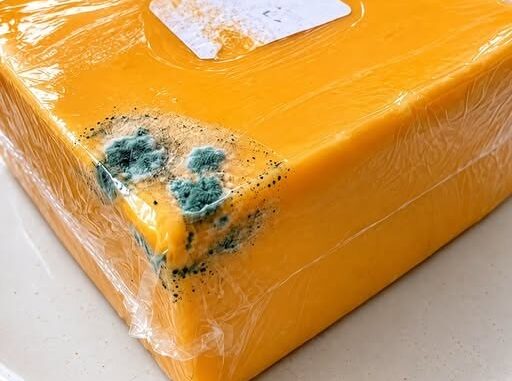
Discovering a green, blue, or white patch of mold on a block of cheddar cheese can leave you wondering whether the entire product needs to go in the trash. After all, the rest of the cheese may look perfectly normal, smell fresh, and appear safe to eat.
The good news is that not every moldy cheese needs to be discarded. However, the type of cheese makes a significant difference when deciding what to do.
Hard cheeses, such as cheddar and Parmesan, can sometimes be saved by carefully removing the affected area. Soft cheeses, on the other hand, generally need to be thrown away when unexpected mold appears.
Understanding why this difference matters can help you avoid unnecessary food waste while protecting your health.
Why Does Mold Develop on Cheddar Cheese?
Mold is a type of fungus that can grow when food is exposed to moisture, air, and suitable storage conditions.
Even refrigerated cheese can develop mold, particularly after its packaging has been opened or when it is repeatedly handled with unclean utensils.
Common factors that encourage mold growth include:
- Exposure to air and moisture.
- Improper refrigeration.
- Contamination from knives, hands, or other foods.
- Damaged or poorly sealed packaging.
- Keeping cheese for longer than recommended.
Although some cheeses are intentionally produced using edible mold cultures, unexpected mold growth on ordinary cheddar should always be treated carefully.
Can You Cut Mold Off Cheddar Cheese?
Yes. According to general food-safety guidance, a block of hard cheese such as cheddar can often be kept if mold develops on a small section.
Hard cheeses have a relatively dense structure and lower moisture content, making it less likely that mold will spread deeply throughout the product.
The recommended approach is to remove at least one inch (2.5 centimeters) around and beneath the visible moldy area.
For safer removal:
- Use a clean knife.
- Keep the blade away from the visible mold while cutting.
- Remove the affected section generously, including the surrounding cheese.
- Avoid allowing the removed portion to touch the remaining cheese.
- Wrap the remaining cheese in fresh, clean packaging and refrigerate it.
If the cheese has extensive mold growth, unusual changes in texture, or other signs of spoilage, discarding the entire block is the more cautious choice.
Which Cheeses Should Be Thrown Away When Mold Appears?
Soft cheeses contain more moisture, allowing mold and potentially harmful microorganisms to spread beyond the visible surface.
For this reason, removing only the affected spot is not considered a reliable safety measure.
Examples of soft cheeses that should be discarded when unexpected mold appears include:
- Cream cheese.
- Ricotta.
- Cottage cheese.
- Brie.
- Camembert.
- Fresh mozzarella.
The same precaution applies to shredded, sliced, and crumbled cheeses because contamination can spread more easily throughout these products.
Is Mold on Cheese Dangerous?
Some molds are harmless when used intentionally in food production. However, others can cause spoilage or produce substances called mycotoxins, which may pose health risks.
Unfortunately, identifying mold by its color or appearance alone is impossible.
A green, blue, white, or gray patch does not tell you whether the mold is safe.
You should never taste questionable cheese to determine whether it is suitable for consumption.
People with weakened immune systems should be particularly cautious and avoid eating food with unexpected mold growth.
How to Store Cheddar Cheese Properly
Proper storage can significantly reduce unwanted mold growth and help your cheese maintain its quality for longer.
Consider these simple habits:
Keep it refrigerated: Store cheddar in the refrigerator at 40°F (4°C) or below.
Use clean utensils: Always handle cheese with clean hands and knives to reduce contamination.
Wrap it properly: Use suitable cheese wrapping or clean, airtight packaging to limit exposure to air while preventing excessive moisture buildup.
Avoid leaving it out: Return cheese to the refrigerator promptly after serving.
Check the packaging: Follow the manufacturer’s storage instructions and pay attention to expiration and use-by information.
Inspect it regularly: Check for unusual discoloration, texture changes, or unexpected mold growth.
Can You Prevent Mold From Developing on Cheese?
Although mold cannot always be prevented completely, good storage habits can reduce the chances of it appearing.
One useful approach is to avoid handling the entire block unnecessarily. Instead, cut the amount you need and return the remaining cheese to the refrigerator.
It is also important to keep cheese away from moisture and avoid storing it in packaging that has become dirty or damaged.
If you regularly buy large blocks of cheddar, consider purchasing smaller quantities that you can comfortably use within the recommended storage period.
When Should You Throw the Cheese Away?
If you are uncertain about the type of cheese, the extent of mold growth, or whether the product has been stored correctly, discarding it is the safer decision.
Do not attempt to rescue soft cheese, shredded cheese, or crumbled cheese by removing visible mold.
Remember that an unpleasant smell is not required for food to be unsafe, and a normal appearance does not guarantee that a questionable product is suitable for eating.
Final Thoughts: Making the Right Decision About Moldy Cheddar
Finding mold on cheddar cheese does not automatically mean the entire block must be discarded. Because cheddar is a hard cheese, a small area of unexpected surface mold can generally be removed by cutting away at least one inch around and beneath the affected section.
Soft cheeses and shredded or crumbled varieties require a different approach. When unexpected mold appears, the safest recommendation is to discard the entire product.
Ultimately, understanding the differences between cheese varieties, practicing proper refrigeration, and following established food-safety recommendations can help protect your household.
When it comes to questionable food, avoiding unnecessary risks is always more important than saving a small amount of cheese.
Leave a Reply