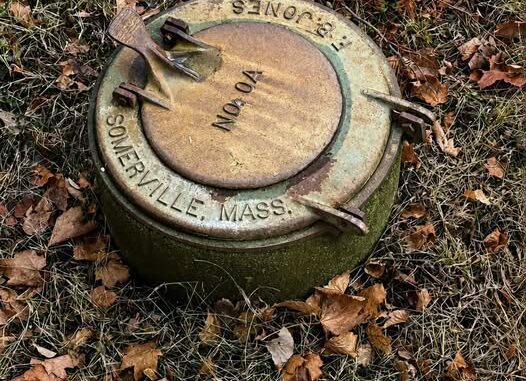
Imagine walking through your backyard and noticing something unusual sticking out of the ground.
At first, it looks like an ordinary piece of metal.
Perhaps it’s an old utility cover, a forgotten drainage system, or the entrance to something buried beneath the lawn.
But when you take a closer look, you discover a heavy iron lid that appears to have been there for decades.
What could possibly be hiding underneath?
For some homeowners, the answer is surprisingly ordinary—and fascinating.
That mysterious metal cover could be part of an underground garbage can, a once-popular household invention designed to keep trash out of sight.
Long before the familiar plastic bins and wheeled trash carts became standard, many American households used underground containers to store their garbage.
These systems were practical, discreet, and surprisingly clever.
Today, surviving examples offer a glimpse into how people managed everyday household waste before modern sanitation systems transformed residential neighborhoods.
The Strange Backyard Discovery That Started It All
The mystery began when a friend named Mike made an unexpected discovery in his backyard.
He had noticed something unusual beneath a layer of fallen leaves.
It was a large, heavy metal hatch that appeared to lead underground.
The object looked old, solid, and completely out of place.
At first, Mike wondered whether he had discovered the entrance to a forgotten bomb shelter.
The possibility was exciting enough to call a friend over for a closer look.
But the truth turned out to be much less dramatic.
After examining the object and researching its possible purpose, they realized it wasn’t a shelter at all.
It was the remains of an old underground garbage disposal system.
The metal cover even carried the words “Somerville, Mass.,” suggesting a connection to the Massachusetts city.
What initially seemed like a mysterious underground structure was actually a practical household feature from another era.
What Were Underground Garbage Cans?
Underground garbage cans were waste-storage systems installed partially or completely beneath the ground.
Unlike modern trash bins that sit beside a house or along a driveway, these containers were designed to remain mostly hidden.
Typically, a metal or concrete enclosure was installed in the ground.
Inside it sat a removable garbage container.
A heavy lid covered the opening at ground level.
This arrangement allowed homeowners to store household waste below the surface while keeping the surrounding yard relatively uncluttered.
On collection day, sanitation workers could access the container and remove the accumulated trash.
The design was intended to address several problems associated with traditional aboveground garbage cans.
It helped keep waste out of sight, offered protection from certain animals, and reduced the likelihood of containers being knocked over by wind.
For households accustomed to handling heavy metal trash cans, the underground system represented an interesting alternative.
Why Did People Bury Their Garbage Cans?
Today, burying a trash container beneath the lawn might sound inconvenient.
But during the middle decades of the twentieth century, the idea offered several practical advantages.
Traditional garbage cans were often made from galvanized metal.
They could be heavy, noisy, and vulnerable to rust.
When placed outdoors, they were exposed to changing weather conditions.
Strong winds could knock them over.
Animals could sometimes open or overturn them while searching for food.
Rainwater could collect inside poorly covered containers.
And during warm weather, unpleasant odors could become particularly noticeable.
Underground garbage systems were developed as one way to reduce some of these problems.
By placing the container inside a protected enclosure beneath the surface, homeowners could keep their yards tidier and their trash more securely contained.
The concept was simple: move the garbage storage area underground rather than leaving it exposed.
Life Before Modern Curbside Trash Collection
Household waste management looked very different before standardized plastic bins and automated collection vehicles became widespread.
In many communities, garbage collection required substantial physical labor.
Sanitation workers handled individual metal containers, often lifting and emptying them manually.
Homeowners had to manage the placement and maintenance of their trash cans.
Heavy containers could be difficult to move.
Winter weather created additional challenges.
Snow and ice sometimes surrounded outdoor garbage cans, making them harder to access.
In warmer months, uncovered or poorly maintained containers could attract insects and animals.
These problems encouraged homeowners and municipalities to explore alternative storage methods.
Underground garbage cans were one of the solutions that emerged during this period.
They reflected a practical effort to make household sanitation cleaner and more manageable.
How Underground Garbage Cans Worked
The basic underground garbage system relied on a relatively straightforward design.
A permanent enclosure was installed below ground level.
This enclosure might be constructed from metal, concrete, or a combination of materials.
A removable garbage can sat inside the underground compartment.
At the surface, a sturdy lid covered the opening.
Some designs used heavy metal covers, while others incorporated different opening mechanisms.
Homeowners could lift or open the lid to deposit household waste into the container.
The garbage remained stored beneath the surface until collection day.
Sanitation workers then accessed the inner container, removed it, and emptied its contents into a collection vehicle.
Afterward, the container was returned to the underground enclosure.
The system required no electronics or complicated technology.
Its effectiveness depended on a durable structure, a secure cover, and a removable container.
The Clever Engineering Behind the Design
One of the most interesting aspects of underground garbage cans was their practical use of space.
Instead of occupying a visible section of the yard, the container was placed beneath it.
Only the lid remained exposed.
This allowed the system to blend into the surrounding landscape.
The underground enclosure also provided a degree of protection from wind and accidental tipping.
A heavy lid could make it more difficult for certain animals to access the trash.
The surrounding soil could help moderate temperature changes compared with a container exposed directly to sunlight.
However, the actual effectiveness of these features depended on the design, condition, and maintenance of the installation.
The system was not completely odor-proof or pest-proof.
Still, for its time, it offered a thoughtful solution to common household sanitation problems.
Why Heavy Metal Lids Were So Important
The lid was one of the most recognizable parts of an underground garbage system.
It served several purposes.
First, it covered the opening and helped keep the garbage out of sight.
Second, its weight could help prevent accidental opening or movement.
Third, it offered some protection against weather and animals.
Many surviving examples feature cast-iron or steel covers.
Some carry names, markings, or lettering associated with manufacturers or locations.
These details can make the objects particularly interesting to homeowners and collectors.
A lid stamped with a city name may provide a clue about where the equipment was manufactured, distributed, or used.
However, identifying the exact origin of an old underground container may require additional research.
The cover alone doesn’t always reveal the complete history.
Why Underground Garbage Cans Were Popular in Older Neighborhoods
Underground garbage systems became associated with certain older residential neighborhoods, including communities in New England.
Their appeal was understandable.
Homeowners wanted a convenient way to store trash without leaving large containers visible in the yard.
A belowground installation offered a relatively discreet solution.
Once installed, the system could become an ordinary part of the property.
Residents might pass it every day without giving it much thought.
Children growing up in homes with underground garbage cans could regard them as completely normal.
To those families, the metal lid in the lawn was no more unusual than a clothesline, garden hose, or outdoor water faucet.
Only after the systems became less common did they begin to appear mysterious.
Today, homeowners unfamiliar with their original purpose may mistake them for utility access points or other underground structures.
The Problems With Traditional Metal Trash Cans
To understand why underground systems were appealing, it’s helpful to remember the limitations of older aboveground garbage containers.
Metal trash cans were durable in some respects, but they had drawbacks.
Their weight made them inconvenient to move.
Repeated exposure to rain and moisture could lead to corrosion.
Lids could become damaged or misplaced.
Animals sometimes managed to overturn containers or scatter their contents.
Strong winds could create similar problems.
In snowy climates, outdoor containers could become surrounded by snow or ice.
These issues made routine waste disposal more frustrating.
An underground enclosure could reduce some of these inconveniences by providing a fixed, protected storage location.
However, it also introduced new maintenance challenges that eventually contributed to the decline of the system.
Why Did Underground Garbage Cans Disappear?
If underground garbage cans were so practical, why did they largely disappear from everyday residential use?
The answer involves changing technology, sanitation practices, and maintenance requirements.
As cities expanded and waste collection systems evolved, municipalities increasingly sought faster and more standardized methods.
Modern trash containers became easier to handle.
Plastic bins offered advantages over traditional metal cans.
Wheeled carts made it simpler for homeowners to move garbage to the curb.
Automated collection vehicles eventually reduced the amount of manual lifting required in many communities.
Underground garbage systems, meanwhile, still depended on workers accessing and removing containers from belowground enclosures.
This could be physically demanding and time-consuming.
As collection methods changed, the advantages of underground residential bins became less compelling.
Over time, many households stopped using them.
Rust Was One of Their Biggest Weaknesses
Although underground garbage cans were designed to be durable, their location created a serious challenge.
They were constantly exposed to moisture in the surrounding soil.
Metal components could gradually corrode.
The inner containers were also vulnerable to rust, especially if water entered the enclosure.
Over many years, corrosion could weaken the structure.
Some installations deteriorated enough to require repair or replacement.
A damaged underground container could become difficult to use.
In severe cases, deteriorating components could create hazards.
This was one of the reasons homeowners eventually chose to abandon or remove older systems.
A design intended to simplify garbage storage could become an ongoing maintenance responsibility.
Rainwater Created Another Problem
Drainage was another important issue.
Underground garbage compartments were vulnerable to water entering from the surrounding ground or through damaged covers.
After heavy rainfall, water could accumulate inside the enclosure.
If the system lacked effective drainage, the water might remain there.
This could create unpleasant conditions.
Standing water could contribute to corrosion, odors, and insect activity.
It could also make the inner garbage container more difficult to remove.
Homeowners needed to keep the installation in suitable condition to prevent these problems.
As the equipment aged, maintaining effective drainage could become increasingly difficult.
For some households, switching to an aboveground trash container was simply more convenient.
New England Winters Made Maintenance Difficult
Cold weather introduced additional challenges for underground garbage systems.
In regions with harsh winters, snow, ice, and freezing temperatures could affect outdoor equipment.
Water that entered an underground garbage enclosure might freeze.
This could make the inner container difficult to remove.
Ice could also interfere with the lid or other components.
Sanitation workers already faced demanding conditions during winter collection routes.
A frozen underground garbage container could create another obstacle.
Although these systems were intended to protect waste from some weather-related problems, they were not immune to extreme conditions.
Over time, the combination of corrosion, drainage issues, and winter maintenance made them less attractive than newer alternatives.
Could Underground Garbage Cans Attract Pests?
One of the original advantages of underground garbage cans was their ability to reduce access for certain animals.
A heavy lid and protected enclosure could make it more difficult for raccoons and other scavengers to reach household waste.
However, the system was not completely immune to pest problems.
Poor maintenance could create new issues.
If water accumulated inside an abandoned enclosure, it might provide conditions suitable for mosquito breeding.
Damaged lids or openings could also allow insects or small animals to enter.
As with any waste-storage system, cleanliness and maintenance were essential.
Underground placement alone did not guarantee that garbage would remain free from pests or odors.
This limitation became more apparent as installations aged.
The Rise of Plastic Trash Bins and Wheeled Carts
The development of modern waste containers helped transform residential garbage collection.
Plastic bins offered several practical benefits.
They were generally lighter than traditional metal containers.
They did not rust in the same way as iron or steel.
Their shapes and sizes could be standardized for municipal collection systems.
Later, wheeled carts made it easier to transport household garbage to designated pickup locations.
Automated lifting equipment further changed how sanitation workers collected waste in many communities.
These developments reduced the need for permanent underground residential storage.
Instead of removing a heavy container from a buried enclosure, collection systems could use standardized bins placed at the curb.
The transition was not identical in every community, but the broader movement toward more efficient collection methods contributed to the decline of older underground systems.
What Happened to the Underground Cans?
When homeowners stopped using underground garbage containers, they had to decide what to do with the remaining structures.
Some systems were removed.
Others were filled in or covered.
In certain cases, the metal lids remained visible at ground level.
Over time, grass, soil, and fallen leaves could partially conceal them.
A new homeowner might purchase an older property without knowing the purpose of the object.
Years later, someone gardening or clearing the yard could rediscover the metal cover.
This explains why underground garbage cans occasionally appear as mysterious backyard finds.
They are remnants of household infrastructure that once served a routine purpose.
As generations passed, knowledge of their function became less common.
Why Old Underground Garbage Lids Are Easy to Misidentify
A circular or rectangular metal lid in the ground can resemble several other types of infrastructure.
Someone unfamiliar with underground garbage systems might assume the cover belongs to a drainage installation.
Others may think it provides access to a water tank, septic system, or utility compartment.
The appearance alone may not provide enough information for accurate identification.
Markings on the lid can offer clues.
The location of the object on the property may also be relevant.
Historical photographs, property records, or information from previous owners can help clarify its purpose.
However, homeowners should avoid opening or entering unidentified underground structures.
Old covers and surrounding materials may be unstable, and concealed spaces can present serious hazards.
Professional assessment is the safest approach when the purpose or condition of an installation is uncertain.
The Historical Value of a Forgotten Backyard Feature
Underground garbage cans may not seem as exciting as antique furniture or rare collectibles.
But they represent an important part of everyday history.
These objects reveal how households managed waste before modern collection systems became widespread.
They also illustrate the relationship between residential design and municipal services.
The placement of a garbage container may seem like a small detail.
Yet it reflects broader changes in technology, labor, sanitation, and neighborhood development.
Historical objects don’t always need to be beautiful or valuable to be meaningful.
Sometimes, the most ordinary pieces of infrastructure provide the clearest picture of how people once lived.
What Old Metal Markings Can Reveal
Some underground garbage lids feature stamped or cast lettering.
These markings may include names of cities, manufacturers, or local businesses.
For homeowners interested in history, such details can be especially intriguing.
A cover bearing the name of a Massachusetts community, for example, may suggest a regional connection.
Manufacturer markings can sometimes help identify the company responsible for producing the equipment.
Comparing these details with historical records may provide additional information about the object’s age and origin.
However, markings should be interpreted carefully.
A city name does not necessarily prove that a particular municipality installed or operated the system.
The full history may require research into manufacturers, property records, or local sanitation practices.
Even without complete documentation, the markings add character to the discovery.
Why These Relics Appeal to History Enthusiasts
People interested in local history often appreciate objects that reveal details about everyday life.
An underground garbage can may not have played a role in a famous event.
It may never have belonged to an important historical figure.
But it was part of the daily routines of ordinary families.
Someone used it to dispose of household waste.
Sanitation workers emptied it.
Children may have walked past it while playing in the yard.
Over time, the system became obsolete and was forgotten.
Discovering one today creates a direct connection to those earlier routines.
It reminds us that history is not limited to major events.
It also exists in the practical objects people used every day.
Can Old Underground Garbage Cans Be Repurposed?
Some homeowners who discover these structures become interested in giving them a new purpose.
A former garbage enclosure may inspire ideas for garden decoration or other creative uses.
For example, an old metal cover could potentially become part of a decorative landscape feature if it is safe, stable, and properly assessed.
Some people have considered adapting abandoned underground compartments for planters or outdoor storage.
However, repurposing these structures requires caution.
Old installations may contain sharp metal, unstable walls, contaminated materials, or standing water.
They may also be connected to unknown underground infrastructure.
Before making changes, homeowners should have the structure identified and evaluated by a qualified professional.
A decorative reuse should never compromise safety.
Turning an Old Structure Into a Garden Feature
One possible way to preserve the appearance of a historical underground garbage system is to incorporate it into a garden design.
Rather than treating the object as unwanted clutter, homeowners may choose to highlight its unusual character.
A safe, professionally assessed installation could potentially become a decorative focal point.
Flowers or other plants might be arranged around the original cover.
A small informational plaque could explain its former purpose.
The goal would be to preserve the historical feature while making it part of the landscape.
However, any structural modifications should account for drainage, stability, and potential contamination.
An abandoned garbage enclosure should not automatically be treated as a suitable planting container.
Its condition and history need to be understood first.
Why Using an Old Underground Bin as a Cooler Requires Caution
The idea of converting an underground garbage compartment into a beverage cooler may sound creative.
After all, soil can help moderate temperature changes.
However, an old waste-storage structure is not automatically suitable for storing drinks or food.
Decades of use may have left contamination behind.
Corrosion and standing water can create additional concerns.
The enclosure may also be structurally unstable.
For these reasons, using an unidentified or abandoned garbage well for food or beverage storage is not recommended without appropriate professional evaluation and remediation.
The historical object can still be appreciated without being returned to active use.
Sometimes, preserving the feature as a reminder of the past is the better option.
The Ingenuity of Everyday Household Inventions
Underground garbage cans are examples of practical problem-solving.
Their creators identified common frustrations associated with waste storage.
Traditional containers could be unsightly, vulnerable to weather, and difficult to manage.
Placing them below ground offered a different approach.
The design used relatively simple materials and mechanical features.
It did not depend on electronics or complex equipment.
Instead, it relied on a fixed enclosure, a removable container, and a protective cover.
Although later technologies eventually offered more convenient solutions, the original concept demonstrated thoughtful engineering.
It reflected the needs and circumstances of its time.
Why Practical Inventions Eventually Become Obsolete
An invention can be useful for decades and still disappear when circumstances change.
Underground garbage cans illustrate this process.
They addressed problems associated with older waste-storage methods.
But changes in municipal collection practices reduced their advantages.
New materials became available.
Transportation and sanitation equipment improved.
Labor requirements changed.
Maintenance costs became more important.
Eventually, other systems proved easier to use in many communities.
This doesn’t mean the original invention was poorly designed.
It means technology and infrastructure continued to evolve.
Many familiar household objects have followed a similar path.
They were once practical solutions but gradually became unnecessary as better alternatives emerged.
What These Backyard Discoveries Tell Us About Neighborhood History
Older residential properties often contain physical evidence of previous generations.
A buried foundation may reveal where an outbuilding once stood.
An old walkway can show how a yard was originally arranged.
A forgotten drainage feature may reflect earlier landscaping practices.
And an underground garbage can can reveal how household waste was stored.
These details help tell the story of a neighborhood.
They show how homes and municipal services changed over time.
They also demonstrate that everyday infrastructure is an important part of local history.
By identifying and documenting such features, homeowners can contribute to a better understanding of their property’s past.
Even a simple photograph and a few notes about an old installation can help preserve useful information.
Why Ordinary Objects Deserve Historical Attention
History is often associated with monuments, museums, and famous landmarks.
But everyday objects can be equally revealing.
A vintage kitchen appliance tells us about domestic technology.
An old telephone reveals changes in communication.
A metal milk box reflects earlier delivery systems.
An underground garbage can provides evidence of changing sanitation practices.
These objects were designed for routine use.
They were not intended to become historical artifacts.
Yet their survival allows us to examine how ordinary people lived.
The more we understand these small details, the more complete our picture of the past becomes.
What to Do If You Find a Mysterious Metal Lid in Your Yard
Discovering an unfamiliar metal cover can be exciting, but it’s important to approach it carefully.
Avoid assuming that the structure is an old garbage container based on appearance alone.
It could belong to another type of underground installation.
Do not attempt to enter the space or remove a heavy cover without understanding what lies beneath it.
Older structures may have weakened over time.
Some could contain water, hazardous materials, or other hidden dangers.
If the object is unfamiliar, consider consulting a qualified contractor, utility professional, or local authority.
Historical property records or previous owners may also provide useful information.
Once the structure has been safely identified, you can decide whether it should be preserved, documented, professionally removed, or incorporated into the landscape.
The Nostalgia of Forgotten Household Technology
There’s something fascinating about discovering an object that was once completely ordinary.
For earlier generations, an underground garbage can may have been an unremarkable part of daily life.
It served a practical purpose.
It required occasional maintenance.
And it became part of the familiar surroundings of the home.
Today, the same object can inspire curiosity because most people no longer recognize it.
That contrast is what makes forgotten household technology so interesting.
Objects that were once commonplace can become mysterious simply because the world around them has changed.
They remind us how quickly everyday habits and technologies can disappear from collective memory.
Final Thoughts: A Hidden Piece of History Beneath the Lawn
The next time you notice an unusual metal lid in an older backyard, consider the possibility that it belongs to a forgotten household invention.
Underground garbage cans were once used to keep waste stored discreetly beneath the ground.
They offered an alternative to exposed metal trash cans and reflected an era when homeowners and municipalities were experimenting with practical sanitation solutions.
Over time, rust, drainage problems, winter maintenance, and changes in collection technology contributed to their decline.
Many were abandoned, covered, or forgotten.
Today, surviving examples provide a fascinating connection to the everyday lives of earlier generations.
What looks like a rusty piece of metal in the grass may actually be a small but meaningful part of local history.
These underground containers remind us that innovation doesn’t always involve complicated machinery or groundbreaking inventions.
Sometimes, it simply means finding a better place to put the garbage.
And sometimes, decades later, that practical solution becomes an unexpected historical discovery waiting just beneath our feet.
Leave a Reply