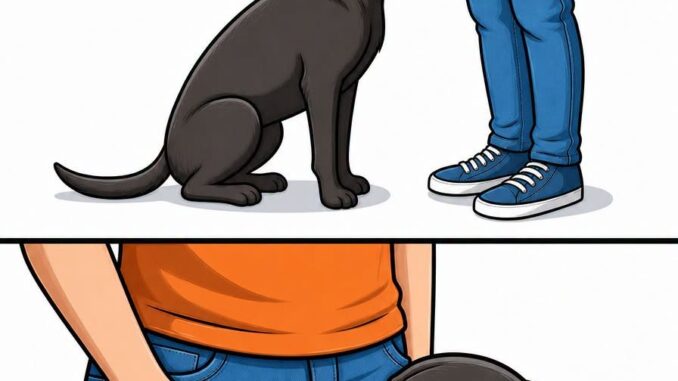
If you’ve ever noticed your dog sniffing your feet after you come home, you may have wondered what makes them so interested.
While humans primarily rely on sight to understand their surroundings, dogs experience much of the world through smell.
Their noses help them recognize familiar people, explore new environments, identify other animals, and gather information about objects they encounter.
This is why your dog might spend several moments investigating your shoes, socks, or feet, even when nothing seems unusual to you.
Although the behavior can seem amusing, it is usually a normal part of canine curiosity.
Understanding why dogs sniff can help owners better appreciate their pets’ natural instincts and communication habits.
How a Dog’s Sense of Smell Works
Dogs have an exceptionally developed sense of smell.
Their noses contain specialized sensory cells called olfactory receptors, which help detect odor molecules in the air.
Depending on the breed, dogs may have considerably more olfactory receptors than humans.
Some estimates suggest that certain dogs possess hundreds of millions of these receptors, compared with only several million in humans.
However, comparing the sensitivity of human and canine smell using a single number can be misleading.
A dog’s ability to detect an odor depends on the substance involved, environmental conditions, training, and individual differences.
Dogs also have a relatively large brain region devoted to processing smells.
This allows them to distinguish complex scent patterns and recognize odors that people might not notice.
For dogs, sniffing is much more than an occasional activity.
It is an essential way of exploring and understanding their surroundings.
Why Your Dog Is Interested in Your Feet
Your feet naturally carry a variety of scents.
The skin contains sweat glands, and microorganisms living on the skin interact with sweat and other substances to create recognizable odors.
Shoes and socks can also collect smells from different environments.
When your dog sniffs your feet, it may be investigating a combination of your natural scent and the odors you’ve encountered throughout the day.
This doesn’t necessarily mean your dog has detected anything unusual.
In most cases, the behavior is simply part of its normal curiosity.
Several factors may explain why dogs are particularly interested in their owners’ feet.
1. Your Feet Carry Your Familiar Scent
Dogs can learn to recognize individual people through their scent.
Your natural body odor is influenced by several factors, including skin chemistry, sweat, personal care products, and the microorganisms living on your skin.
Over time, your dog becomes familiar with your particular scent profile.
Sniffing your feet may be one way of recognizing and gathering information about you.
Because feet often remain enclosed in shoes for extended periods, their odor may be especially noticeable.
Your dog may investigate this scent even if you have only been away for a short time.
The behavior is generally normal and doesn’t automatically indicate a problem.
2. Your Dog May Be Curious About Where You’ve Been
Think about the places your shoes travel throughout an ordinary day.
You might walk through a park, visit a grocery store, spend time at work, or pass other animals while outside.
Each environment contains different odors.
Some of these smells may remain on your shoes and clothing.
When you return home, your dog may investigate those unfamiliar scents.
It could be interested in traces of other animals, outdoor environments, or objects you encountered.
This is one reason some dogs become particularly enthusiastic about sniffing shoes after their owners return from a walk.
To a dog, your footwear may contain a collection of interesting smells.
3. Familiar Smells May Provide Comfort
Dogs often develop strong associations between familiar scents and positive experiences.
Your smell may be connected with feeding, playtime, walks, affection, and other everyday routines.
For some dogs, being near an owner’s familiar scent may provide reassurance.
This may help explain why certain dogs enjoy sleeping near their owner’s clothing or resting beside their shoes.
However, sniffing alone isn’t enough to determine a dog’s emotional state.
A relaxed posture, comfortable body language, and normal behavior can provide additional clues about whether your dog feels at ease.
If your dog regularly rests near your feet, it may simply enjoy being close to you.
4. Sniffing Is a Natural Form of Exploration
Dogs are naturally curious.
Puppies begin investigating their surroundings through smell at an early age.
As they grow, sniffing remains an important part of their daily behavior.
Dogs use their noses to examine new objects, recognize familiar environments, and explore changes in their surroundings.
Your feet are easily accessible when you’re sitting on a couch or standing nearby.
That makes them a convenient subject for investigation.
Some dogs sniff briefly and move on.
Others spend more time examining particular odors.
Both patterns can be normal, depending on the dog and the circumstances.
5. Your Dog May Be Responding to Changes in Scent
Human body odor isn’t completely constant.
It can change with physical activity, hygiene products, diet, environmental exposure, and certain physiological processes.
For example, exercise may increase sweating, while a new soap or lotion may introduce an unfamiliar fragrance.
Your dog may notice these differences.
Research also suggests that dogs can sometimes distinguish odor changes associated with particular physiological states.
However, this doesn’t mean every dog can accurately determine whether its owner is stressed, happy, or unwell simply by sniffing their feet.
A dog’s response to an odor can be influenced by learning, context, and previous experiences.
Sniffing should not be interpreted as a reliable assessment of someone’s health or emotions.
Why Dogs Sniff Shoes and Socks
Shoes and socks can be especially interesting to dogs.
They collect a combination of body odors and environmental scents.
Socks absorb sweat and may retain familiar smells.
Shoes can carry traces of outdoor surfaces and other surroundings.
Some dogs enjoy investigating these items because the odors are concentrated.
Others may pick up socks or shoes as part of play.
If your dog frequently takes these items, consider providing appropriate toys and keeping footwear out of reach.
Swallowing pieces of socks or other fabric can cause serious digestive problems.
If you suspect your dog has swallowed a foreign object, contact a veterinarian promptly.
How Dogs Use Smell to Communicate
Scent plays an important role in canine communication.
Dogs can gather information about other animals through odors associated with their bodies, urine, and scent markings.
This is one reason dogs frequently sniff the ground, trees, and other dogs during walks.
They may use this information to recognize familiar animals or investigate which animals have recently visited an area.
Chemical signals, including pheromones, are involved in communication among many animal species.
However, the role of human pheromones in dog-human interactions is less clearly established.
It would be inaccurate to assume that dogs can consistently interpret a person’s emotional state through pheromones alone.
Canine behavior is influenced by many signals, including smell, body language, voice, routines, and past experiences.
Can Dogs Recognize Their Owners by Smell?
Dogs can learn to recognize familiar individuals using scent.
Studies of canine behavior and scent processing suggest that familiar human odors can produce distinctive responses.
This helps explain why a dog may recognize its owner even when visual information is limited.
For example, a dog may investigate a familiar jacket or blanket that carries its owner’s scent.
Recognition can also involve hearing, sight, and learned routines.
Dogs don’t rely exclusively on their noses to identify people.
Instead, they combine several sources of information.
This ability to recognize familiar individuals is part of what makes the relationship between dogs and their owners so interesting.
Can Dogs Tell How Long You’ve Been Away?
You may have heard the idea that dogs can measure time through changes in scent.
The theory suggests that odors gradually become weaker or change as time passes.
Dogs might use these changes, along with other environmental cues, to anticipate familiar events.
However, scientists have not established that dogs consistently measure elapsed time by detecting the fading scent of their owners.
Dogs may learn daily schedules through repeated experiences.
They can associate certain sounds, activities, lighting conditions, and household routines with events such as feeding or someone returning home.
Scent may contribute to this process, but it is only one possible factor.
If your dog seems to know when you’re about to arrive, familiar routines and learned patterns may help explain the behavior.
Can Dogs Detect Changes in Human Health?
One of the most interesting areas of canine research involves whether dogs can recognize odors associated with certain medical conditions.
Researchers have studied trained dogs in connection with conditions such as diabetes, some cancers, and seizure-related changes.
These studies suggest that certain physiological processes may produce detectable odor differences.
However, results vary, and many applications remain experimental.
A dog’s ability to notice a particular odor should not be confused with the ability to diagnose a medical condition.
Medical testing and professional evaluation remain essential.
Dogs and Cancer Detection Research
Researchers have investigated whether specially trained dogs can identify odor patterns associated with certain cancers.
Some studies have examined breath, urine, and other biological samples.
The research often focuses on volatile organic compounds, or VOCs.
These are chemicals that can be released through normal biological processes and may change under certain conditions.
In controlled experiments, some trained dogs have demonstrated an ability to distinguish certain samples.
However, study methods and results vary considerably.
This approach has not replaced established cancer screening or diagnostic methods.
If someone has concerning symptoms, they should seek medical advice rather than relying on a pet’s behavior.
Dogs and Blood Sugar Changes
Some dogs are trained to alert people with diabetes to changes associated with low blood sugar.
These animals are sometimes called diabetic alert dogs.
Researchers believe that changes in body chemistry may produce odors that trained dogs can learn to recognize.
However, the accuracy of alerts can vary.
A trained dog should not replace a continuous glucose monitor, blood glucose testing, or a medical treatment plan.
For individuals who use alert dogs, the animals may provide an additional source of support.
But decisions about blood sugar management should still be based on reliable medical measurements and professional guidance.
An ordinary pet sniffing someone’s feet is not evidence that the person has diabetes.
Dogs and Seizure-Related Alerts
Another area of research involves dogs that appear to respond to changes before or during certain seizures.
Some dogs may notice behavioral or physiological cues.
Researchers are also investigating whether particular odors are associated with seizure activity.
Although some trained dogs have demonstrated promising abilities, seizure prediction is not consistent across all animals or individuals.
The mechanisms are still being studied.
Dogs should not be considered a substitute for medical care, prescribed treatment, or established seizure safety plans.
Their potential role is best understood as an area of ongoing research and specialized training.
Why Your Dog Might Sniff More Than Usual
An increase in sniffing doesn’t always indicate a problem.
Your dog may simply have encountered a new or interesting smell.
Common reasons for increased sniffing include changes in your footwear, visiting unfamiliar places, new household products, or the presence of another animal.
Dogs may also investigate more actively when they are excited or exploring a new environment.
However, sudden changes in behavior deserve attention.
If excessive sniffing occurs alongside unusual restlessness, appetite changes, discomfort, or other concerning signs, consider speaking with a veterinarian.
A professional can help determine whether the behavior is related to normal curiosity, environmental factors, or an underlying issue.
Should You Let Your Dog Sniff Your Feet?
In most cases, occasional foot sniffing is harmless.
It is a normal part of how dogs investigate their environment.
You generally don’t need to discourage the behavior unless it becomes uncomfortable or disruptive.
If you prefer your dog not to sniff or lick your feet, you can gently redirect its attention.
Offer a toy, ask for a familiar command, or encourage another appropriate activity.
Reward calm behavior rather than punishing curiosity.
Avoid harsh corrections, as they may create confusion or anxiety.
Consistent, positive training can help establish comfortable boundaries for both you and your pet.
Why Some Dogs Lick Their Owners’ Feet
Sniffing and licking are different behaviors, although they sometimes occur together.
A dog may lick feet because of taste, curiosity, learned behavior, or a desire for attention.
Sweat contains salts and other substances that may be interesting to dogs.
Some dogs also learn that licking causes their owners to respond.
If the owner laughs, speaks, or moves, the dog may repeat the behavior.
Occasional licking is not necessarily concerning.
However, persistent or compulsive licking may require attention, especially if it occurs alongside other behavioral changes.
It’s also sensible to prevent dogs from licking skin that has topical medications or potentially harmful products on it.
How to Encourage Healthy Sniffing Behavior
Sniffing is an important form of mental activity for dogs.
Allowing dogs opportunities to investigate safe environments can provide enrichment and help satisfy their natural curiosity.
During walks, consider giving your dog time to explore appropriate areas rather than focusing entirely on distance or speed.
You can also introduce scent-based games at home.
For example, hide a few treats in safe locations and encourage your dog to find them.
Food puzzles and snuffle mats may offer similar opportunities.
Always choose activities suited to your dog’s age, health, and abilities.
Supervise games involving small objects or materials that could be swallowed.
These activities can provide enjoyable ways for dogs to use their sense of smell.
Understanding Your Dog’s Body Language
Sniffing is only one part of canine communication.
To better understand your dog, pay attention to its overall behavior.
A relaxed dog may have a comfortable posture, soft facial expression, and natural movements.
A dog that feels uncertain may show signs such as avoiding contact, becoming unusually still, or repeatedly moving away.
Individual dogs express themselves differently.
Learning your pet’s usual behavior can make changes easier to recognize.
If your dog appears distressed or develops persistent behavioral problems, a veterinarian or qualified behavior professional can help.
Understanding the whole picture is more useful than assigning a specific meaning to a single action.
The Bond Between Dogs and Their Owners
Dogs often form strong relationships with the people who care for them.
These bonds develop through regular interaction, predictable routines, positive experiences, and a sense of security.
Scent recognition may contribute to this connection.
But affection is expressed in many ways.
Your dog may enjoy resting near you, following you around the house, playing together, or greeting you when you return.
Each dog has its own personality.
Some are physically affectionate.
Others prefer a little more space.
Neither style automatically indicates a stronger or weaker bond.
The most important thing is creating an environment where your dog feels safe, understood, and well cared for.
Final Thoughts: What Your Dog’s Sniffing Really Means
If your dog regularly sniffs your feet, there is usually no reason to be concerned.
Your feet carry familiar body odors as well as scents collected from your surroundings.
For a dog with a highly developed sense of smell, these odors can be interesting sources of information.
The behavior may reflect curiosity, familiarity, or an interest in something new.
Although dogs have impressive scent-detection abilities, it’s important not to exaggerate what they can determine about human emotions or health.
The simplest explanation is often the most accurate: your dog is using its nose to explore the world.
By understanding this natural behavior and providing safe opportunities for scent exploration, you can support your dog’s well-being and build a more rewarding relationship with your pet.
Leave a Reply