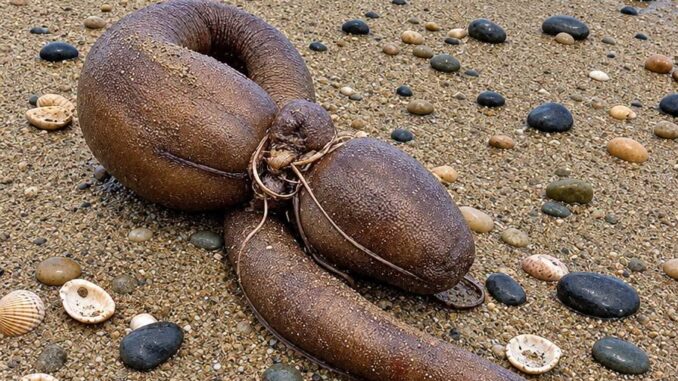
A peaceful walk along the beach took an unexpected turn when a pet noticed an unfamiliar object lying among the wet stones near the shoreline.
At first, it seemed like another ordinary item washed ashore by the waves. However, its unusual shape and weathered appearance caught the attention of the pet’s owner.
The discovery raised an interesting question: Was the object something created by nature, or had it once served a practical purpose?
Without enough information to identify it, the find became a reminder of how many unfamiliar objects can appear along coastlines.
An Unexpected Discovery During a Beach Walk
Beaches are constantly changing environments.
Waves, tides, wind, and seasonal weather conditions regularly move materials across the shoreline. As a result, visitors may encounter everything from seashells and driftwood to fishing equipment and other objects carried by the water.
During this particular walk, a pet reportedly noticed something unusual resting among the damp pebbles.
The animal approached the object, briefly investigated it, and then stepped away.
Its behavior attracted the owner’s attention.
Looking more closely, the owner noticed that the object had an unfamiliar shape and did not immediately resemble the surrounding stones, shells, or pieces of wood.
Its appearance suggested that it might have spent a considerable amount of time exposed to water and changing weather conditions.
However, there was no immediate way to determine what it was or where it had come from.
What Made the Object So Unusual?
According to the description, the item had a rounded central section with several curved parts extending outward.
A narrower section appeared to project from one side, giving it an irregular outline.
Its surface looked relatively smooth and worn.
These characteristics made the object difficult to identify from its appearance alone.
Some naturally occurring materials develop unusual shapes after prolonged exposure to water.
Likewise, manufactured objects can lose their original features after spending months or years outdoors.
The available description did not establish the object’s size, weight, material, or exact location.
Without these details, identifying it confidently would be difficult.
Could It Be a Natural Formation?
One possible explanation is that the object originated in the natural coastal environment.
Beaches collect a wide variety of materials transported by currents, rivers, and waves.
Some of these materials can look surprisingly unfamiliar.
Driftwood, for example, often develops distinctive shapes as it moves through water.
Branches and roots may become twisted, rounded, or polished after repeated contact with sand and rocks.
Over time, the original structure of a piece of wood can become difficult to recognize.
Marine vegetation can also produce unusual appearances.
Certain seaweeds and plant materials may fold, dry, or become tangled after washing ashore.
Depending on the region, fragments of coral or other natural marine structures may also be present.
Although these examples offer possible explanations, there is not enough evidence to connect the discovery to any specific natural material.
Could It Be Part of an Everyday Object?
Another possibility is that the item was manufactured.
Coastal areas are frequently used for fishing, boating, recreation, and transportation.
Equipment and everyday objects can sometimes be lost or carried away by changing water conditions.
An item found on the beach might once have been part of a boat, a fishing accessory, or another piece of equipment.
After spending time in the water, these objects can change significantly.
Metal may develop corrosion.
Wood can become worn and discolored.
Plastic may fade or become brittle after prolonged exposure to sunlight and weather.
These changes can make a familiar object appear unusual.
However, the discovery reportedly lacked recognizable markings or other details that would confirm a manufactured origin.
For now, that explanation remains a possibility rather than an established fact.
How the Ocean Changes Objects Over Time
The shoreline is a dynamic environment.
Every day, waves move sand, stones, shells, and other materials.
When objects repeatedly come into contact with these surfaces, their appearance can gradually change.
Sharp edges may become smoother.
Small details can wear away.
Surfaces may develop scratches, discoloration, or unusual textures.
The amount of change depends on several factors, including the object’s material, the strength of the waves, and the length of time it has been exposed.
An item that originally had a recognizable shape may look very different after extended contact with water and sediment.
This is one reason beach discoveries can be difficult to identify.
Even a common household item may become unfamiliar after spending a long time outdoors.
Why the Pet’s Reaction Attracted Attention
One of the most memorable details of the discovery was the pet’s behavior.
The animal reportedly approached the unfamiliar object, sniffed it, and then moved away.
Although this reaction prompted the owner to investigate, it does not establish that the object was unusual in any particular scientific sense.
Animals often respond cautiously to unfamiliar smells, shapes, and textures.
A new scent or an object that moves slightly in the wind may be enough to attract their attention.
Some pets investigate new objects enthusiastically, while others prefer to keep their distance.
Their reactions can be interesting to observe, but they should not be used to determine whether an unidentified object is safe.
When something unfamiliar appears along a beach, keeping pets from touching or carrying it is a sensible precaution.
Why the Location Matters
The place where an object is discovered can provide useful clues about its origin.
Different shorelines collect different materials.
For example, a beach near a fishing harbor may contain equipment associated with marine activities.
A shoreline near a river mouth may receive branches, roots, and other materials carried downstream.
Remote beaches can collect natural debris as well as manufactured objects transported over long distances.
Local weather conditions also influence what appears along the coast.
Strong winds and storms may bring previously submerged materials onto the beach.
Changing tides can expose items that were hidden beneath sand or stones.
Knowing the approximate location of the discovery would help narrow down the possible explanations.
Without that information, identifying the object remains more difficult.
What Details Would Help Identify It?
A closer examination of the available evidence could provide a better understanding of the object.
Several characteristics would be particularly useful:
- Size: Measurements could help determine whether the item resembles a known natural structure or manufactured component.
- Material: Identifying whether it appears to be wood, metal, plastic, stone, or organic material would narrow the possibilities.
- Texture: Smooth, porous, layered, or rough surfaces can provide clues about how an object formed.
- Shape: Clear views of the curved sections and central structure could reveal recognizable features.
- Markings: Numbers, symbols, or manufacturer information could indicate that the item was produced for a particular purpose.
- Location: The surrounding environment could help explain how the object reached the beach.
Photographs taken from different angles would also be helpful.
A single photograph can sometimes make an ordinary object appear much more unusual than it actually is.
Additional images may reveal details that are not visible from the original perspective.
The Value of Clear Photographs
When an unfamiliar object is found outdoors, photographs can help document its appearance without requiring unnecessary handling.
If it is safe to remain nearby, images can show the object’s overall shape, surface, and surrounding environment.
A photograph that includes a familiar object nearby for scale may also help viewers estimate its size.
However, unknown items should not be moved or handled simply to obtain a better picture.
If an object appears damaged, contains unfamiliar substances, or resembles potentially hazardous equipment, it is better to keep a safe distance.
Photographs can later be compared with reliable identification guides or shared with appropriate local specialists.
Marine researchers, environmental organizations, and local authorities may be able to provide guidance depending on the nature of the discovery.
Why Visual Similarities Can Be Misleading
People naturally try to identify unfamiliar objects by comparing them with things they already know.
This can be useful, but it can also lead to incorrect conclusions.
A weathered root may resemble a manufactured component.
A piece of marine vegetation might appear similar to an unfamiliar household accessory.
Likewise, damaged fishing equipment can sometimes resemble naturally occurring material.
These similarities do not necessarily indicate that the objects are related.
Reliable identification usually requires more than one visual feature.
Material, measurements, location, and construction details all contribute to a more accurate assessment.
When information is limited, it is better to acknowledge uncertainty than to present an unsupported explanation as fact.
Could the Discovery Have Historical Significance?
Some objects found along shorelines are connected to older human activities.
Coastal communities have long histories involving fishing, trade, shipping, and transportation.
Over time, items associated with these activities may become buried, submerged, or transported to new locations.
Occasionally, older objects become visible after storms or changes in the shoreline.
However, an unusual appearance alone does not establish historical importance.
An item would need recognizable characteristics or supporting evidence before it could be connected to a particular period or activity.
If a discovery appears potentially significant, local heritage organizations or relevant authorities may be able to offer guidance.
Leaving the object in place can also help preserve information about the conditions in which it was found.
Staying Safe Around Unfamiliar Beach Objects
Exploring beaches can be an enjoyable outdoor activity, but caution is important when encountering unknown materials.
Not everything washed ashore is suitable for handling.
Some objects may contain sharp edges, damaged components, or substances that are difficult to identify visually.
Others may be unsuitable for pets or children to investigate.
A few simple precautions can help reduce unnecessary risks.
Avoid touching or opening objects when their contents or purpose are unclear.
Keep pets from chewing or carrying unfamiliar materials.
Do not attempt to dismantle an object to discover what is inside.
If an item resembles hazardous equipment or a suspicious container, contact the appropriate local authorities rather than attempting to move it.
For ordinary beach debris, follow local environmental guidance and collection rules.
These precautions allow people to enjoy shoreline discoveries responsibly.
Why Beachcombing Continues to Fascinate People
One of the most interesting aspects of visiting the coast is that the scenery never remains exactly the same.
A beach may look familiar one day and noticeably different after a storm.
Waves can reveal new stones, shells, pieces of wood, and other materials.
Some objects travel considerable distances before reaching shore.
Others may have been present beneath the sand for years before becoming visible.
For beachcombers, these changing conditions create opportunities to learn more about coastal environments.
An unfamiliar object can encourage curiosity about marine life, natural processes, and the effects of human activity.
Even when the explanation turns out to be ordinary, the process of investigating can be educational.
What Can Be Concluded About This Discovery?
Based on the available description, the object’s identity remains unknown.
Its rounded center, curved sections, and weathered surface provide some visual clues, but they do not establish its origin.
It could be a natural material shaped by coastal conditions.
It might also be part of an item that was manufactured and later transported by water.
Without clear photographs, measurements, material information, and a confirmed location, neither explanation can be verified.
The pet’s reaction adds an interesting detail to the account, but it does not provide reliable evidence about the object’s identity.
The most reasonable conclusion is that additional information would be needed before identifying the discovery.
Final Thoughts
A simple walk along the shoreline can sometimes lead to an unexpected discovery.
In this case, an unfamiliar object among the wet pebbles attracted attention because of its unusual appearance and a pet’s curious reaction.
Although several explanations are possible, its origin has not been established.
Natural coastal materials, weathered marine debris, and manufactured objects can sometimes share similar characteristics.
A careful examination supported by reliable information would be necessary to determine what the item actually is.
Until then, the discovery serves as a reminder that beaches are constantly changing environments filled with interesting natural processes and occasional surprises.
Sometimes, the most rewarding part of discovering something unfamiliar is the curiosity it inspires and the opportunity to learn more about the world around us.
Leave a Reply