
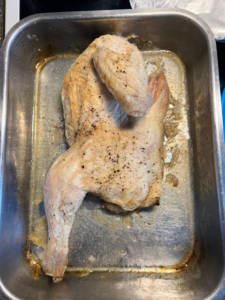
It’s an easy mistake to make. After preparing dinner and cleaning up, you forget to put the leftovers in the refrigerator. The following morning, you find cooked chicken, beef, or another meat dish still sitting on the kitchen counter.
The food may look exactly as it did the night before. It might even smell perfectly normal.
Throwing it away can feel wasteful, especially when you’ve prepared a large meal.
However, cooked meat that has been left at room temperature overnight should not be eaten.
Perishable foods can become unsafe when they remain at temperatures that allow harmful bacteria to multiply. Some bacteria can also produce toxins that reheating may not eliminate.
Understanding how temperature and storage time affect cooked meat can help you make safer decisions about leftovers.
This guide explains why meat left out overnight should be discarded, how long cooked food can remain unrefrigerated, and the best ways to store meals for later.
Can You Eat Cooked Chicken or Beef Left Out Overnight?
The safest answer is no.
Cooked chicken and beef left at ordinary room temperature throughout the night should be discarded.
Even if the food looks and smells normal, that doesn’t mean it’s safe.
Cooking meat to the appropriate internal temperature destroys many harmful microorganisms. However, cooked food can become contaminated again through contact with hands, utensils, kitchen surfaces, or other foods.
When the food remains at room temperature for an extended period, bacteria may multiply.
One challenge is that bacteria capable of causing foodborne illness don’t always produce noticeable changes in the food.
A serving of roasted chicken might still look appetizing the next morning.
A piece of cooked beef may retain its usual color and smell.
Neither observation confirms that the food is safe.
That’s why food-safety recommendations focus on storage time and temperature rather than appearance alone.
Understanding the Food Temperature Danger Zone
Temperature plays an important role in keeping perishable foods safe.
The United States Department of Agriculture (USDA) identifies the food temperature danger zone as approximately 40°F to 140°F (4°C to 60°C).
Within this range, many bacteria can grow more rapidly.
When freshly cooked meat is removed from the stove or oven, its temperature gradually decreases.
If it remains on the counter, it may spend a considerable amount of time within the danger zone.
Under favorable conditions, some bacteria can multiply quickly, potentially doubling in number in about 20 minutes.
This doesn’t mean every food becomes unsafe at exactly the same moment.
Different foods, bacteria, and environmental conditions affect how quickly contamination becomes a concern.
However, the recommended time limits provide a practical safety margin.
Refrigeration slows bacterial growth and helps preserve food for later use.
How Long Can Cooked Meat Stay at Room Temperature?
A widely recommended food-safety rule is to refrigerate perishable food within two hours.
When the surrounding temperature is above 90°F (32°C), that limit is reduced to one hour.
These recommendations apply to cooked chicken, beef, and many other perishable dishes.
| Storage situation | Recommended action |
|---|---|
| Normal room temperature | Refrigerate within 2 hours |
| Temperature above 90°F (32°C) | Refrigerate within 1 hour |
| Cooked meat left out overnight | Discard |
| Properly refrigerated cooked meat | Generally consume within 3–4 days |
| Continuously frozen at 0°F (-18°C) | Remains safe while frozen, although quality may decline |
Remember that the recommended time includes the period when food is sitting on the dining table.
For example, if dinner remains on the table for an hour, you shouldn’t leave the leftovers out for another two hours before refrigerating them.
Planning ahead can help prevent food from sitting at unsafe temperatures.
Why Cooked Chicken Requires Careful Storage
Chicken is a popular source of protein and can be prepared in many ways.
However, proper handling is important both before and after cooking.
Raw poultry may contain bacteria such as Salmonella and Campylobacter.
Cooking chicken thoroughly helps reduce these hazards.
But once the chicken is cooked, it can become contaminated again if handled improperly.
Possible sources of contamination include unwashed hands, cutting boards, utensils, countertops, and containers that haven’t been cleaned adequately.
If cooked chicken is left unrefrigerated for several hours, bacteria introduced after cooking may have an opportunity to multiply.
Large portions of chicken also require attention when cooling.
For example, placing an entire batch of hot chicken into one deep container can slow the cooling process.
A better approach is to separate leftovers into smaller portions and place them in shallow containers.
This helps the food cool more efficiently in the refrigerator.
Is Cooked Beef Any Safer When Left Out?
Some people believe beef can remain at room temperature longer than chicken.
However, cooked beef is also perishable and should follow the same general storage guidelines.
Whether you’re storing steak, ground beef, roast beef, meatballs, or beef stew, proper refrigeration is important.
Different microorganisms may be associated with improperly handled cooked foods.
Examples include:
Clostridium perfringens: This bacterium can multiply in cooked foods that are cooled too slowly or held at unsuitable temperatures.
Staphylococcus aureus: This organism may contaminate food through handling. Under certain conditions, it can produce toxins.
Salmonella: Improper handling and cross-contamination can introduce this bacterium into prepared foods.
Bacillus cereus: This bacterium is associated with several types of improperly stored food and can produce toxins under certain conditions.
The particular risk depends on the food, preparation process, and storage conditions.
The important takeaway is that beef should not be considered safe after being left out overnight simply because it is different from poultry.
Can Reheating Make Overnight Meat Safe Again?
Reheating leftovers is useful when the food has been stored properly.
However, reheating is not a reliable way to make meat safe after it has remained at room temperature overnight.
Heating food to an appropriate internal temperature can destroy many living bacteria.
The problem is that certain bacteria can produce toxins that remain active even after reheating.
For example, some strains of Staphylococcus aureus can produce heat-resistant toxins.
Certain toxins associated with Bacillus cereus may also withstand normal reheating.
This means that even thoroughly heated food can still present a risk if it was stored improperly beforehand.
Using a microwave, frying pan, oven, or slow cooker doesn’t guarantee that these hazards will be eliminated.
For this reason, meat that has exceeded the recommended unrefrigerated storage time should be discarded rather than reheated.
What If You Accidentally Eat Meat That Was Left Out?
Eating improperly stored meat doesn’t automatically mean you will become ill.
However, it can increase the risk of foodborne illness.
Symptoms depend on the microorganism or toxin involved.
Possible symptoms include nausea, vomiting, diarrhea, stomach cramps, abdominal discomfort, and sometimes fever.
Some symptoms may appear within a few hours, while others can take several days to develop.
Mild cases may improve with rest and sufficient fluids.
However, foodborne illness can sometimes become serious, particularly for young children, older adults, pregnant people, and individuals with weakened immune systems.
When to Contact a Healthcare Professional
Seek medical advice if symptoms are persistent, worsening, or concerning.
Prompt medical attention is particularly important if you experience bloody diarrhea, a high fever, severe abdominal pain, frequent vomiting that prevents fluid intake, or signs of dehydration.
Dehydration may cause dizziness, unusually little urination, and significant weakness.
Diarrhea lasting more than three days also warrants medical evaluation.
People in higher-risk groups should seek professional guidance sooner when symptoms develop.
If symptoms are severe, urgent medical care may be necessary.
Can You Tell Whether Meat Is Unsafe by Smelling It?
Not reliably.
Smell and appearance can sometimes reveal obvious spoilage, but they cannot confirm that food is safe.
Certain harmful bacteria may be present without producing a noticeable odor.
Likewise, contaminated food may retain its usual color and texture.
Signs that food has spoiled can include an unpleasant smell, slimy texture, unusual discoloration, or visible mold.
However, the absence of these signs doesn’t mean that improperly stored meat is safe to eat.
A piece of chicken left out overnight may smell normal and still present a risk.
The same is true for beef.
Rather than relying on your senses, consider how long the food has been unrefrigerated and whether it was maintained at a safe temperature.
Never taste questionable meat to test whether it is safe.
How to Store Cooked Chicken and Beef Safely
Good storage habits can reduce food waste while helping protect your household from foodborne illness.
You don’t need specialized equipment.
A refrigerator, suitable containers, and a few consistent routines are usually enough.
1. Refrigerate Leftovers Promptly
Place cooked meat in the refrigerator within two hours.
If the surrounding temperature exceeds 90°F (32°C), refrigerate it within one hour.
Avoid leaving food on the counter while finishing household chores or waiting until bedtime.
2. Divide Large Portions
Large amounts of hot food can cool slowly.
Separating leftovers into smaller portions helps them reach refrigerator temperatures more quickly.
Shallow containers are especially useful for stews, casseroles, and large quantities of cooked meat.
You don’t need to wait for food to cool completely to room temperature before refrigerating it.
3. Check Your Refrigerator Temperature
Maintain your refrigerator at 40°F (4°C) or below.
A refrigerator thermometer is a simple way to check whether the appliance is operating at a suitable temperature.
4. Cover and Protect Leftovers
Store food in clean, covered containers or appropriate food-storage packaging.
This helps reduce exposure to contamination and prevents the food from drying out.
5. Label Food With the Date
Writing the preparation date on containers can make it easier to track how long leftovers have been stored.
This is especially helpful for meal preparation or when several dishes are stored together.
How Long Does Cooked Meat Last in the Refrigerator?
Properly refrigerated cooked chicken and beef generally remain suitable for consumption for three to four days.
This guidance applies to many common dishes, including roasted chicken, grilled chicken, cooked ground beef, roast beef, beef stew, meatballs, and meat casseroles.
The food should have been refrigerated promptly and kept at 40°F (4°C) or below.
If you don’t plan to eat the leftovers within three to four days, freezing them is a practical option.
When reheating properly stored leftovers, the USDA recommends an internal temperature of 165°F (74°C).
A food thermometer can help you check the temperature accurately.
Remember that this reheating recommendation applies to food that has been stored safely.
It does not mean that meat left on the counter overnight can be made safe simply by heating it again.
Can You Freeze Cooked Chicken or Beef?
Yes.
Freezing cooked meat is a convenient way to preserve leftovers for longer periods.
For best results, divide the food into meal-sized portions.
Place each portion in a freezer-safe container or bag.
Remove excess air where practical, seal the package, and label it with the date.
Keep the freezer at 0°F (-18°C) or below.
Food maintained continuously at this temperature can remain safe indefinitely, although flavor and texture may gradually decline.
For better eating quality, cooked meat leftovers are generally best used within a few months.
Safe Ways to Thaw Frozen Meat
There are several recommended methods for thawing frozen food.
Refrigerator thawing is convenient because it keeps the food at a controlled temperature.
Cold-water thawing can also be used when the food is sealed in a leakproof package and the water is changed regularly.
Microwave thawing is another option, but food thawed this way should generally be reheated promptly.
Avoid leaving frozen meat on the kitchen counter to thaw at room temperature.
Common Leftover Storage Mistakes
Even experienced home cooks sometimes develop habits that increase food-safety risks.
Recognizing these mistakes can help make food storage more reliable.
Leaving Covered Food Out Overnight
Covering a plate or container helps protect it from some forms of contamination.
However, a lid doesn’t prevent bacteria already present from multiplying when food remains at unsafe temperatures.
Assuming Food Is Safe Because It Smells Fine
Harmful microorganisms don’t always change the smell or appearance of food.
Storage time and temperature are more useful indicators.
Reheating the Same Dish Repeatedly
Repeated heating and cooling can create opportunities for improper handling.
A practical approach is to store leftovers in individual portions and reheat only the amount you plan to eat.
Using Very Deep Containers
Large containers filled with hot food may cool slowly.
Shallow containers help food cool more efficiently.
Overcrowding the Refrigerator
A refrigerator needs adequate airflow to maintain consistent cooling.
Avoid packing it so tightly that cold air cannot circulate properly.
Assuming a Cool Room Is Cold Enough
A kitchen may feel cool without being cold enough for safe food storage.
Unless perishable food is continuously maintained at an appropriate temperature, normal room-temperature storage limits still apply.
Frequently Asked Questions
Can I eat cooked chicken that sat out all night?
No. Cooked chicken left at room temperature overnight should be discarded, even if it looks and smells normal.
Is cooked beef safe after eight hours on the counter?
No. Eight hours exceeds the standard recommended time limit for perishable food kept at ordinary room temperature.
Can I microwave meat that was left out overnight?
Microwaving is not a reliable solution. Some bacterial toxins may remain even after the food has been heated.
Does covering meat make it safe to leave out?
No. Covering food does not stop bacteria from growing when storage temperatures are unsuitable.
What if the kitchen was cold overnight?
A cool-feeling room is not necessarily cold enough. Unless the food was continuously kept at 40°F (4°C) or below, meat left out overnight should be discarded.
How long can cooked chicken stay in the refrigerator?
Generally, three to four days when refrigerated promptly at 40°F (4°C) or below.
How long does cooked beef last in the refrigerator?
Most properly stored cooked beef leftovers also have a recommended refrigerated storage period of three to four days.
Can meat be unsafe even if it smells normal?
Yes. Some harmful bacteria and toxins do not produce noticeable changes in smell, appearance, or taste.
What temperature should leftovers reach when reheated?
Properly stored leftovers should generally be reheated to an internal temperature of 165°F (74°C).
What should I do if I already ate meat that was left out?
Monitor for symptoms such as nausea, vomiting, diarrhea, fever, or stomach cramps. Eating the food doesn’t guarantee illness, but seek medical attention if symptoms are severe, persistent, or accompanied by dehydration.
Final Thoughts
Finding cooked meat on the counter the morning after dinner can be frustrating.
Nobody likes wasting food, especially after spending time and money preparing a meal.
However, cooked chicken and beef left at room temperature overnight are not considered safe to eat.
Bacteria can multiply without causing noticeable changes in the food.
And while reheating can destroy many microorganisms, it doesn’t reliably eliminate every toxin that may have formed.
The most effective approach is prevention.
Refrigerate perishable leftovers within two hours, or within one hour when the surrounding temperature exceeds 90°F (32°C).
Store cooked meat in shallow, covered containers.
Keep your refrigerator at 40°F (4°C) or below.
And plan to eat refrigerated leftovers within three to four days or freeze them for later.
If cooked meat has been left on the kitchen counter overnight, the safest choice is to throw it away.
A little food waste is disappointing, but following proper storage practices helps protect the health of everyone at your table.
Leave a Reply