For 76-year-old Ruth Talbot, Thanksgiving was supposed to be a joyful occasion filled with family, homemade meals, and familiar traditions.
However, an unexpected discovery at the end of her driveway interrupted her holiday preparations and encouraged her to address a neighborhood disagreement that had been developing for months.
What began with a damaged trash can eventually became an important lesson about communication, personal responsibility, and the difference between generosity and obligation.
Welcoming a New Neighbor
Ruth and her husband, Frank, had lived in their home for 41 years.
They purchased the property in 1983, when their son, Danny, was four years old. Over the decades, they developed close relationships with their neighbors and enjoyed being part of a friendly community.
When their longtime neighbor Ellen moved to Ohio to live with her daughter, Ruth was saddened to see her leave.
Nevertheless, she looked forward to welcoming the new homeowner, Denise, who moved into the property in April.
Ruth prepared a loaf of homemade banana bread and delivered it shortly after Denise arrived.
She hoped their relationship would develop into another pleasant neighborhood friendship.
Unfortunately, their expectations about sharing belongings and respecting personal property were quite different.
Borrowing Without Asking
The first unusual encounter occurred when Ruth discovered Denise standing inside her garage with two flowerpots and a gardening rake.
Denise explained that she needed several household items after moving into her new home and intended to return everything later.
Wanting to be helpful, Ruth allowed her to take the belongings.
Several days later, however, Ruth needed her rake and had to visit Denise’s house to retrieve it.
She discovered that it had been left outside in the rain.
Over the following weeks, other gardening tools began disappearing from the garage, including a trowel and a cultivator that Frank had repaired years earlier.
Ruth initially assumed she had misplaced them.
Then, one Saturday in June, the couple returned from grocery shopping and discovered that their lawn mower was missing.
Frank reviewed footage from their garage security camera and saw Denise removing the mower while they were away.
Ruth visited her neighbor and brought the equipment home.
Although she was disappointed, she avoided discussing the larger issue because she wanted to maintain a friendly relationship.
Additional Concerns Develop
During a warm afternoon in July, Ruth discovered that Denise had connected a garden hose to their outdoor faucet and was using their water to fill her swimming pool.
Frank expressed concern about the unauthorized use of their household utilities.
Ruth disconnected the hose, neatly gathered it, and returned it to Denise’s side of the property.
Once again, she avoided a direct conversation.
The following month, Ruth noticed Denise cutting flowers from her garden.
These particular roses held special sentimental value because they had originally belonged to Ruth’s mother.
Ruth had carefully grown them from cuttings in 1991, and Frank had built a trellis to support them.
Denise explained that she wanted samples so she could grow similar roses in her own garden.
Although Ruth was uncomfortable with the situation, she found herself offering gardening advice rather than explaining why the flowers were important to her.
A Disagreement Over Household Trash
By September, Ruth noticed that her outdoor trash cans were frequently full before collection day.
Since she and Frank lived alone, they generally produced very little household waste.
One evening in October, Ruth discovered Denise placing two large garbage bags inside their bins.
She politely requested that Denise use her own trash cans.
Denise explained that her bins were frequently full and that Ruth appeared to have additional space available.
Ruth suggested contacting the city to request another container, but Denise was reluctant to pay the additional expense.
Despite Ruth’s request, the situation continued.
Eventually, Ruth began carrying her household waste to a smaller container behind the house to avoid another uncomfortable conversation.
Frank encouraged his wife to address the issue directly.
He reminded her that maintaining a peaceful relationship should not require her to continually inconvenience herself.
An Unexpected Thanksgiving Discovery
On Thanksgiving morning, Ruth was busy preparing dinner for eleven family members.
She had a pie in the oven, potatoes waiting to be prepared, and several other household responsibilities to complete.
Around midday, she walked outside to dispose of some kitchen waste.
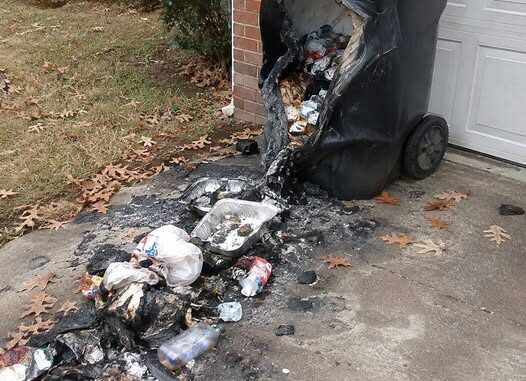
When she reached the driveway, she discovered that one side of her plastic trash can had melted, leaving its contents scattered across the ground.
Inside the damaged container were ashes and pieces of charcoal.
Earlier that morning, Ruth had noticed Denise and her guests preparing food on a charcoal grill.
She suspected that the remaining charcoal had been placed inside her trash can.
Frank examined the damage and recognized the potential safety concerns associated with disposing of charcoal before it had completely cooled.
Once the container was safe to move, Ruth decided to speak with Denise.
Requesting a Replacement
Ruth brought the damaged trash can to Denise’s house and explained what she had discovered.
Denise acknowledged emptying the grill but said she believed the charcoal had cooled sufficiently.
Initially, she suggested that Ruth purchase another container herself.
After months of similar disagreements, Ruth decided that she needed to communicate her expectations more clearly.
She requested a replacement of the same size and quality.
Denise eventually indicated that she might reimburse Ruth after the holiday.
However, Ruth wanted a definite commitment and requested written confirmation, with payment by the following Monday.
The conversation ended without a clear resolution.
Ruth returned home and continued preparing Thanksgiving dinner, although the encounter remained on her mind throughout the celebration.
Putting Her Concerns in Writing
After her family departed that evening, Ruth sat at the kitchen table and prepared a letter.
She documented the incident, described the damage, and included the replacement cost of $68.49.
She also included information from the original purchase receipt and explained that security camera footage was available.
Ruth stated that if the matter could not be resolved, she would consider pursuing reimbursement through small claims court.
Frank reviewed the letter and supported her decision.
Ruth also took out a decorative serving platter with blue flowers around its rim, packaged it separately, and prepared to deliver it alongside the letter as a symbolic gesture.
The following morning, she left both packages at Denise’s doorstep.
Later that afternoon, Denise called to discuss the letter and expressed surprise that Ruth was considering formal action over the damaged container.
Ruth calmly explained that she simply wanted her property replaced.
For the first time in months, she did not feel responsible for resolving the disagreement by overlooking her own concerns.
Seeking Assistance Through Mediation
On Monday, Ruth spoke with Carol, an experienced county mediator who had previously worked as a school guidance counselor.
Carol listened carefully as Ruth described the Thanksgiving incident.
However, their conversation soon expanded beyond the damaged trash can.
Ruth explained the previous experiences involving her gardening tools, lawn mower, outdoor faucet, and flowers.
Carol asked what Ruth ultimately wanted to achieve.
After reflecting on the question, Ruth realized that her main concern was not simply receiving reimbursement.
She wanted to feel comfortable in her own home and know that her belongings would remain where she had left them.
The mediation center contacted Denise separately, and both women voluntarily agreed to attend a meeting.
Reviewing What Had Happened
The following Wednesday, Ruth and Denise met with Carol at the mediation center.
Denise initially focused on the replacement cost, explaining that she had believed the charcoal was cool enough to discard.
Ruth acknowledged that the damage might not have been intentional.
However, she showed footage from her security camera documenting Denise checking her own trash can before walking over to Ruth’s container.
Denise explained that her bin was full and that she assumed Ruth had additional space.
Ruth reminded her that she had previously requested that Denise stop using her containers.
She also shared the footage showing Denise removing the lawn mower from the garage without permission.
These recordings helped illustrate that the Thanksgiving incident was part of a broader disagreement about personal property and communication.
Understanding Different Perspectives
During the conversation, Denise explained that she had grown up in an apartment building in Chicago, where neighbors frequently shared household items.
She was 44 years old and had purchased her first home following a divorce.
The unexpected expenses of homeownership had been challenging, particularly because she needed gardening equipment and other supplies she had never previously owned.
Ruth understood those difficulties.
She remembered when she and Frank had purchased their first home and needed assistance from their neighbors.
Frank had regularly borrowed a lawn mower during their first summer, but he always requested permission and returned it promptly.
That distinction helped Ruth explain her concerns.
She was not opposed to helping Denise.
She simply wanted the opportunity to decide when and how her belongings could be shared.
Denise also acknowledged that some of her previous comments had been inconsiderate.
She apologized for the way she had responded on Thanksgiving and admitted that embarrassment had influenced her reaction.
Ruth appreciated the acknowledgment.
Reaching a Written Agreement
With Carol’s assistance, the two neighbors developed a written agreement addressing their concerns.
Under the arrangement, Denise agreed to:
-
Pay $68.49 toward the replacement trash can.
-
Remove the damaged container and remaining household waste.
-
Return Ruth’s missing gardening tools by Saturday.
-
Avoid entering the garage without permission.
-
Use her own outdoor faucet and trash containers.
-
Leave Ruth’s garden and flowers undisturbed.
-
Request permission before borrowing household equipment.
Both women reviewed and signed the agreement.
Ruth also told Denise that she could keep the flowerpots she had previously borrowed.
Before leaving, Denise explained that the rose cuttings had successfully developed roots and were growing on her kitchen windowsill.
She offered to return them.
Ruth considered the offer but decided Denise could keep the cuttings and plant them in the spring.
This time, the decision was entirely Ruth’s.
A Welcome Change
On Saturday morning, Ruth heard a knock at her front door.
Denise was standing outside with the missing gardening tools and an envelope containing the reimbursement.
The cultivator had been cleaned, and the familiar green tape Frank had wrapped around its handle was still there.
Ruth checked the payment, thanked Denise, and accepted the returned belongings.
Denise also collected the damaged trash can and the remaining waste, fulfilling the responsibilities outlined in their agreement.
Later that afternoon, Ruth returned the cultivator to its usual place in the garage.
She left the garage door open while completing her gardening responsibilities, something she had gradually stopped doing over the previous months.
Frank joined her outside with a cup of coffee.
For the couple, it felt good to return to a familiar routine.
Learning That Permission Matters
A week later, Denise knocked on Ruth’s door again.
This time, she politely asked whether she could borrow a pair of pruning shears.
Ruth knew exactly where the equipment was, but she intended to use it herself that afternoon.
Instead of changing her plans to accommodate the request, she explained that the shears were unavailable.
Denise accepted the answer without complaint and returned home.
It was a brief conversation, but it represented meaningful progress.
Ruth had learned that declining a request did not make her an inconsiderate neighbor.
Denise had learned that asking permission also meant respecting the answer.
Later that afternoon, when Ruth went outside to trim her roses, her gardening equipment was exactly where she had left it.
The Importance of Healthy Neighborhood Boundaries
Friendly relationships between neighbors can make communities more welcoming and supportive.
Sharing equipment, offering assistance, and exchanging garden produce are wonderful ways to build connections.
However, these arrangements work best when everyone respects personal property and communicates openly.
Borrowing should involve permission, reasonable care, and timely returns. When accidental damage occurs, accepting responsibility can help prevent misunderstandings from becoming larger disagreements.
Ruth’s experience also illustrates how mediation can provide an opportunity to discuss concerns and develop mutually acceptable solutions without unnecessary confrontation.
Final Thoughts
What began with a damaged trash can on Thanksgiving eventually helped two neighbors develop a clearer understanding of respect and responsibility.
Ruth discovered that she could remain generous and considerate without overlooking her own needs.
Denise gained a better understanding of the importance of permission, accountability, and communication.
Their relationship did not need to become a close friendship to improve. Establishing clear expectations was enough to create a more comfortable neighborhood environment.
Being a good neighbor does not mean agreeing to every request. Sometimes, the foundation of a respectful relationship is simply learning to ask, listen, and accept another person’s answer.
Leave a Reply