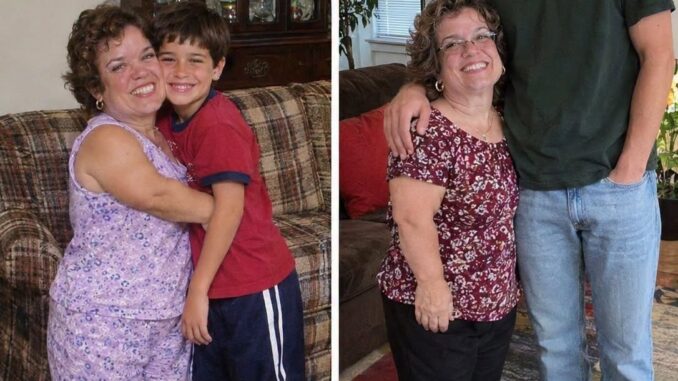
For twenty years, Elvira Montoya believed that a severe winter storm was responsible for the loss of her daughter, son-in-law, and eldest grandson.
Her younger grandson, Mateo, was the only survivor. She devoted the following two decades to raising him, providing a loving home, and helping him build a meaningful future.
However, shortly before the twentieth anniversary of the accident, Mateo returned home carrying a handwritten letter that would change their understanding of that winter evening.
What followed was an emotional journey involving unanswered questions, personal accountability, and the enduring strength of family bonds.
A Christmas Filled With Happy Memories
Elvira, a 70-year-old retired elementary school teacher, lived in Alamosa, Colorado, where she had spent much of her life.
Her husband, Rubén, had passed away when she was 44, leaving her with their only daughter, Lucía.
Twenty years earlier, Lucía had traveled from Pueblo to spend Christmas with her mother. She was accompanied by her husband, Andrés, and their two sons, eight-year-old Tomás and five-year-old Mateo.
The family spent five wonderful days together.
They exchanged presents, enjoyed homemade hot chocolate, and shared traditional cookies prepared using Elvira’s mother’s recipe.
Elvira had also knitted a pair of red mittens for each of her grandsons.
These ordinary family moments would eventually become some of her most treasured memories.
An Unexpected Change in the Weather
On December 28, Lucía and her family prepared to return home.
The weather forecast indicated that a winter storm was approaching the mountains, and Elvira encouraged them to remain another night.
However, Andrés was expected at work the following morning, so the family decided to continue with their travel plans.
Elvira watched from her driveway as Mateo waved his red mittens through the window and Tomás made funny expressions from the back seat.
Lucía promised to call when they arrived safely.
As the evening progressed, Elvira became increasingly concerned when she received no response to her calls.
Later that night, a representative from the local sheriff’s office contacted her with heartbreaking news.
The family’s vehicle had been involved in a serious accident near La Veta Pass.
Lucía, Andrés, and Tomás had passed away. Mateo had survived and was receiving medical treatment at a hospital in Walsenburg.
Beginning a New Chapter Together
With assistance from a neighbor, Elvira traveled to the hospital to be beside her grandson.
Mateo required considerable medical care and time to recover.
Healthcare professionals explained that his memories of the incident might be incomplete and encouraged Elvira not to pressure him into remembering details.
Following his recovery, Mateo moved into his grandmother’s home.
At nearly fifty years old, Elvira found herself raising a young child again while continuing her teaching career.
Her days became filled with school lunches, medical appointments, homework, birthday celebrations, and soccer games.
Although the circumstances were challenging, she remained committed to providing Mateo with stability, affection, and encouragement.
A Childhood Memory That Never Completely Disappeared
Several weeks after the accident, Mateo woke during the night feeling frightened.
He told his grandmother that he remembered a man carrying a light near the family’s vehicle.
Elvira believed the experience was connected to his fragmented memories and the emotional effects of the accident.
She comforted him and explained that the difficult weather conditions had caused the vehicle to leave the road.
Mateo eventually returned to sleep, and the conversation was not revisited for many years.
Elvira believed she was following the advice she had received and helping her grandson move forward without unnecessary distress.
Mateo Builds a Promising Future
As Mateo grew older, he developed into a thoughtful, responsible, and observant young man.
He attended Adams State University in Alamosa, where he studied criminal justice and graduated with honors.
Elvira proudly attended his graduation, celebrating the achievements of the grandson she had raised.
After completing his education, Mateo began working for a local private investigation firm.
His responsibilities included reviewing documents, conducting background research, and assisting with insurance-related investigations.
He particularly enjoyed work that involved examining information carefully and discovering answers to complicated questions.
Eventually, his professional interests encouraged him to reconsider an important chapter of his own life.
Questions About the Past
Several weeks before the twentieth anniversary of the accident, Elvira noticed changes in Mateo’s behavior.
He frequently spent evenings reviewing documents and working on his laptop.
During dinner, he began asking questions about the day his family had departed, including when they left and whether authorities had contacted Elvira again after the initial investigation.
She assumed he was becoming curious about his childhood and wanted to understand more about the family he had lost.
What she did not realize was that Mateo had already spent several months conducting his own research.
One snowy Sunday afternoon, he returned home carrying a folded handwritten letter.
He asked his grandmother to sit down with him.
He explained that he had discovered information suggesting the original account of the accident might have been incomplete.
A Letter From a Retired Deputy
The letter had been written by Thomas Hargis, an 81-year-old retired deputy who had responded to the accident twenty years earlier.
According to his account, evidence at the location suggested that another vehicle might have been involved.
He described observing two sets of tire tracks, damage to the family’s vehicle, and additional markings that indicated someone had approached the scene before leaving.
Hargis explained that he had documented these observations in his original report.
However, he claimed that his supervisor, Sheriff Raymond Brandt, had instructed him to revise the report and classify the incident as a weather-related, single-vehicle accident.
Although Hargis had followed those instructions, he had privately preserved a copy of his original findings and photographic material.
Now experiencing serious health difficulties, he wanted the family to have access to the information.
The letter also included a key to a safe deposit box where the documents had been stored.
How Mateo Discovered the Information
Mateo explained that his interest in the accident had returned while he was working on an unrelated insurance investigation.
Certain photographs reminded him of fragments from his childhood.
He recalled a red vehicle, bright headlights, and someone carrying a flashlight near the family’s minivan.
Rather than relying entirely on those memories, he requested the original public accident report.
He discovered that the document was unusually brief and contained no reference to another vehicle.
Curious about the discrepancy, he began searching for the deputy who had signed it.
After several months, Mateo located Hargis at an assisted living facility in Trinidad, Colorado.
Their initial meeting was emotional, and the retired deputy requested additional time before discussing the incident.
Eventually, he provided Mateo with the letter and the key, asking that Elvira receive the information first.
Recovering Documents From Twenty Years Earlier
The following morning, Elvira and Mateo traveled to Walsenburg.
Along the way, they stopped near the roadside memorial dedicated to Lucía, Andrés, and Tomás.
For years, Elvira had passed the location without stopping. This time, she allowed herself to reflect on the memories associated with it.
At the bank, they accessed the safe deposit box and discovered an aged folder containing a four-page accident report and an undeveloped roll of photographic film.
The original report described observations that were absent from the official version.
Mateo later arranged for the film to be professionally developed.
The resulting photographs appeared consistent with several details described in the retired deputy’s letter.
Together, the documents provided a clearer basis for examining what might have happened that evening.
Considering Their Available Options
Mateo shared the information with his employer, Gilbert Archuleta, an experienced private investigator.
After reviewing the documents, Gilbert explained that the considerable amount of time that had passed could complicate potential legal proceedings.
He expressed concern that certain legal deadlines might limit the family’s options.
Although Elvira was disappointed, Gilbert reminded her that establishing an accurate account of the past could still have significant personal value.
That evening, Elvira and Mateo discussed what they wanted to accomplish.
Mateo explained that his primary goal was to receive an honest explanation from Kyle Brandt, the former sheriff’s son, whom the newly discovered information suggested had been involved.
Elvira respected her grandson’s decision and agreed to accompany him.
A Conversation Twenty Years in the Making
Kyle Brandt was now 39 years old and operated a successful automobile dealership in Walsenburg.
When Elvira and Mateo arrived at his business, Kyle immediately recognized the significance of their visit.
He invited them into his office, where Mateo presented the original report and photographs.
After reviewing the documents, Kyle acknowledged his involvement in the incident.
He explained that he had been nineteen years old at the time and had made several irresponsible decisions before driving through the mountains during difficult weather conditions.
According to his account, his vehicle had contributed to the family’s accident.
He also acknowledged leaving the location without arranging immediate assistance and later relying on his father to handle the situation.
Kyle expressed deep regret about his decisions and the consequences they had caused.
For Elvira and Mateo, hearing this acknowledgment was an emotional experience.
After twenty years of uncertainty, they finally had an explanation that addressed many of their unanswered questions.
A Commitment to Personal Change
During their conversation, Kyle also explained that he had struggled with personal difficulties in the years following the accident.
Eventually, he recognized the need to make significant changes in his life.
He sought support, maintained sobriety for fourteen years, and regularly attended recovery meetings.
He also revealed that he had visited the family’s roadside memorial every year on the anniversary of the accident.
Although these actions could not change the past, they helped Elvira and Mateo understand how the experience had continued to affect him.
Mateo listened carefully without suggesting that personal regret removed the importance of accountability.
Saying Goodbye to Thomas Hargis
On December 22, shortly before the twentieth anniversary, Thomas Hargis passed away.
Mateo had visited him at the assisted living facility and shared the outcome of their conversation with Kyle.
The retired deputy expressed relief that the information he had preserved had finally reached the family.
Elvira and Mateo attended his funeral, where they met his daughter, Ruth.
She explained that her father had occasionally spoken about an unresolved incident from his professional career, although his family had never understood the circumstances.
Ruth thanked them for giving him an opportunity to share what he had carried privately for so many years.
Returning to the Memorial
On December 28, Elvira and Mateo returned to La Veta Pass.
A gentle snowfall covered the surrounding landscape.
Kyle was already waiting near the roadside memorial after receiving Mateo’s permission to join them.
The three spent time reflecting on the events that had brought them together.
Mateo invited Kyle to accompany him to the area below the memorial, where they shared a private conversation.
Elvira watched from a distance as her grandson offered a gesture of compassion.
For Mateo, the visit represented an opportunity to revisit a difficult childhood memory with a different perspective.
It did not erase what had happened, but it allowed him to begin moving forward with a greater sense of understanding.
A Public Acknowledgment of Responsibility
In early January, Kyle arranged for a letter to appear in a local newspaper.
In the letter, he publicly acknowledged his involvement in the accident and explained that the original account had not accurately represented the circumstances.
He requested that the relevant authorities review and correct their records.
Kyle also announced his resignation from the local hospital’s board and expressed his intention to sell his automobile dealership.
According to his announcement, the proceeds would support a scholarship fund at Adams State University for students pursuing criminal justice studies.
He intended to name the scholarship after Thomas Hargis, recognizing the retired deputy’s eventual decision to disclose the original information.
An Official Correction
Several months later, the sheriff’s office issued an amended accident report.
The updated document acknowledged the involvement of a second vehicle and referenced the original findings preserved by Hargis, along with Kyle’s statement.
The current sheriff personally visited Elvira’s home to deliver the revised report and offer an apology on behalf of the department.
Although the correction could not change the family’s loss, it provided something Elvira had wanted for years without realizing it: an accurate acknowledgment of what had happened.
For Mateo, it also confirmed that his childhood memories had contained meaningful information.
A Grandmother’s Heartfelt Apology
After the sheriff departed, Elvira sat beside Mateo and reflected on their earlier conversations.
She apologized for dismissing his childhood memory of the man carrying a flashlight.
For years, she had believed that reassuring him was the best way to support his recovery.
Mateo gently reminded her that she had acted according to the information available at the time.
She had been managing her own grief while taking responsibility for raising a young child.
He did not blame her for accepting the explanation provided by the authorities.
Instead, he expressed gratitude for the love, stability, and encouragement she had given him throughout his life.
Their conversation brought them closer and helped Elvira release some of the guilt she had carried since reading the letter.
Rediscovering a Treasured Childhood Keepsake
Later that evening, Elvira retrieved an old shoebox from her hallway closet.
Inside was the pair of small red mittens she had knitted for Mateo twenty years earlier.
He had worn them during that Christmas visit and kept them close throughout much of his childhood.
Mateo held the mittens carefully, remembering how he had waved to his grandmother through the vehicle’s window.
Elvira reminded him that Tomás had been making funny faces beside him.
For a moment, they laughed together while remembering the happy family celebration that had preceded their difficult experience.
The mittens represented more than a childhood possession. They connected Mateo to the love and warmth of his earliest family memories.
Creating a Meaningful New Memorial
In May, after the winter snow had melted, Elvira and Mateo returned to La Veta Pass with a new cedar memorial cross.
It featured the names of Lucía, Andrés, and Tomás, carefully carved into the wood.
Beneath their names was a short inscription acknowledging the truth the family had finally uncovered.
Mateo attached his childhood red mittens to the memorial using yarn from his grandmother’s knitting basket.
As they stood together in the spring sunshine, Mateo explained that he no longer felt the same fear when visiting the location.
He knew that his grandmother had always been there for him, offering reassurance, encouragement, and unconditional love.
That understanding had become more important to him than the difficult memories associated with the place.
The Importance of Truth, Accountability, and Family Support
Elvira and Mateo’s story illustrates how unanswered questions can influence families for many years.
It also highlights the value of preserving accurate information, accepting responsibility for past decisions, and approaching difficult conversations with compassion.
While discovering the truth cannot reverse earlier events, it can provide clarity and help individuals develop a deeper understanding of their experiences.
Forgiveness and reconciliation are personal decisions, and they do not require overlooking responsibility or forgetting the past.
For Elvira and Mateo, their greatest source of strength remained the relationship they had built throughout twenty years together.
Final Thoughts
What began as a grandmother’s commitment to raising her grandson eventually became a shared journey toward understanding, accountability, and emotional healing.
Mateo’s determination helped uncover information that had remained private for two decades, while Elvira’s unwavering support gave him the confidence to pursue those answers.
Standing beside their family’s memorial, they recognized that their lives had been shaped not only by loss but also by countless moments of kindness, perseverance, and love.
Although the past cannot be rewritten, honesty, compassion, and the support of loved ones can help create a more peaceful future.
Leave a Reply