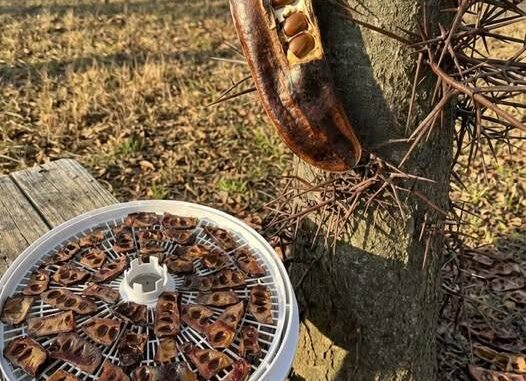
In many suburban streets and city parks, the honey locust tree (Gleditsia triacanthos) is often treated as a background feature—just another shade tree with light, airy leaves and a neat, ornamental shape.
But behind that ordinary appearance is a surprisingly rich history of human use, ecological importance, and natural engineering. For centuries, this tree quietly provided food, materials, and practical tools long before modern industries existed.
Understanding it reveals something deeper: many “common” trees are far more valuable than they first appear.
A Tree with Deep Historical Roots
The honey locust is native to North America, especially regions like the Mississippi Valley and parts of the Appalachian region. Long before industrial agriculture and global supply chains, it played a meaningful role in the daily survival of Indigenous communities and early settlers.
Rather than being a decorative species, it functioned as a multipurpose natural resource—offering food, materials, and even natural cleaning agents from a single organism.
The Sweet Secret Inside Its Pods
One of the most distinctive features of the honey locust is its long, twisted seed pods.
Inside those pods is a soft, sweet pulp that surrounds the seeds. This pulp contains natural sugars and has a rich, earthy sweetness.
Historically, people used it in several ways:
- Eaten directly as a natural sweet snack
- Boiled into a simple syrup-like extract
- Fermented into traditional beverages in some regions
At a time when refined sugar was rare and expensive, this natural sweetness made the tree especially valuable as a seasonal food source.
Seeds That Became a Coffee Substitute
Beyond the pulp, the seeds inside the pods also had practical use.
Once roasted, they develop a deep, nutty aroma. Early settlers sometimes ground them into a coarse meal or used them as a coffee alternative during times when imported coffee was unavailable or unaffordable.
While not a perfect substitute, they provided warmth, comfort, and familiarity in harsh frontier conditions.
A Strong and Reliable Source of Wood
The honey locust is also known for its extremely durable wood.
Unlike many trees that break down quickly when exposed to moisture or soil, honey locust wood resists decay naturally. This made it especially useful for:
- Fence posts
- Wagon components
- Tool handles
- Construction supports
Its strength and resistance to rot meant it could last for decades outdoors without significant deterioration, making it highly valuable in early rural life.
A Natural Cleaning Agent
Another lesser-known feature of the honey locust is its chemical composition.
Parts of the tree—including bark and pods—contain natural compounds called saponins. When mixed with water and agitated, these compounds create a mild foam with cleaning properties.
Before commercial soaps were widely available, people sometimes used plant-based alternatives like this for:
- Washing fabrics
- Cleaning household items
- Gentle personal cleansing
It was a natural solution that reflected early reliance on botanical resources for everyday needs.
A Built-In Defense System: The Thorns
Wild honey locust trees are also famous for their large, sharp thorns, which can grow in clusters along the trunk and branches.
These thorns likely evolved as protection against large herbivores that once roamed North America, preventing animals from stripping the tree’s valuable pods.
Early humans also found practical uses for them, including:
- Makeshift needles
- Fishing hooks
- Small fastening tools
Modern cultivated varieties are often thornless, especially in urban landscaping, but wild specimens still show this dramatic defensive trait.
An Ecological Support System
Beyond human use, the honey locust plays an important ecological role.
Its leaves are small and finely divided, creating a type of filtered shade rather than dense darkness. This allows sunlight to reach the ground, supporting:
- Grass growth
- Wildflowers
- Insect populations
In the fall and winter, fallen pods become an important food source for wildlife such as:
- Deer
- Squirrels
- Birds
In return, animals help spread the seeds, ensuring the tree continues to grow in new areas.
Why It Thrives in Modern Cities
One of the reasons the honey locust is still widely planted today is its resilience.
It tolerates:
- Poor soil conditions
- Urban pollution
- Heat and drought
- Compacted ground
This adaptability makes it a strong choice for city environments where many other trees struggle to survive.
A Tree We Often Overlook
Despite its usefulness, the honey locust is frequently overlooked in modern life. Most people see only its aesthetic qualities—its filtered shade or graceful branching structure—without realizing its historical and ecological significance.
Yet this tree once functioned as:
- A food source
- A material supplier
- A natural cleaning tool
- A wildlife support system
All in one living organism.
Final Thoughts: Seeing Value in the Ordinary
The honey locust is a reminder that nature often hides its most useful gifts in plain sight.
What looks like a simple shade tree is actually a long-standing example of natural efficiency—offering food, materials, and ecological balance with very little demand in return.
In a world where so much is processed, packaged, and industrialized, the honey locust stands quietly as proof that some of the most valuable resources don’t come from stores or factories—but from living systems that have supported life for centuries.
Sometimes, the “common” tree isn’t common at all.
Leave a Reply