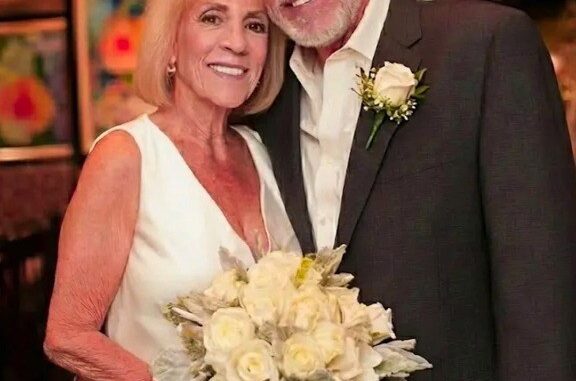
Three months after my mom’s funeral, my dad married her sister. I told myself grief made people do strange things. Then my brother arrived late to the wedding, pulled me aside, and handed me a letter Mom never wanted me to read.
I didn’t think anything could feel worse than watching my mom die. I was wrong. She fought breast cancer for nearly three years. Toward the end, she barely had the strength to sit up, yet she asked if I had eaten, if my brother Robert was keeping up with bills, and if Dad remembered his blood pressure meds. Even in her final days, she was still parenting.
The house still smelled like antiseptic and her lavender lotion when we buried her. Everyone offered the same words:
“She’s not in pain anymore.”
“She was so strong.”
“You’ll be okay. Time helps.”
Time did nothing. It just made the silence louder.
Three months later, Dad asked Robert and me to come over. “Just talk,” he said carefully over the phone.
When we arrived, everything looked the same. Mom’s coat still hung by the door. Her slippers were under the couch. The flowers from the funeral were gone, but the space they left felt permanent. Aunt Laura, Mom’s younger sister, sat next to Dad, hands folded, eyes red as if she had been crying. I remember thinking, Why is she here?
“I want to be honest with you both,” Dad said. “I don’t want secrets.” That should have been my first warning.
He and Laura explained that grief had brought them together and that they were in love. They were getting married. My brother’s face tightened. “Three months after Mom died? This isn’t right,” he muttered.
I tried to convince myself it was grief, that people find comfort in unexpected ways. I nodded politely, though the unease never left. Laura tried to include me over the next few weeks, asking if I wanted to help with flowers or see the venue. I always declined. I didn’t know what I was protecting myself from.
The wedding invitation arrived six weeks later. Small ceremony. Close family only. Mom’s name was nowhere on it. I told myself I was doing the mature thing. I went.
Then Robert arrived, eyes wide, jacket half-on, and grabbed my arm.
“Claire. We need to talk. Right now.”
He handed me a sealed, cream-colored envelope. “Dad isn’t who he pretends to be,” he said.
My blood ran cold.
Robert explained that Mom had discovered something before she died—messages she wasn’t meant to see, dates that didn’t line up, and money quietly moving.
“She realized Dad had been lying to her for years,” Robert whispered. “Not about small things—his entire life.”
I felt my stomach twist.
He continued: the child everyone believed belonged to another man was actually Dad’s. Mom had uncovered the truth and, in her final months, had made a decision. She had rewritten her will so that everything would go to us—her children. Dad and Laura would inherit nothing.
My hands shook as I absorbed it. She hadn’t exposed them while alive but had secured justice quietly and legally. Mom had protected us even in death, orchestrating her final act of truth with precision and courage.
We returned to the reception. Dad saw us and smiled, unaware that the celebration he had anticipated had just turned into a reckoning. “Mom knew. About everything,” I said, holding the envelope.
Laura and Dad went pale. The room buzzed around us with laughter and clinking glasses, oblivious to the secret in our hands.
Months later, Laura left him. Love fades fast when there’s nothing left to inherit. Mom had been right. She didn’t fight while alive. She fought quietly. And in her way, she won.
That day taught me something profound. Even in the face of betrayal and grief, a quiet, careful resolve can outlast anger and deceit. Mom’s final act reminded me that protection, justice, and love can coexist—even when the world believes only chaos remains.
Dad and Laura were left with nothing, and yet the weight of their actions was felt fully. My brother and I kept Mom’s wishes and integrity alive, holding fast to the truth she worked so hard to leave behind.
She didn’t seek confrontation or revenge. She sought a legacy—a way to safeguard us and honor what mattered most. And in that moment, I understood that her strength had never left the house, her love never left our hearts, and her lessons would echo for the rest of our lives.
Mom didn’t just die. She protected. She planned. And she won quietly, brilliantly, and completely.
Leave a Reply