The steam from my coffee swirled into the chilly morning air, carrying memories of Dylan, my late husband, that still haunted every corner of our home. It had been two years since he collapsed tying his running shoes—a sudden heart attack at forty-two that stole him from me and left a gaping void in my life. For over a decade, we had tried to conceive, enduring countless fertility treatments, only to be told I could never carry a child. Dylan had held me through the heartbreak, promising we would adopt, but death intervened before we could even begin. Standing at his casket, I whispered a vow I meant with every fiber of my being: I would still be a mother. I would find the child we were meant to raise together.
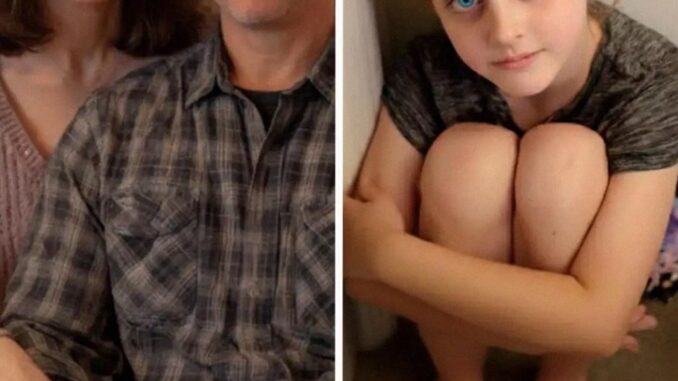
Three months later, I walked into the adoption agency with my mother-in-law, Eleanor, for support. The room felt impossibly still, as if the universe itself had paused. In a corner sat a twelve-year-old girl named Diane. Most prospective parents overlooked children of her age in favor of infants, but something about her stopped me cold. She looked up, and my heart nearly stopped—Diane had Dylan’s eyes. One hazel, one deep blue. A rare, startling heterochromia that felt like a silent blessing from him.
We adopted her, and for a year, Diane became our daughter. She fit into our lives slowly, cautiously, but with an unmistakable spark that reminded me of Dylan.
Then, one afternoon, everything changed.
I found a photo tucked in Diane’s bag. My hands froze. It showed a younger Dylan and Eleanor standing over a baby with the same heterochromatic eyes Diane now had. Scribbled on the back, in Eleanor’s jagged handwriting, was a command: “Diane, burn this. Dylan was your father. I’m your grandmother. Never tell Claire or you’ll destroy his memory.”
A cold, vibrating fury coursed through me. I immediately collected DNA samples—Dylan’s old hairbrush and Diane’s toothbrush. The results arrived quickly: 99.9% paternal match. Dylan had a daughter I didn’t know, hidden from me for years. Eleanor had manipulated the situation, putting Diane into the foster system to protect her own reputation.
I drove straight to Eleanor’s house, the photo and note clutched like evidence. She didn’t lie. She confessed: thirteen years ago, Dylan had fathered a child during an affair. The mother died in a car crash three years later. Dylan had wanted to bring the child home and tell me the truth—but Eleanor convinced him to remain silent. She arranged for Diane’s adoption, keeping me in the dark, and had finally handed Diane the photo and note at the agency to maintain control over the secret.
I cut Eleanor out of our lives immediately. Her priorities had been self-preservation over family.
Returning home, Diane sat waiting, her eyes red from crying. She confessed her fear—every day, she had worried that I would reject her, that I would send her back. I held her tightly, promising that nothing—not lies, not secrecy, not even the complicated shadow of her father—could change that she was my daughter.
The next morning, we went together to Dylan’s gravesite. I spoke aloud the anger and grief I had carried for two years—angry at the years stolen from Diane, heartbroken that Dylan had never revealed the truth. But as I looked at Diane, I realized that the universe had still given me a piece of him. A daughter with his eyes, his spirit, and now a family we would forge together.
Hand in hand, we left the cemetery, leaving the secrets in the dirt, finally free to build a life based on truth and love.
For Diane, the odds had been against her. Children over 12 make up a small fraction of adoptions, often aging out without families. But statistics couldn’t touch the bond we created. We weren’t just an adoption success story—we were a family defined not by blood or betrayal, but by the choice to stay.
Leave a Reply