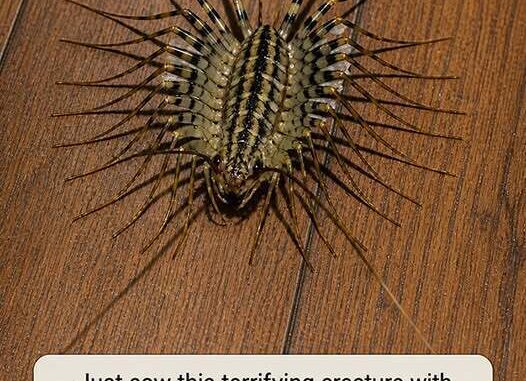
You are walking through your hallway late at night, the silence of the house pressing against your ears, when you catch a flicker of movement out of the corner of your eye. You look down, and your heart spikes with primal, instantaneous terror. A creature, impossibly long and equipped with an obscene, shimmering abundance of legs, is sprinting across the floorboards with a speed that defies the laws of nature. In that split second of pure, unadulterated panic, your brain screams that you have encountered a miniature horror movie villain, a nightmarish insect that surely exists only to inflict harm upon you and your family. Your instinct is to reach for the nearest heavy object, to crush the life out of this intruder, and to reclaim the safety of your home. However, you must stop yourself right now. That strange, many-legged blur you keep finding in your bathroom, your basement, or the dark corners of your laundry room is almost certainly a house centipede, and while it may look like something crawled out of a science fiction nightmare, it is actually acting as your most dedicated, silent, and entirely unpaid home security system.
When we see a house centipede, our visceral reaction is one of absolute revulsion, and it is easy to understand why. With their elongated, segmented bodies and those dozens of frantic, undulating legs, they violate our sense of how a creature should move. They do not crawl; they flow, a blur of movement that triggers a deep-seated evolutionary response to fear anything that moves too quickly or looks too alien. They are naturally drawn to the environment of a modern home because they crave moisture, darkness, and quiet, undisturbed corners. They are not interested in you, they do not want to crawl on you, and they certainly do not want to engage in any sort of conflict. They are simply hunting. They follow the trail of other pests, diligently patrolling the hidden gaps and crevices of your infrastructure, performing a duty that you should be grateful for rather than disgusted by.
It is time to dismantle the myths surrounding these creatures. While many people live in constant fear that a house centipede will bite them in their sleep or attack their children, the reality is remarkably different. Their venom, while highly effective against the prey they hunt, is specifically engineered for tiny insects, not humans. They lack the jaw strength and the biological inclination to pierce your skin. Even in the incredibly rare event that one were to bite a human, the sensation is typically no worse than a mild sting, essentially equivalent to a bee sting that fades away within minutes. Most of the time, the centipede is far more terrified of your massive, thundering footsteps than you could ever be of its tiny legs. When they see you, their only objective is to find the nearest dark gap and disappear, and it is only because they are so desperately trying to escape that they appear to be running toward you.
Leave a Reply