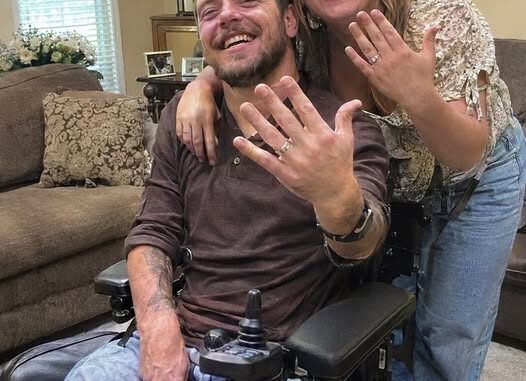
I married a man who was nearing the end of his life because he wanted to experience the comfort of having someone by his side.
Ten days later, I attended his funeral.
That evening, his attorney appeared at my door carrying a letter.
“Carl asked me to wait until after the funeral before giving you this,” he explained.
Then he added something I wasn’t prepared to hear.
“He wanted you to know who he was before you met him.”
I opened the envelope, expecting a final goodbye.
Instead, the first sentence made me sit down.
Selena, our meeting wasn’t a coincidence. I knew you long before you ever walked into my house.
And suddenly, the story of how we’d met began to change.
The Man Who Loved Scrabble
For eleven years, I’d volunteered with a hospice support program in Grand Rapids, Michigan.
Three days a week, I visited people who needed companionship or help with ordinary household tasks.
Sometimes I prepared meals.
Sometimes I changed bedsheets or organized groceries.
And sometimes I simply sat beside someone who wanted to talk.
I learned early on that small gestures could make a difficult day feel a little easier.
Then I met Carl Reeves.
He was thirty-six, lived alone in a modest house on Baldwin Street, and was receiving hospice care for advanced pancreatic cancer.
His home was filled with books.
There were paperbacks on the windowsills, hardcovers stacked beside the couch, and several novels sitting in a laundry basket near the front door.
When I arrived for my first visit, he was sitting at the kitchen table.
A Scrabble board was already set up.
Two cups of tea waited beside it.
“Do you know how to play?” he asked.
“Of course.”
“Do you cheat?”
I smiled.
“Only when necessary.”
He laughed.
“I think we’re going to get along.”
He was right.
An Unexpected Friendship
Over the following months, Carl and I developed a comfortable routine.
I’d bring vegetable soup, help with the dishes, and make tea.
He insisted that I use a chipped blue mug because, according to him, it was the best one in the house.
“But you have six perfectly good mugs in the cabinet,” I pointed out.
“Those are decorative.”
“They’re from the discount store.”
“That doesn’t mean they can’t be decorative.”
Carl had a wonderful sense of humor.
He loved old movies, history books, and word games.
He also noticed little things about people.
Within a few weeks, he knew I liked extra honey in my tea.
He knew I disliked cilantro.
He knew my left knee sometimes bothered me in cold weather.
And he noticed that I hummed while washing dishes.
“You sing the same few notes every time,” he said one afternoon.
“What song?”
“That’s what I’ve been trying to figure out.”
I laughed.
At the time, I thought he was simply observant.
I had no idea that some of those details reminded him of someone he’d known many years earlier.
The Afternoon He Went Quiet
Carl was open about his illness.
He understood that his time was limited, and he preferred to spend it doing things he enjoyed.
But some days were harder than others.
During one Scrabble game, he began telling me a story about his ninth-grade English teacher.
Halfway through a sentence, he struggled to continue speaking.
His illness and treatment had begun affecting his speech.
I could see how frustrated he felt.
Instead of finishing the sentence for him, I looked toward the window.
“Did I tell you what happened at the volunteer center yesterday?”
He shook his head.
I launched into a ridiculous story about a volunteer who’d accidentally locked herself inside a supply closet.
The maintenance worker had mistaken the noises for an animal.
I exaggerated a few details, hoping to make Carl smile.
Eventually, his shoulders relaxed.
A few minutes later, he looked at me.
“You did that on purpose.”
“Did what?”
He smiled faintly.
“Nothing.”
Then he returned to our game.
I thought I’d simply helped him through an uncomfortable moment.
Years later, I would understand why that afternoon meant so much to him.
A Proposal I Never Expected
Four months after we met, I arrived at Carl’s house with groceries.
He was sitting at the kitchen table wearing a neatly pressed blue shirt.
Beside his cup of tea was a small velvet box.
“Carl?”
He looked up.
“Selena, will you marry me?”
I nearly dropped the groceries.
“Are you serious?”
“Completely.”
“We’ve only known each other four months.”
“Four very enjoyable months,” he replied.
Then his expression became serious.
He explained that he’d recently been completing paperwork about his future care.
There were spaces for a spouse, next of kin, and emergency contact.
He’d left them blank.
“I know I can’t offer you a long future together,” he said. “But you’ve made these months happier than I thought they could be.”
I sat across from him.
“Carl, I don’t want you to think you need to marry me just because I’ve been helping you.”
“I don’t,” he answered.
“Then why?”
He looked toward the bookcase.
“Because you’ve never made me feel like a burden.”
I was quiet for a long time.
I’d received training about professional boundaries in caregiving relationships, and I understood that marriage was a serious decision with emotional and legal implications.
I thought carefully about what he was asking.
I cared about Carl.
I enjoyed his company.
And I wanted to spend whatever time we had together.
Finally, I said yes.
Our Small Wedding
The next afternoon, a priest named Father Tomasz came to Carl’s home.
My best friend, Dana, attended as our witness.
There were no elaborate decorations or expensive arrangements.
Carl wore his blue shirt.
I wore a simple white blouse.
We stood in his living room between a bookcase and an old lamp.
During the exchange of rings, Carl’s hands trembled.
He tried to place the ring on my finger but struggled.
I gently held his hand and helped him.
He looked at me with such gratitude that I nearly cried.
When Father Tomasz pronounced us married, Dana burst into tears.
Carl laughed.
“Well,” he said, “at least somebody came prepared.”
For ten days, I was his wife.
Ten Days I’ll Always Remember
I moved into Carl’s house to spend time with him.
We watched old movies.
I read books aloud when he became too tired to read.
We played Scrabble.
He won most of our games, which he never let me forget.
One morning, I entered the living room and discovered a chocolate cupcake beside his bed.
A single candle stood in the frosting.
“Happy birthday,” he said.
I stared at him.
“How did you know it was my birthday?”
He smiled.
“I have my sources.”
He explained that the teenager next door had gone to the bakery for him.
We shared the cupcake.
Carl could only manage a few bites, but he insisted I eat the rest.
I assumed he’d found my birthday on the volunteer paperwork.
I didn’t ask any more questions.
A few nights later, I noticed him holding a very old paperback.
Its cover was faded, and the pages were worn.
“What’s that?” I asked.
“My favorite book.”
“Can I see it?”
He smiled.
“Not yet.”
I teased him about keeping secrets.
He simply placed the book beside his pillow.
Two days later, Carl passed away peacefully while I was holding his hand.
The Funeral
Eighteen people attended Carl’s funeral.
Some were old friends.
Others were former students.
That surprised me.
Carl had never mentioned being a teacher.
After the service, several people approached me.
One young man said Carl had been his favorite teacher.
Another explained that Carl used to stay after school so students had somewhere quiet to finish their homework.
Someone left a brown paper lunch bag beside his casket.
Another person left a small blue wooden birdhouse.
I didn’t understand the meaning of either gift.
But I could tell they mattered.
Driving home, I thought about the kind man I’d married.
I believed I’d given him companionship during his final days.
I didn’t yet understand how much he’d given others throughout his life.
The Attorney’s Visit
That evening, I was sitting alone in my apartment when someone knocked.
A gentleman in a dark overcoat stood outside.
“My name is Elliot Baron,” he said. “I was Carl’s attorney.”
He carried a worn leather briefcase.
Inside was a sealed envelope with my name written on the front.
“Carl asked me to deliver this after his funeral.”
“Why did he want you to wait?”
Mr. Baron hesitated.
“He wanted you to remember the man you married before learning about his past.”
I opened the envelope.
The letter began:
Selena,
Before I was your husband, I was the quiet boy who lived two houses away from you on Silver Oak Street.
I stopped reading.
Silver Oak Street.
I hadn’t heard that name in years.
It was the street where I’d grown up.
The street I’d left when I was fourteen.
The street where my childhood had ended after my parents died in a traffic accident.
I looked up at Mr. Baron.
“Who was Carl?”
He answered gently.
“Someone you knew when you were thirteen.”
The Boy From the Bicycle Workshop
I remembered a small repair shop behind a house on Silver Oak Street.
It belonged to an older man named Arthur Reeves.
Arthur repaired bicycles for neighborhood children.
He also built colorful birdhouses from leftover wood.
His grandson lived with him.
A quiet boy with dark hair who rarely spoke.
He had a noticeable stutter and often seemed uncomfortable around other children.
His name was Carl.
I put a hand over my mouth.
“That was him?”
Mr. Baron nodded.
The man I’d married was the same boy I’d known more than twenty years earlier.
I couldn’t understand how I’d failed to recognize him.
Mr. Baron explained that Carl had spent years working on his speech and confidence.
He’d attended speech therapy, joined public-speaking groups, and eventually become a history teacher.
The shy boy I’d remembered had grown into a thoughtful, funny man.
But why hadn’t he told me?
The answer was waiting in his letter.
The Afternoon Beneath the Maple Tree
As I read, a memory returned.
I was thirteen.
One Saturday, I’d gone to Arthur’s workshop to collect my bicycle.
Arthur had stepped out to buy a replacement part.
Carl was alone when an impatient customer arrived.
The man became frustrated when Carl struggled to explain something about a repair.
He spoke sharply and left.
Carl was embarrassed.
He walked outside and sat beneath the maple tree at the end of the alley.
I found him there.
I didn’t know what to say.
So I sat beside him and began talking about a kitten we’d found beneath our porch.
The kitten loved shoelaces and had developed a habit of following my father around the garden.
My mother wanted to name it Mittens.
My father suggested a completely different name.
I couldn’t decide.
After listening quietly, Carl offered a suggestion.
“Biscuit.”
I looked at him.
“Biscuit?”
He nodded.
“Because she curls up like one.”
I laughed.
“That’s perfect!”
We sat together for a while longer.
Then we returned to the workshop and helped clean up some scattered tools.
To me, it had been an ordinary afternoon.
I hadn’t thought about it in years.
But Carl remembered every detail.
What Carl Wrote
His letter explained why.
That afternoon, I was embarrassed and didn’t want to speak to anyone.
You sat beside me and talked about a kitten as though nothing unusual had happened.
You didn’t make me feel different.
You simply treated me like a friend.
I continued reading.
You probably forgot that afternoon.
I never did.
Tears blurred the words.
Carl explained that he’d carried the memory with him through difficult years.
It had encouraged him to keep trying when speaking felt challenging.
He’d gone on to become a teacher because he wanted young people to feel accepted and supported.
He hadn’t built his entire life around finding me.
Instead, he’d tried to become the kind of person who could offer others the same kindness I’d once shown him.
I thought about the afternoon he’d struggled to speak during our Scrabble game.
I’d changed the subject and told him a funny story.
He’d looked at me and said, “You did that on purpose.”
Now I understood.
He’d recognized the same kindness he’d experienced as a child.
The Journal
Mr. Baron opened his briefcase again.
He handed me a small leather journal.
“Carl wanted you to have this.”
Inside the front cover was my name.
Selena.
The first entry had been written the year after I left Silver Oak Street.
Age 15: I hope high school is kinder to her.
I turned the page.
Age 16: I hope someone asks how her day went and listens to the answer.
Another page.
Age 18: I hope she finds a place that feels like home.
Then:
Age 20: I hope she has people who make her laugh.
Age 23: I hope she knows she doesn’t have to do everything alone.
There was one entry for every birthday.
For twenty-one years, Carl had written a small hope for my future.
He hadn’t known where I was.
He hadn’t known whether I’d ever read his words.
But once a year, he remembered the girl who’d sat beside him under a maple tree.
Then I remembered the cupcake.
The candle.
His mysterious smile.
He hadn’t needed to look up my birthday.
He’d known it for years.
Why He Never Contacted Me
I asked Mr. Baron why Carl hadn’t reached out sooner.
He explained that Carl had tried once when he was seventeen.
He’d written me a letter and sent it to a foster home in Holland, Michigan.
But by the time it arrived, I’d already moved.
The envelope was returned unopened.
Mr. Baron handed it to me.
The handwriting was uneven and youthful.
My name was written across the front.
Carl had kept the letter all those years.
After that, his grandfather encouraged him to let me build a new life without reminders of the past.
Carl listened.
As the years passed, he became increasingly unsure whether contacting me would be welcome.
He finished school.
He became a teacher.
He built friendships and a meaningful career.
And he continued writing one birthday wish for me each year.
How We Found Each Other Again
When Carl received his diagnosis, a hospital social worker gave him information about hospice volunteer services.
My name appeared on the volunteer list.
Selena M.
He recognized it immediately.
He asked whether I could be assigned to visit him, provided I was willing.
That’s how our paths crossed again.
He hadn’t spent years searching for me.
He’d simply been given an unexpected opportunity to reconnect.
And he’d taken it.
“He wanted to know how your life had turned out,” Mr. Baron explained.
“Why didn’t he tell me who he was?”
“He was afraid the history would change how you felt about him.”
I returned to the letter.
Carl had written:
I wanted you to know me as the man sitting across the Scrabble board.
Not as the boy from your childhood.
If you chose to spend time with me, I wanted it to be because you enjoyed being with me.
And you did.
I began crying.
I’d married Carl because I cared about him.
I hadn’t known about the boy beneath the maple tree.
I hadn’t known about the journal.
And I hadn’t known that one afternoon from my childhood had remained important to him for so long.
The Book He Wouldn’t Show Me
Mr. Baron removed one final item from his briefcase.
It was Carl’s worn paperback.
The book he’d held close during our final nights together.
He placed it on the table.
Inside was a pressed maple leaf.
I recognized it.
When I was thirteen, I’d borrowed a book from Arthur’s house.
It was Carl’s favorite.
When I returned it, I’d slipped a red leaf between the pages.
“Now you’ll never lose your place,” I’d joked.
Carl had kept the leaf.
For twenty-two years.
I held the book carefully.
A small gesture I’d forgotten had become one of his most treasured memories.
What He Left Behind
Mr. Baron explained that Carl had left me his books, his modest savings, and the house on Baldwin Street.
He’d been purchasing the property through a land contract, and the payments had been completed.
There was also a small life insurance policy.
Carl hadn’t been wealthy.
He’d spent his career teaching.
But he’d managed his finances carefully.
“He wanted you to have a place of your own,” Mr. Baron said.
Then he added, “And he said you’d know what to do with the books.”
I smiled through my tears.
Of course he had.
Before leaving, Mr. Baron told me one more thing.
Carl had practiced saying a particular word during their final meetings.
It was the word he’d wanted to say to me before he passed away.
“Biscuit,” Mr. Baron said.
The kitten.
The afternoon under the maple tree.
The first word he’d managed to say when I sat beside him.
I held the old paperback against my chest.
For the first time, I understood what Carl had been trying to tell me.
The Students Who Remembered Him
Over the following weeks, I began meeting people whose lives Carl had touched.
One was a former student named Darnell.
He told me that during his freshman year, his family had struggled financially.
He often arrived at school without lunch.
Carl noticed.
Every afternoon, he’d offer Darnell an extra brown paper lunch bag.
“I made too many again,” he’d say. “Would you mind taking one?”
Darnell later discovered that Carl regularly prepared extra lunches for students who needed them.
He never made anyone explain their circumstances.
He simply made sure food was available.
Darnell had saved several of the notes Carl wrote on the bags.
One said:
You’re smarter than you think.
Another said:
Good luck on your test.
The brown paper bag at the funeral suddenly made sense.
Then I met Rosa, a former student who’d left the blue birdhouse.
She explained that Carl had let students spend time in his classroom after school.
Some needed a quiet place to study.
Others simply wanted somewhere welcoming to sit.
In winter, he taught them how to build birdhouses using his grandfather’s old tools.
They painted them bright blue.
Just like Arthur had.
Rosa had become an art teacher.
Now she taught her own students to make the same birdhouses.
Carl’s kindness had continued through the people he’d helped.
Returning to Silver Oak Street
Six weeks after the funeral, I drove back to the neighborhood where I’d grown up.
It was October.
The air was cool, and the trees were turning red and gold.
Arthur’s old workshop was gone.
An apartment building stood in its place.
My childhood home was still there, although someone had painted it a different color.
The porch swing had disappeared.
But the maple tree remained.
It was much larger than I remembered.
Its branches stretched over the sidewalk.
I parked nearby and sat beneath it with Carl’s book in my lap.
I thought about the afternoon we’d spent there as children.
Two thirteen-year-olds.
One embarrassed after a difficult encounter.
The other talking endlessly about a kitten.
Neither of us had known that the moment would matter decades later.
I opened the book.
The pressed leaf rested between its pages.
For years, Carl had kept it as a reminder that kindness could make someone feel accepted.
I sat quietly for a long time.
Then I placed the leaf beneath the tree.
Not because I wanted to forget.
But because I wanted to return it to the place where our friendship had begun.
I took the book home.
A New Beginning
In November, I moved into Carl’s house.
I kept his books.
I repaired the couch.
I bought a cushion for the kitchen chair and made it my favorite place to read.
The chipped blue mug remained in the cabinet.
Every morning, I used it for my tea.
Extra honey.
No milk.
Just the way Carl remembered.
Then, in January, I started a small after-school program at the public library.
I called it the After-School Room.
Every Tuesday afternoon, children could come to read, study, play board games, or simply spend time somewhere welcoming.
There were books.
There were puzzles.
There was a Scrabble board.
And there were snacks available for anyone who wanted them.
I wrote encouraging notes on the lunch bags.
I’m glad you came today.
Take your time.
You can do difficult things.
Some children came every week.
Others visited occasionally.
I didn’t ask them to explain why they were there.
I simply made sure they felt welcome.
The Boy at the Scrabble Table
One afternoon, a thirteen-year-old boy began attending the program.
He had dark hair and usually sat quietly by himself.
He also had a stutter.
For the first few weeks, he preferred reading to conversation.
Then one Tuesday, he sat at the Scrabble table and began arranging the letter tiles.
I sat across from him.
He looked up.
After a moment, he asked:
“D-do you cheat?”
I smiled.
“Only when necessary.”
He laughed.
Then he placed his first word on the board.
For a moment, I thought about Carl.
The boy on Silver Oak Street.
The man who loved books.
The teacher who made extra lunches.
The husband who’d given me ten unforgettable days.
I couldn’t bring him back.
But I could continue something he’d believed in.
The Kindness We Carry
I still volunteer with hospice.
I still visit people who need companionship.
And I still attend the annual training sessions about maintaining healthy caregiving boundaries.
But I approach those visits with a different understanding now.
I know that a brief conversation can stay with someone for years.
I know that small gestures can become important memories.
And I know that we don’t always realize how much our kindness matters.
Carl spent his life offering other people the same patience and understanding he’d once received.
He never needed recognition for it.
He simply wanted people to feel welcome.
Sometimes I look at the journal he left me.
I read the birthday wishes.
I remember the cupcake.
And I think about the final entry, written after our wedding.
She chose me.
And I chose her.
Our marriage lasted only ten days.
But the connection between us had begun long before either of us understood it.
And the kindness that brought us together didn’t end when Carl’s life did.
It continued through his students.
Through the people he’d helped.
And now, through the children who come to the library every Tuesday afternoon.
Because sometimes the smallest kindness becomes a memory someone carries for a lifetime.
The End
Leave a Reply