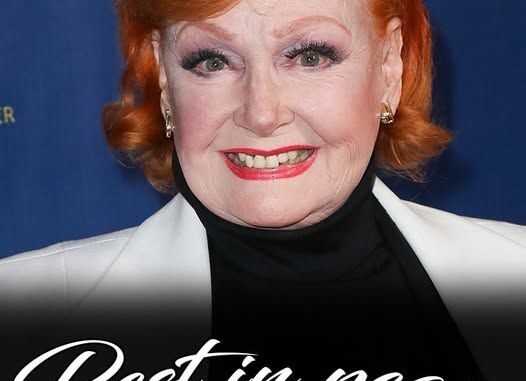
The landscape of classic Hollywood has grown a little dimmer with the news that Ann Robinson, the pioneering actress who became the face of science fiction’s golden age, has passed away at the age of ninety-six. While her influence on the industry was immense, the circumstances surrounding her final chapter remained shrouded in mystery for months. In an era where every moment of a celebrity life is typically documented in real time, the Robinson family’s decision to keep her passing private speaks to a profound desire for dignity and a boundary that few public figures are granted in their final hours. Her death, while confirmed recently, occurred long before the public became aware, leaving fans to wonder about the quiet, final days of a woman who defined the nightmares and dreams of a generation.
Born in 1929, Robinson entered the entertainment world with a grit that was rare for women of her time. She did not start in front of the lens as a polished starlet; she began her career as a stunt performer. This demanding, physically punishing work shaped a brand of resilience that would serve her well in the brutal machinery of the mid-century film industry. It was this toughness that caught the attention of producers, eventually leading her to the role that would etch her name into cinematic history: Sylvia Van Buren in the 1953 masterpiece War of the Worlds. As the scream of the aliens echoed through movie theaters and the specter of invasion gripped the American public, Robinson became the iconic image of terror and wonder. She was more than just a performer; she was the anchor of a film that transformed science fiction from a niche B-movie genre into a serious, high-stakes cinematic experience.
However, Robinson’s career was defined as much by her departures as it was by her arrivals. At the absolute zenith of her fame, when the industry expected her to capitalize on her stardom, she made the shocking decision to step away from Hollywood. She traded the spotlight for the life of a wife, marrying the famous bullfighter Jaime Bravo. To the studio executives of the 1950s, this was a baffling professional blunder; to Robinson, it was a deliberate choice to prioritize her personal autonomy over the insatiable demands of fame. She walked away from the contract-driven world of Tinseltown to live a life on her own terms, demonstrating an independence that was years ahead of its time.
Her professional journey was not linear, but that was precisely its strength. After the chapter with Bravo ended, Robinson returned to the screen, proving that her talent was not tied to her youth or her initial meteoric rise. She maintained a steady, respected presence in cinema for decades, appearing in notable films like the legendary Imitation of Life. She became a testament to the idea that an actress’s career does not have to be a vertical climb toward a peak, but can instead be a long, winding road of evolving roles and enduring relevance. She never treated her past work with disdain; rather, she embraced it. As the cult status of War of the Worlds grew, Robinson leaned into her legacy, attending conventions and connecting with a new generation of fans who saw her not just as a relic of the past, but as a living link to the history of the genre.
Leave a Reply