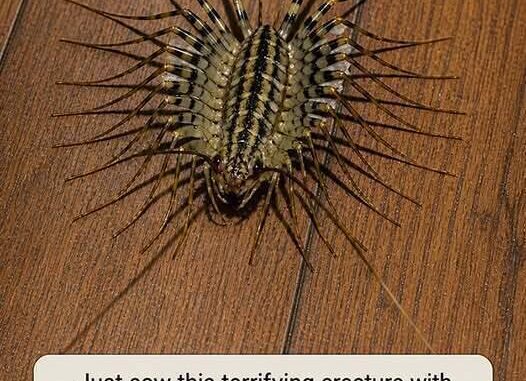
Few things startle homeowners faster than spotting a fast-moving house centipede racing across the floor.
One moment your home feels calm and comfortable, and the next you catch sight of a blur of long legs disappearing behind a cabinet or darting across a bathroom wall. For many people, the reaction is immediate: surprise, discomfort, and a strong desire to get away from it as quickly as possible.
With their long bodies, countless legs, and lightning-fast movements, house centipedes can certainly look intimidating. But despite their unusual appearance, experts say these creatures are generally harmless to humans and may actually play a helpful role inside the home.
In fact, many pest specialists consider house centipedes to be beneficial because they feed on other unwanted pests.
Why House Centipedes Feel So Alarming
House centipedes are difficult to ignore because they look very different from most insects people commonly encounter indoors.
They typically have:
- Long segmented bodies
- Thin, delicate legs
- Long antennae
- Extremely fast movement
- Sudden nighttime appearances
For many people, the speed is what feels most unsettling.
Humans naturally react strongly to rapid, unpredictable movement, especially indoors where unexpected creatures can feel intrusive or threatening. When a centipede suddenly races across the room, the brain immediately shifts into alert mode.
Even though they appear frightening, house centipedes are usually trying to escape rather than interact with humans.
What Is a House Centipede?
House centipedes are predatory arthropods commonly found in damp indoor environments.
Unlike millipedes, which move slowly and feed on decaying material, house centipedes actively hunt smaller insects for food.
They are often found in:
- Bathrooms
- Basements
- Laundry rooms
- Kitchens
- Garages
- Crawl spaces
- Areas near plumbing or moisture
These locations attract them because they provide shelter, humidity, and access to prey insects.
House centipedes are primarily nocturnal, meaning they are most active at night when many insects emerge and homes are quieter.
Why They Move So Quickly
One of the most surprising things about house centipedes is their speed.
Their long legs allow them to move rapidly across floors, walls, and ceilings while searching for prey or escaping danger.
This fast movement helps them:
- Catch insects
- Avoid predators
- Navigate tight indoor spaces
- Reach shelter quickly
Although their movement may seem aggressive to humans, they are usually attempting to flee whenever they are disturbed.
Most encounters happen simply because someone accidentally interrupted their normal activity.
The Helpful Role They Play Indoors
Despite their appearance, house centipedes can actually help reduce populations of other household pests.
They commonly hunt and feed on:
- Cockroaches
- Silverfish
- Ants
- Spiders
- Moths
- Small beetles
- Termites
- Other insects
Because they prey on many common pests, some pest-control professionals view them as natural pest managers inside the home.
In many situations, seeing house centipedes may actually indicate that other insects are already present nearby.
Are House Centipedes Dangerous?
For most people, house centipedes are considered harmless.
They do possess venom, but it is intended for subduing tiny insects rather than harming humans.
In rare cases where a bite occurs, symptoms are typically mild and temporary, often similar to a minor insect sting.
Most house centipedes:
- Avoid direct contact with people
- Prefer dark hiding places
- Run away when disturbed
- Do not actively seek interaction with humans
Their instinct is almost always escape, not aggression.
Why They Often Appear in Bathrooms and Basements
Moisture plays a major role in attracting house centipedes indoors.
That’s why they are commonly seen in damp areas such as:
- Bathrooms
- Basements
- Laundry rooms
- Kitchens
- Storage spaces
- Areas with plumbing leaks
Humidity supports both the centipedes themselves and the insects they hunt.
Common conditions that attract them include:
- Leaky pipes
- Damp walls or flooring
- Standing water
- High humidity
- Poor airflow
- Cracks or gaps around foundations
Reducing excess moisture can often help reduce centipede activity naturally.
Why Humans React So Strongly to Them
House centipedes trigger discomfort mainly because they move differently from creatures people are used to seeing.
Humans tend to react more strongly to:
- Fast-moving creatures
- Multiple legs
- Sudden appearances
- Unpredictable movement
- Nocturnal behavior
Psychologists believe these reactions are connected to ancient survival instincts that encouraged humans to stay cautious around unfamiliar animals or insects.
Even though house centipedes are mostly harmless, their appearance automatically activates those instincts.
Why Killing Them May Not Solve the Real Problem
When people spot a centipede indoors, the immediate instinct is often to eliminate it.
However, the centipede itself is usually not the main issue.
Because they feed on other insects, their presence may actually signal that prey pests already exist somewhere in the home.
Instead of focusing only on removing the centipede, it can be more effective to address underlying conditions such as:
- Moisture problems
- Hidden pest infestations
- Cracks or entry points
- Poor ventilation
- Cluttered storage areas
Improving these conditions can naturally reduce both pests and the predators that feed on them.
Humane Ways to Remove House Centipedes
For people uncomfortable sharing space with house centipedes, there are safe and humane ways to remove them.
Common methods include:
- Trapping them under a cup or container
- Sliding paper underneath carefully
- Releasing them outdoors away from the house
You can also reduce future activity by:
- Using dehumidifiers
- Repairing leaks
- Improving ventilation
- Sealing cracks and gaps
- Keeping storage areas dry and organized
These steps help make the environment less attractive to both insects and centipedes.
Why Moisture Control Is Important
Because house centipedes rely heavily on humid conditions, moisture control is one of the best long-term prevention strategies.
Lower humidity levels can help discourage:
- Mold growth
- Pest insects
- Centipedes
- Water-related home damage
Helpful habits include:
- Running bathroom fans
- Fixing plumbing leaks quickly
- Using basement dehumidifiers
- Improving airflow
- Cleaning damp storage areas regularly
Homes with better moisture management often experience fewer pest problems overall.
Understanding Fear vs. Actual Risk
One important thing to remember about house centipedes is that emotional reactions often feel stronger than the actual danger involved.
Their appearance can trigger immediate panic, but the real risk to humans is extremely low.
This difference matters because fear can easily exaggerate how threatening unfamiliar creatures truly are.
While they may look alarming, house centipedes are usually quiet predators simply trying to survive indoors.
Fascinating Features of House Centipedes
Although many people find them unpleasant to look at, house centipedes are actually highly specialized hunters.
Some interesting facts include:
- They move faster than many household insects
- Their legs help them climb walls and ceilings easily
- They use venom to immobilize prey insects
- They are mostly active at night
- They have excellent reflexes and sensory awareness
What humans often interpret as “creepy” is actually the result of evolutionary adaptation designed for survival and hunting efficiency.
Why They Rarely Stay Visible
Most house centipedes prefer staying hidden during the day.
They commonly hide in:
- Cracks and crevices
- Behind cabinets
- Under appliances
- Inside wall gaps
- Dark storage areas
When disturbed, they immediately run toward shelter, which contributes to the startling nature of most encounters.
Final Thoughts
House centipedes may not be popular houseguests, but they are far less dangerous than their appearance suggests.
While their many legs and rapid movements can certainly trigger discomfort, these creatures often spend their time hunting pests that homeowners would rather avoid altogether.
By feeding on insects like cockroaches, silverfish, ants, and termites, house centipedes quietly help maintain balance inside indoor environments.
That doesn’t mean everyone has to enjoy seeing them in the house. But understanding their behavior can replace fear with perspective.
In most cases, the strange creature racing across your bathroom floor isn’t trying to harm you at all.
It’s simply a tiny nighttime hunter searching for pests while trying to avoid being noticed.
And sometimes, the creatures that seem the most unsettling are actually doing work we rarely appreciate until they’re gone.
Leave a Reply