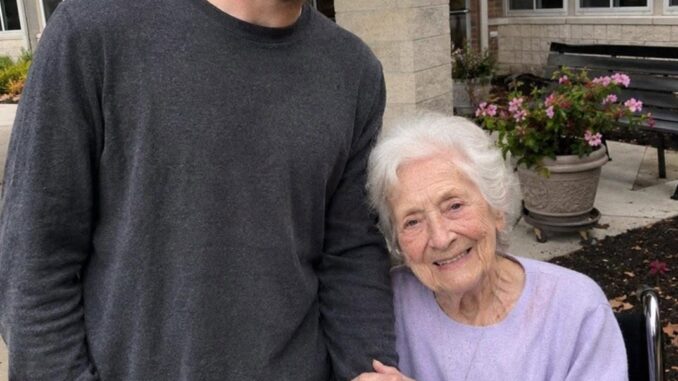
I never imagined I would get paid to become someone else’s son.
At the time, it didn’t feel like a choice. It felt like survival.
Every night, I sat in my delivery van outside my mother’s apartment building, staring at numbers that never worked. Rent overdue. Medications climbing. Bills piling up. Every paycheck vanished before it even hit my account.
One rainy night, the dashboard clock read 11:47 p.m. I grabbed the groceries and meds, climbed three flights of stairs, and forced a smile. My mother opened the door before I could knock.
“You shouldn’t be out this late, dear,” she said.
“I brought your blood pressure medicine and the soup you like,” I replied.
She cupped my face. “You look exhausted.”
“I’m okay, Ma,” I lied.
The Offer
The next morning, while stopping for coffee between shifts, a well-dressed man approached me.
“You’re Jeremy?”
“Who’s asking?”
“I have an opportunity.”
He slid a thick stack of cash across the table.
“My mother lives in a nursing home. Her name is Rosie. She has dementia. She constantly says her son never visits. It’s embarrassing. I want someone to pretend to be me—her son. You. Five hundred dollars a week. Visit weekends, call her ‘Mama,’ and act like my son.”
I stared at him. The offer felt disgusting. Then he said:
“Right and wrong won’t pay your mother’s medical bills.”
He was cruel—and he was right.
“When do I start?” I asked.
“Saturday,” he said. “One more thing. Don’t get attached.”
Becoming “Tim”
The first visit, I felt like a criminal. Room 214 smelled of disinfectant and old flowers. An elderly woman sat by the window, small and fragile.
“Mama,” I said. “It’s me. Tim.”
Her face lit up. “There you are.”
She reached for my hand, patted the chair beside her. “Sit down.”
Her first question wasn’t about herself:
“Have you been eating enough? Are you sleeping? Are you taking care of yourself?”
No one had asked me that in years—not since my father disappeared, not since my mother became sick.
I stayed an hour. When I left, she squeezed my hand. “Come back soon.” I promised I would.
Soon, I visited more often than required. Tulips. Chocolates. Lunch breaks. Wednesdays. Sometimes just because.
Pretending became impossible. I genuinely cared.
One afternoon, she looked into my eyes. “You’re a good man, son.”
Her Last Request
Two days later, Rosie passed away peacefully. The nursing home director called.
“Jeremy… she left something for you.”
Inside the envelope was a letter in her handwriting:
“My dear boy who is not my boy… I knew you weren’t Tim, but you stayed. Unlike my real son, you stayed.”
A small brass key accompanied the letter. She explained it belonged to a safety deposit box, with one condition: half must go to the nursing home’s residents—those who, like her, often sat waiting for visitors who never came.
The Conflict
Then Tim—the real son—showed up, furious.
“You manipulated a sick woman. Where’s the key?”
I asked, quietly, “Where were you?”
He threatened lawsuits. Family called me a fraud. I almost gave up.
But in court, the truth came out: Tim himself had hired me. He paid me to replace him. When asked when he last visited his mother, he had no answer. Margaret, Rosie’s friend, testified: “She called him ‘the boy who chose to stay.’”
I admitted taking the money, but told the truth: “I needed it for my mother’s meds… but I kept coming back because I cared.”
The judge read Rosie’s letter. The bequest stood.
The Gift
Inside the safety deposit box: savings bonds, cash, and a photograph of a young Rosie holding a baby—her real son. Half went to the nursing home, improving meals, outings, and comforts. The other half paid my mother’s bills.
For the first time in years, I slept without fear, without calculating expenses.
Yet the greatest gift Rosie left me wasn’t money. It was something far rarer.
Every Saturday, I still visit the nursing home. I sit beside Margaret. Sometimes we talk. Sometimes we don’t. One afternoon, I placed tulips in Rosie’s old chair. Sunlight fell across them the way it once fell across her lap.
“What are you thinking about?” Margaret asked.
I smiled. “Rosie taught me something. She taught me how to stay.”
And somehow, that lesson was worth far more than anything hidden in a bank vault.
Leave a Reply