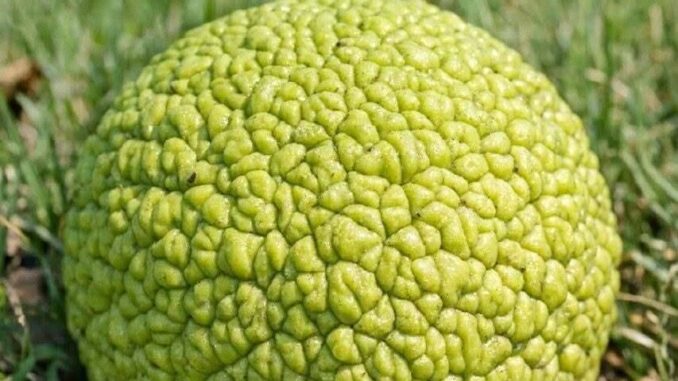
Imagine walking beneath a row of trees on a calm afternoon when something unusual catches your eye. Resting on the ground is a round, green object with a strange, wrinkled surface. It looks almost like a human brain—bumpy, uneven, and oddly fascinating. When you pick it up, you notice it feels slightly sticky, leaving a faint residue on your fingers.
At first glance, it might seem like something unusual or even unnatural. Some people even wonder if it’s artificial or harmful. But in reality, this curious object is completely natural. What you’ve likely found is a fruit known as the Osage orange, one of the most unique and misunderstood plants in North America.
Let’s take a deeper look at what this unusual fruit is, why it looks the way it does, and what you should (and shouldn’t) do if you come across one.
A Closer Look at the Osage Orange
The Osage orange, scientifically called Maclura pomifera, is a tree fruit known for its distinctive appearance. Despite its name, it’s not related to oranges at all. Instead, it belongs to the same plant family as mulberries and figs.
Its surface is what makes it stand out the most. Covered in deep grooves and ridges, the fruit has a wrinkled texture that many people compare to the folds of a brain. This unusual look often sparks curiosity—and sometimes confusion.
These fruits are typically about the size of a grapefruit, though some can grow even larger. Their color ranges from bright green to yellow-green as they mature, especially during the fall season when they begin to drop from trees.
Why Does It Look So Strange?
The unique texture of the Osage orange isn’t random—it’s the result of how the fruit develops. Instead of growing as a single, smooth structure, it forms from many small flower clusters that fuse together over time. This creates the bumpy, irregular surface that makes it so recognizable.
Inside, the fruit contains a dense network of fibrous material and seeds. The outer layer protects these seeds, making the fruit quite tough compared to more familiar fruits.
When you handle one, you might also notice a sticky, milky substance. This is a natural sap produced by the fruit. It serves as a protective mechanism against insects and environmental damage.
Is It Safe to Touch?
Yes, in most cases, the Osage orange is safe to handle. The sticky sap can feel unpleasant and may cling to your hands, but it’s generally not harmful.
However, it’s a good idea to wash your hands after touching it, especially if you have sensitive skin. Some people may experience mild irritation, though this is uncommon. Avoid rubbing your eyes or face before cleaning your hands, as the sap could cause temporary discomfort.
Can You Eat It?
This is one of the most common questions people ask—and the answer might surprise you.
Technically, the Osage orange is not considered toxic. However, it’s not something you’d want to eat. The fruit is extremely tough, fibrous, and has a bitter taste that most people find unpleasant.
Because of its texture and flavor, it has never been widely used as a human food source. Trying to eat it would likely be more frustrating than enjoyable. For that reason, it’s best appreciated as a natural curiosity rather than a snack.
What About Animals?
While humans tend to avoid eating Osage oranges, some wildlife interacts with them in interesting ways.
Small animals like squirrels may chew through the tough outer layer to reach the seeds inside. These seeds are the most nutritious part of the fruit.
Scientists believe that long ago, large prehistoric animals—such as mammoths—may have played a role in spreading these fruits. These animals were strong enough to break open the fruit easily, helping distribute the seeds across large areas.
Today, without those large animals, the fruit often falls to the ground and remains mostly untouched, adding to its mysterious presence.
Where Do These Trees Grow?
Osage orange trees are native to parts of the United States, particularly regions like Texas, Oklahoma, and Arkansas. Over time, they have been planted in many other areas due to their durability and usefulness.
These trees are highly adaptable and can grow in different soil types and weather conditions. They are often found in rural areas, along fence lines, or in open fields.
One notable feature of the tree is its thorny branches. These thorns can be quite sharp, making the tree naturally resistant to animals and useful as a protective barrier.
Historical Uses of the Tree
The Osage orange tree has a long and practical history. Its wood is incredibly strong, dense, and resistant to decay.
Indigenous communities, particularly the Osage Nation, valued this wood for making tools and hunting equipment. It was especially prized for crafting bows due to its flexibility and strength.
Later, settlers used these trees as natural fencing. Before modern materials were widely available, farmers planted Osage orange trees close together to create dense, thorny barriers that kept livestock contained.
Do They Really Repel Insects?
You may have heard that these fruits can keep insects or spiders away. This idea has been passed down for years, and some people still place the fruits around their homes for this purpose.
While the fruit does contain certain natural compounds, there’s limited scientific evidence to support strong insect-repelling effects. In most cases, the impact is minimal.
So while it may not hurt to try, it’s best not to rely on Osage oranges as a primary method of pest control.
Common Lookalikes
Although the Osage orange is quite distinctive, it can sometimes be confused with other natural objects.
For example, black walnuts also have a green outer shell and fall from trees, but they are smaller and smoother. When opened, they have a very strong smell and a hard nut inside.
Observing the shape, texture, and tree it came from can help you tell the difference.
What Should You Do If You Find One?
If you come across one of these unusual fruits, there’s no need to worry. Here are a few simple options:
- Leave it where it is: It can serve as part of the natural environment and may be used by wildlife
- Use it for decoration: Many people collect them for seasonal displays, especially in autumn
- Handle with curiosity, not concern: It’s a harmless natural object, just an uncommon one
If you have children or pets, it’s best to keep the fruit out of reach to avoid accidental chewing or ingestion, mainly due to its tough texture rather than toxicity.
Final Thoughts
Finding something unusual in nature can be both exciting and confusing. The Osage orange is a perfect example of how nature can surprise us with shapes, textures, and forms that seem almost unreal.
While it may look strange at first, it’s simply a fascinating part of the natural world with a rich history and unique characteristics. Understanding what it is can turn uncertainty into appreciation.
So the next time you spot one of these “brain-like” green balls on the ground, you’ll know exactly what you’re looking at—and you might even see it as a small wonder rather than a mystery.
Leave a Reply