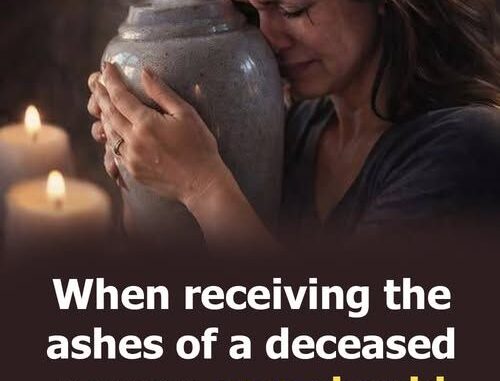
For many people, bringing a loved one’s ashes home after cremation feels comforting. The urn becomes more than an object — it feels like a quiet connection to someone deeply missed. For others, however, keeping ashes in the home can feel emotionally overwhelming or spiritually unsettling.
As cremation becomes more common around the world, families are increasingly faced with an emotional question:
Is it truly okay to keep a loved one’s ashes at home?
The answer depends largely on personal beliefs, cultural traditions, religion, and the way each person experiences grief.
In many Western countries, especially throughout the United States and Europe, keeping ashes at home has become widely accepted. Families often place urns on shelves, mantels, bedside tables, or memorial corners surrounded by candles and photographs. For some, this creates comfort during the grieving process. It can feel as though the person is still close, still part of daily life.
Some people even speak to the urn during difficult moments or include it in birthdays, holidays, and family gatherings. Modern culture places a strong emphasis on personal grieving choices, so families often create unique memorial traditions that feel meaningful to them.
Still, not everyone within a family may feel the same way. One person may find comfort in keeping ashes nearby, while another may believe the deceased should be buried or scattered so they can fully “rest.” These emotional differences are often shaped by religion and tradition.
In Catholic teachings, cremation is permitted, but ashes are expected to be treated with dignity and respect. The Catholic Church generally encourages ashes to be placed in sacred spaces such as cemeteries, mausoleums, or columbariums rather than stored permanently at home. The belief is not rooted in fear, but in honoring the body and maintaining reverence for the deceased.
Similarly, many Buddhist traditions accept cremation, though views on ashes vary by region. In countries like Japan, some families temporarily keep ashes at home before moving them to a family grave or temple memorial. Buddhism often emphasizes remembrance while also teaching the importance of letting go of attachment. Because of this, some believe holding too tightly to ashes may make emotional healing more difficult.
In Hinduism, cremation carries deep spiritual meaning connected to the soul’s journey after death. Traditionally, ashes are scattered in flowing water — especially sacred rivers like the Ganges — symbolizing release and spiritual transition. Keeping ashes in the home for long periods may be viewed as interfering with that process.
Traditional Chinese culture also places strong importance on honoring ancestors. Some families keep ashes temporarily before placing them in ancestral temples or memorial spaces. Feng shui beliefs may also influence where ashes are kept, as some believe improper placement can affect the energy within a home.
Meanwhile, cultures connected to celebrations like Día de los Muertos often view remembrance very differently. In many Mexican traditions, loved ones who have passed away remain emotionally present within the family through altars, photographs, candles, and offerings. Death is not always approached with fear, but with ongoing connection and remembrance.
Leave a Reply