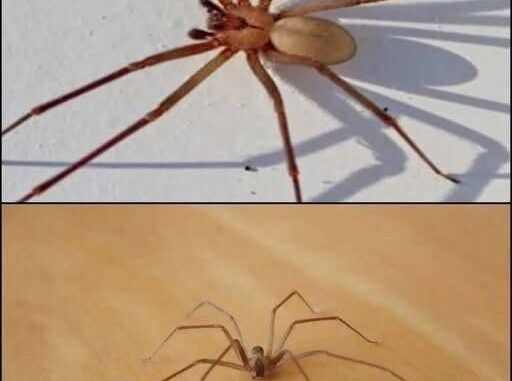
If you’ve ever switched on a light late at night and spotted a long-legged spider racing across the floor, you’re not alone. Images of these spiders often circulate online with alarming captions claiming they can cause severe injuries or are among the world’s most dangerous spiders.
But how much of that is actually true?
Let’s separate fact from fiction and explore what these long-legged spiders are, whether they’re dangerous, and what you should do if you find one in your home.
Meet the Long-Legged House Spider
The spider shown in the images has the appearance of a long-legged house spider, a group that may include species such as the giant house spider or, in some regions, the brown recluse look-alike. While it’s impossible to identify a spider with complete certainty from a single image alone, these spiders are commonly found in homes, garages, basements, sheds, and other quiet indoor spaces.
Their long legs and fast movements often make them seem much scarier than they actually are.
Are They Dangerous?
For most people, the answer is no.
Most long-legged house spiders are not considered medically dangerous to healthy adults. Although nearly all spiders produce venom to subdue their prey, the vast majority either cannot bite humans easily or have venom that causes only mild, temporary symptoms.
If bitten, a person may experience:
- Mild pain
- Redness
- Minor swelling
- Itching around the bite area
These symptoms often improve within a few hours or days without serious complications.
Why Do They Come Inside?
These spiders usually aren’t looking for people—they’re looking for food and shelter.
Homes provide:
- Warm temperatures
- Dark hiding places
- Plenty of insects to eat
- Protection from harsh weather
They’re commonly found in:
- Basements
- Garages
- Closets
- Under furniture
- Around windows and doors
- Storage areas
They’re Actually Natural Pest Controllers
Although many people dislike spiders, they provide an important benefit.
House spiders feed on many common household pests, including:
- Flies
- Mosquitoes
- Moths
- Cockroaches
- Silverfish
- Small insects
In many cases, they help reduce unwanted insect populations naturally.
When Should You Be Concerned?
While most spider bites are minor, you should seek medical advice if you experience:
- Severe pain
- Rapidly increasing redness or swelling
- Difficulty breathing
- Fever
- Signs of an allergic reaction
- A bite that develops an unusual wound or doesn’t heal
Because many skin conditions can resemble spider bites, it’s important not to assume a spider is always the cause.
How to Keep Spiders Out of Your Home
If you’d rather not share your home with spiders, these simple steps can help:
Seal Entry Points
Check doors, windows, vents, and small cracks where spiders can enter.
Reduce Clutter
Storage boxes, piles of clothing, and unused items provide excellent hiding places.
Vacuum Regularly
Vacuuming corners, ceilings, and behind furniture removes webs and egg sacs.
Reduce Outdoor Lighting
Lights attract insects, which in turn attract spiders.
Control Indoor Insects
Fewer insects mean less food for spiders.
Should You Kill Them?
Not necessarily.
If possible, many experts recommend gently capturing the spider with a cup and piece of paper and releasing it outside.
This allows it to continue controlling insect populations without remaining inside your home.
Common Myths About House Spiders
Myth: Every spider is highly venomous.
Fact: Most house spiders pose little risk to humans.
Myth: If you see one spider, your home is infested.
Fact: Seeing an occasional spider is common and doesn’t necessarily indicate an infestation.
Myth: All spider bites are dangerous.
Fact: Most bites are mild, and many suspected “spider bites” are actually caused by other insects or unrelated skin conditions.
Final Thoughts
Long-legged house spiders may look intimidating, but appearances can be deceiving. In most cases, they are harmless visitors that spend their time hunting insects rather than bothering people.
Instead of believing frightening social media posts, it’s best to rely on accurate information. Understanding these spiders can help reduce unnecessary fear while allowing you to make informed decisions about how to manage them if they appear in your home.
If you’re ever unsure about a spider or develop concerning symptoms after a suspected bite, it’s always wise to contact a healthcare professional or your local poison center for guidance.
Leave a Reply