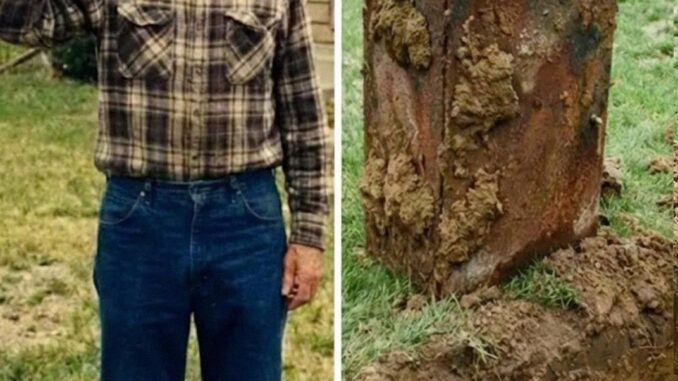
I used to think I had a good read on people.
Growing up, my mother taught me that life was simple if you followed certain rules: keep your home in order, speak the truth, and never allow yourself to get tangled in unnecessary secrets. She believed clarity was everything and that confusion only came from things left unsaid.
I carried that mindset into adulthood. By the time I was in my late thirties, I considered myself grounded and observant. I had a stable marriage, two children, and a predictable routine that made life feel manageable. Even my small habits reflected that need for order — I kept detailed notes about the neighborhood, knew everyone on our street, and often checked in on elderly neighbors just to make sure everything was fine.
One of those neighbors was Mr. Whitmore.
He lived two houses down from us, in a modest home with a slightly overgrown yard and a large apple tree that leaned a little too far over the fence. He was quiet, polite, and mostly kept to himself. The kind of man people nodded to but didn’t really know.
When he passed away, the neighborhood felt a little emptier, but nothing about his death seemed unusual. He had been elderly, and everyone assumed it was simply his time.
I went to his funeral out of respect, along with many others from the street. It was a simple service — nothing dramatic, nothing unexpected.
At least, that’s what I thought.
The Letter That Changed Everything
The next morning, I checked my mailbox like I always did. Among the usual flyers and bills was a thick envelope. My name was written on the front in neat, looping handwriting I immediately recognized — Mr. Whitmore’s.
For a moment, I stood still on the porch, unsure what to think. My husband, Richie, stepped outside behind me, holding his coffee.
“You look like you’ve seen a ghost,” he said lightly.
“This is from Mr. Whitmore,” I replied.
That changed the tone immediately.
I opened the envelope.
Inside was a short letter.
It didn’t begin with greetings or pleasantries. It got straight to the point.
He explained that if I was reading it, he was no longer alive. Then came a sentence that made me stop breathing for a moment.
He wrote that he had carried a secret for forty years — something hidden in his backyard beneath the old apple tree. He said it was something I had the right to know, and that I should not tell anyone about it until I understood the truth.
There was no explanation beyond that.
Just a request.
And a warning.
Richie frowned when I showed it to him.
“Wait… he wants you to dig in his yard? That’s not normal.”
“I know,” I said. “But it feels like he meant it.”
That night, I couldn’t focus on anything. The letter stayed in my mind, repeating itself in fragments. Every time I looked out the kitchen window, my eyes drifted toward the apple tree in his yard.
It suddenly felt less like part of the landscape and more like something waiting.
A Decision I Couldn’t Ignore
The next morning, after the kids left for school and Richie headed to work, I found myself standing at the edge of Mr. Whitmore’s property.
It felt strange walking into a place that now technically belonged to no one. The grass was slightly overgrown, and the branches of the apple tree moved gently in the wind.
I hesitated only briefly before grabbing a shovel from my shed.
Part of me still thought this was ridiculous. The other part felt like I didn’t have a choice.
I started digging beneath the tree.
At first, there was nothing but soil and roots. But after some time, the shovel hit something solid.
Metal.
My heart began to race.
I knelt down and carefully pulled a small rusted box from the ground.
It was heavier than I expected.
For a moment, I just stared at it.
Then I opened it.
Inside were a few carefully preserved items: an old photograph, a hospital bracelet, and a folded letter sealed inside plastic to protect it from time.
My hands trembled as I picked up the photo.
It showed a young man holding a newborn baby in a hospital room. The lighting was harsh, and the expression on his face was something between hope and sorrow.
Then I looked at the bracelet.
My name was on it.
But it wasn’t the name I had grown up with.
It was my birth name.
I felt the ground shift beneath me, though I was already sitting on it.
“No…” I whispered. “This can’t be real.”
But something inside me already knew it was.
The Truth Inside The Letter
The second letter was addressed to me directly.
It explained everything in calm, steady language.
He wrote that he was my biological father.
He said he never abandoned me — that circumstances had taken me away from him when I was just a baby. According to his account, my mother’s family had intervened when she was young and made the decision to separate us.
He said he had tried to stay close without interfering. He moved into the neighborhood years later just to remain near me, watching my life from a distance without revealing himself.
He ended the letter by saying he never wanted to disrupt my life, but he also couldn’t leave the world without telling me the truth.
I sat there under the apple tree, unable to process what I was reading.
Everything I believed about my past suddenly felt unstable.
Confronting My Mother
Richie found me there later that afternoon. When I showed him everything, he was just as stunned.
“This is… serious,” he said quietly. “You need to talk to your mom.”
I knew he was right.
That evening, I called her and asked her to come over.
When she arrived, she seemed calm at first — until she saw the box on the table.
Her expression changed instantly.
“You weren’t supposed to see that,” she said softly.
That was all it took.
The truth began to unravel.
She admitted she had been very young when she became involved with him. Her parents disapproved and pressured her heavily. In the end, she said, she felt she had no real choice but to step away from him.
She said she believed she was protecting me from instability.
But what hurt more was what came next.
She admitted she knew he lived nearby later on. She knew he stayed close. She suspected he might even be watching from a distance.
But she never told me.
Her voice broke slightly when she said, “I thought it would be easier if you never knew.”
But easier for who?
Not for me.
The Emotional Fallout
The days that followed were difficult. I felt like I was standing in the middle of two versions of my life — the one I had lived, and the one that had been hidden from me.
Friends offered opinions. Some defended my mother. Others said I had every right to feel betrayed.
But none of that changed how disoriented I felt.
This wasn’t just about a secret. It was about identity.
Everything I thought I knew about where I came from had shifted.
A Different Kind of Understanding
Eventually, my mother stopped defending herself.
One afternoon, she simply said, “I thought I was doing the right thing. But I see now that I took away your choice.”
It wasn’t a perfect apology, but it was honest.
And for the first time, I saw her not just as my mother, but as a young woman who had made a decision under pressure and lived with it ever since.
That didn’t erase the hurt.
But it softened it slightly.
Returning to the Tree
A week later, I went back to Mr. Whitmore’s yard.
I stood under the apple tree again, this time not searching for answers, but trying to make peace with the ones I already had.
“I wish you had told me sooner,” I said quietly. “We lost time we can’t get back.”
Grief doesn’t always arrive at the same moment as truth.
Sometimes it comes after.
What Remains
Life didn’t suddenly become simple again after that.
Some relationships take time to rebuild. Some truths take time to settle.
But I now understand something I didn’t before — that silence can shape a life just as much as words can. And that secrets, even those kept with good intentions, have a way of resurfacing eventually.
I lost my neighbor, and with him, I discovered a part of myself I never knew existed.
And while I can’t change the past, I can decide how much power it has over my future.
The truth is no longer buried.
And neither am I.
Leave a Reply