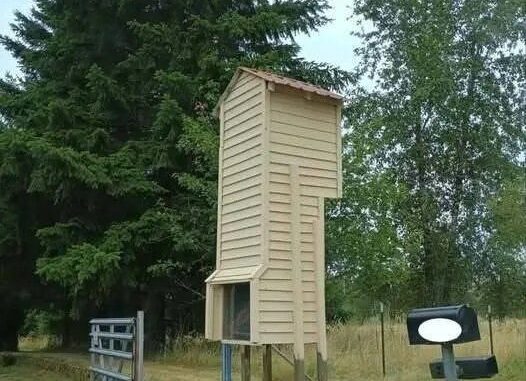
Introduction: A Curious Object With a Purpose
While driving along unfamiliar roads, it’s common to notice objects that seem unusual or out of place. One such structure—a tall, narrow post made of wood and positioned near a driveway or bend—can appear confusing at first glance. With no lights, signs, or obvious markings, it might look purely decorative.
However, this modest structure serves a clear and practical purpose. Placed near areas where visibility is limited, it helps drivers detect approaching vehicles, pedestrians, or other obstacles that may otherwise remain hidden. It’s a quiet example of how simple design can improve safety without relying on complex technology.
Why Visibility Matters on the Road
Safe driving depends heavily on clear sightlines. Drivers need to see far enough ahead to make decisions, anticipate movement, and react appropriately.
Unfortunately, not all roads offer ideal conditions. Rural routes, curved streets, and hidden driveways often create blind spots. Trees, fences, elevation changes, or buildings can block the view, making it difficult to know when it’s safe to move forward.
Even a small moment of uncertainty can increase risk. Drivers may hesitate too long or act too quickly without enough information. Addressing these visibility challenges—even with simple solutions—can make a meaningful difference.
The Idea Behind the Structure
Sometimes referred to as a “driveway periscope,” this structure uses a straightforward concept: reflection.
Inside the post, mirrors are positioned at specific angles. These mirrors capture views from areas that are otherwise hidden and redirect them toward the driver. As a result, the driver gains an extended field of vision without needing to move forward blindly.
This allows for:
- Earlier awareness of approaching traffic
- Better decision-making
- Reduced hesitation at blind spots
- Improved overall safety
Its effectiveness comes from precise placement rather than complicated design.
How Reflection Enhances Visibility
The science behind this system is simple. Light reflects off mirrors, allowing people to see objects outside their direct line of sight.
In this structure:
- One mirror captures the hidden angle (such as around a curve)
- Another mirror redirects that image toward the driver
This creates a continuous visual pathway, similar to how periscopes function.
Because it doesn’t rely on electronics, the system offers several advantages:
- No need for electricity
- Minimal maintenance
- Reliable performance in different weather conditions
This makes it a practical and long-lasting solution.
Influence on Driver Behavior
Beyond improving visibility, the structure also affects how drivers behave. When people notice something unusual along the roadside, they tend to slow down and pay closer attention.
This natural response adds another layer of safety. The structure not only helps drivers see more—it encourages them to be more cautious.
Even small changes in attention and speed can significantly reduce the likelihood of accidents.
Built for Durability
These roadside structures are designed to withstand outdoor conditions. Typically made from wood and fitted with durable mirrors, they can handle:
- Rain and humidity
- Sun exposure
- Wind and temperature changes
Maintenance is simple. Occasional cleaning of the mirrors and checking the structure’s stability is usually enough to keep it working effectively.
Unlike electronic systems, there are no parts that require updates or technical servicing.
A Reminder That Simple Ideas Can Be Effective
This structure highlights an important concept: innovation doesn’t always require complexity.
Some of the most effective solutions come from:
- Identifying a specific problem
- Using accessible materials
- Designing for long-term use with minimal upkeep
This principle applies beyond road safety. Simple adjustments—like better lighting, clear organization, or improved layout—can enhance everyday experiences in meaningful ways.
Encouraging Awareness and Responsibility
By improving visibility, this structure supports safer decision-making. Drivers are better equipped to assess situations and respond appropriately.
It also serves as a reminder of the importance of awareness. Whether on the road or in daily life, having a clearer view of potential challenges leads to better outcomes.
Small, thoughtful improvements—like adding a mirror at a blind spot—can prevent larger problems.
Community Impact
Often, these structures are created in response to a specific local need. A hidden driveway or dangerous curve may prompt someone to find a practical solution.
This kind of initiative reflects a sense of responsibility and care for others. Even without formal recognition, such efforts can improve safety for entire communities.
Each avoided accident or safer interaction highlights the value of these small contributions.
Applications Beyond the Road
The idea behind this structure—improving visibility to reduce risk—can be applied in many areas of life.
For example:
- In workplaces, clearer processes can prevent mistakes
- In homes, better lighting and layout can reduce accidents
- In communication, sharing complete information helps avoid misunderstandings
In each case, the goal is the same: remove blind spots and make better-informed decisions.
A Look at Historical Practices
The concept of improving visibility with simple tools is not new. Long before modern technology, communities used basic methods to enhance safety.
Examples include:
- Markers placed near intersections
- Early mirrors at blind corners
- Painted signs to guide travelers
The roadside structure builds on these ideas, combining traditional materials with a clear understanding of how light and vision work.
Encouraging Local Solutions
One of the strengths of this approach is its accessibility. Individuals and communities can take steps to improve safety without needing large budgets.
Simple actions include:
- Installing mirrors at hidden driveways
- Maintaining existing structures
- Sharing knowledge about local hazards
These efforts rely more on awareness and initiative than on advanced resources.
The Value of Mindful Observation
Another key takeaway is the importance of paying attention.
The presence of this structure encourages drivers to slow down and observe more carefully. This habit—taking a moment to assess a situation—can prevent mistakes in many areas of life.
Whether driving, working, or making decisions, a brief pause to gather information can lead to better outcomes.
Practical Considerations
For those interested in implementing similar solutions, a few guidelines can help:
- Choose durable, weather-resistant materials
- Position mirrors carefully to avoid glare
- Maintain the structure regularly
- Consider input from others to identify problem areas
With thoughtful planning, even simple tools can be highly effective.
Final Thoughts
In a world often focused on advanced technology, this quiet roadside structure offers a different perspective. It shows that meaningful improvements don’t always require complex systems.
By using basic principles and thoughtful design, it enhances visibility, encourages caution, and improves safety.
More importantly, it serves as a reminder: sometimes the best solutions are the simplest ones—built not on complexity, but on clear thinking and practical action.
And in many cases, that’s exactly what makes them so effective.
After My Divorce, I Finally Set a Boundary—And It Changed More Than I Expected
“She’s your mother, not mine anymore. If she wants to keep spending, that’s your responsibility now.”
Those were the words I said to my ex-husband the day after our divorce was finalized.
He didn’t waste time on small talk.
“What did you do?” he asked sharply. “My mom’s card was declined.”
I took a breath before answering.
“I didn’t do anything to her,” I said. “I just removed my account from the situation.”
He called it unnecessary. Said I was overreacting.
But what he didn’t see was how long this moment had been building.
Years of Quiet Acceptance
During our marriage, I worked hard to maintain stability—not just for us, but often for his family as well.
Over time, I found myself covering more expenses than I ever expected. His mother, in particular, had grown used to a lifestyle that included frequent shopping and outings, many of which were tied to accounts under my name.
At first, I didn’t question it.
I told myself it was temporary. That helping out was part of being supportive.
But it didn’t stay temporary.
Alongside the financial support, there were subtle comments and expectations that made me feel more like a resource than a person.
When I tried to talk about it, I was often told to let it go.
“That’s just how things are,” he would say.
So I stayed quiet.
Choosing Something Different
After the divorce, I had space to think clearly.
I realized I didn’t need to continue a pattern that no longer made sense in my life. So I made a simple decision—I removed access to the shared financial resources.
There was no confrontation at the time.
Just a quiet change.
The Unexpected Reaction
The next day, I heard knocking at my door.
When I checked, both my ex and his mother were there.
I opened the door slightly and kept the conversation calm.
They were frustrated. Confused. Asking why things had changed so suddenly.
But from my perspective, it hadn’t been sudden at all.
It had been years in the making.
For the first time, I explained everything clearly—what I had been contributing, how long it had gone on, and why it was no longer appropriate.
There were attempts to dismiss it at first.
But when I mentioned that I had records and details to support everything, the conversation shifted.
It became quieter.
More reflective.
There wasn’t much left to debate.
So I ended the conversation and moved forward.
A New Sense of Balance
In the months that followed, things settled into a new rhythm.
I focused on my work, and my business reached an important milestone. For the first time, I felt fully in control of my efforts and the results.
Without added pressure or expectation, everything felt clearer.
When I later crossed paths with my ex, the conversation was brief.
“How have you been?” he asked.
“Doing well,” I said.
And I meant it.
What Changed the Most
The biggest shift wasn’t just financial—it was personal.
I learned that setting boundaries doesn’t mean creating conflict. It means creating clarity.
It means understanding what you are responsible for—and what you are not.
Letting go of old expectations can feel uncomfortable at first. But sometimes, it’s exactly what’s needed to move forward with confidence and peace.
Leave a Reply