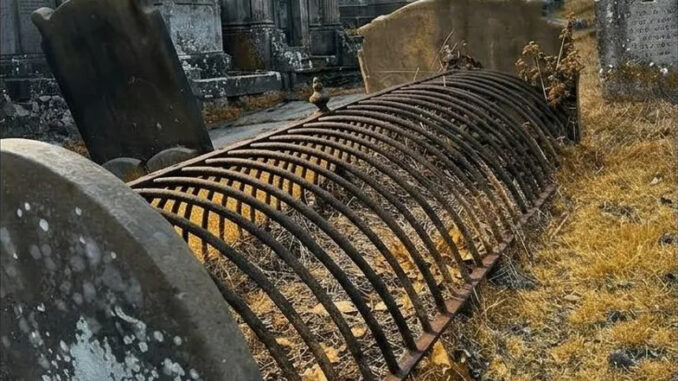
For centuries, cemeteries were meant to be peaceful places of remembrance, but during the 18th and 19th centuries, some burial grounds across Europe contained unusual iron structures placed directly over graves. These heavy metal cages, known as mortsafes, were not decorative or symbolic. They were designed to solve a very real problem that frightened many communities at the time: grave robbing.
As medical schools expanded during this period, the demand for human bodies for anatomical study increased rapidly. Doctors and students needed cadavers to learn about the human body and improve medical knowledge. However, strict laws limited the number of bodies legally available for research and education. Because legal supply could not meet demand, illegal body trading began to grow in certain areas.
Groups sometimes referred to as “resurrectionists” secretly dug up recently buried bodies and sold them to medical institutions. Families feared that loved ones could be disturbed only days after burial, turning cemeteries into places of anxiety rather than peace. This fear became especially strong in regions where grave robbing incidents were widely reported.
To protect graves, communities created mortsafes—heavy iron frameworks placed over burial sites. These structures were built from thick bars and reinforced metal that made it extremely difficult for anyone to dig into the grave quickly or quietly. Some mortsafes were locked into stone bases, while others were so heavy that several people were required to move them.
Importantly, these iron covers were usually temporary. Body snatchers mainly targeted fresh graves before natural decomposition made the remains unsuitable for illegal sale. Families would therefore leave the mortsafe in place for several weeks after burial and later remove it for reuse on another grave.
In some towns, protection efforts went beyond iron barriers. Communities organized nighttime cemetery patrols, hired guards, or worked together to watch over burial grounds. These measures reflected the emotional importance people placed on preserving dignity after death.
Over time, governments introduced reforms that changed the situation. New laws allowed donated or unclaimed bodies to be used legally for medical education, reducing the illegal demand for stolen remains. As medical ethics and legal systems improved, grave robbing gradually declined, and mortsafes disappeared from common use.
Today, surviving mortsafes can still be found in some historic cemeteries, especially in parts of the United Kingdom and Scotland. Though rusted and weathered by time, they remain powerful reminders of a period when scientific advancement, public fear, and legal limitations collided in unusual ways.
These iron covers now serve as historical artifacts rather than security devices. They tell the story of how communities responded to difficult challenges during a time of medical change and uncertainty. More importantly, they reflect humanity’s enduring desire to protect loved ones and preserve respect for the dead.
Many historians view mortsafes as symbols of a transitional era in medicine. While anatomy research eventually helped advance surgery and healthcare, the methods used to obtain bodies created deep ethical concerns among the public. The appearance of these iron grave covers demonstrates how strongly ordinary people reacted when they believed burial sites were no longer secure.
Even today, visitors who encounter a mortsafe in an old cemetery are often surprised by its appearance. The structures can look mysterious or even unsettling at first glance, but their purpose was rooted in protection rather than superstition. They represent practical solutions created during a time when communities felt they had few other options.
In the end, mortsafes reveal more than just an unusual chapter in cemetery history. They show how societies adapt when fear, science, and human emotion intersect. What remains today is not only iron and rust, but a lasting reminder of the importance people have always placed on dignity, remembrance, and peace after death.
As interest in historical cemeteries continues to grow, mortsafes have become important educational landmarks for researchers and visitors alike. Historians often study them to better understand the social tensions that existed during the rise of modern medicine. They offer insight into how communities balanced scientific progress with moral concerns and public trust. In many ways, these iron structures reflect a period when society was still learning how to ethically support medical advancement while respecting cultural beliefs surrounding death and burial.
Some preserved mortsafes are now displayed alongside museum exhibits or marked with informational plaques explaining their history. Tourists visiting older graveyards are often fascinated to learn that these unusual iron cages once served as real protection against grave robbing. What may appear strange today was once considered necessary for peace of mind.
Ultimately, the story of mortsafes is not just about cemeteries or medicine. It is also about human dignity, community cooperation, and the lengths people will go to in order to protect loved ones—even after death. Their presence in historic burial grounds continues to remind modern generations of a forgotten chapter in history that shaped both medical ethics and public awareness for years to come.
Leave a Reply