My Daughter-in-Law Asked My Grandson Not to Call Me Grandma — Then He Handed Me a Private Note at His School Play

For months after losing my son Daniel, I struggled to adjust to a world that no longer included his laughter, his visits through the back door, or the familiar routines we had shared as a family. The brightest reminder of him was his young son, Noah, whose smile, expressions, and gentle heart reflected so much of his father. In the early days, my daughter-in-law Rachel welcomed my help as we all navigated grief together. I spent time with Noah, answered his questions about his father, and tried to preserve the memories that mattered. He often asked if his father had been brave, and I would tell him that courage was not the absence of fear but the decision to keep loving despite it. Those conversations seemed to comfort him and helped keep Daniel’s memory alive.

As time passed, Rachel began a new relationship with a man named Brent. At first, I hoped this would bring stability to their lives, but gradually things changed. Visits became shorter, invitations disappeared, and Noah seemed discouraged from speaking about his father. One day, I was even told that calling me “Grandma” was confusing for him. The distance grew more painful with every passing week. I watched family traditions fade and worried that Daniel’s place in Noah’s life was being quietly erased. Though I wanted to protest, I knew anger would only deepen the divide. Instead, I held onto patience and faith that love would eventually find its way through the silence.

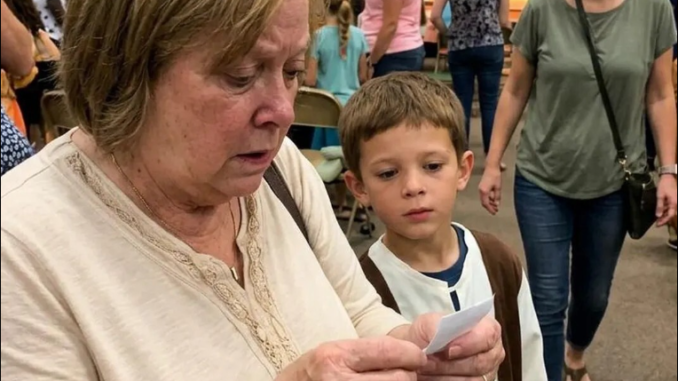
Everything shifted when I unexpectedly learned about Noah’s school play from one of his teachers. I attended quietly and sat in the back row. The moment Noah spotted me in the audience, his nervousness faded, and he performed with confidence. Afterward, he ran into my arms and slipped a folded note into my hand. Later, alone in my car, I unfolded it and read words that broke my heart: he missed the place where his father’s memory was still welcomed. I realized then that this was not about houses or family roles—it was about a child’s need to remember where he came from. Rather than argue, I began writing stories about Daniel’s life, his kindness, his humor, and the everyday moments that made him special.

Week by week, I mailed those memories to Rachel. Slowly, something changed. She began reading them and remembering the man she had loved. Eventually, she arrived at my door with Noah beside her. This time, when he ran into my arms and called me “Grandma,” no one stopped him. Rachel admitted that moving forward did not have to mean leaving the past behind. Together, we learned that honoring a loved one’s memory does not prevent healing—it helps make healing possible. That evening, we sat together sharing stories about Daniel, and for the first time in a long while, it felt as though love had brought our family home again.

Be the first to comment

Leave a Reply

Your email address will not be published.


*