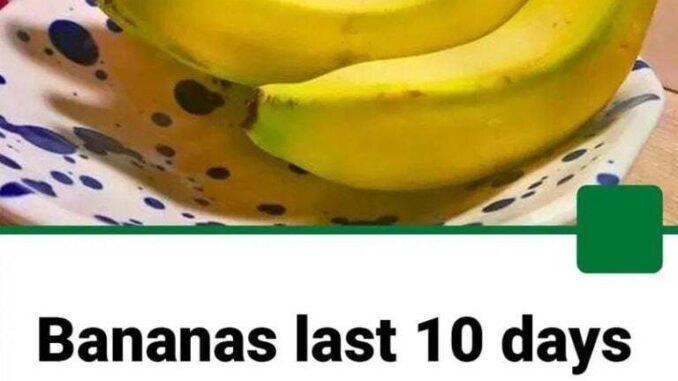
Bananas kept rotting on my kitchen counter, and for the longest time, I blamed myself. Every single week felt like the same frustrating cycle: I’d buy a fresh yellow bunch with good intentions, promise myself I’d actually eat them this time, and then watch them transform almost overnight into soft, spotted mush. By the time I reached for one, the peel was already turning brown, the texture inside too sweet and soggy to enjoy. I threw away more bananas than I ate, wasting money week after week while convincing myself I was simply terrible at buying fruit at the right time.
At first, I thought the problem was timing. Maybe I was purchasing too many at once. Maybe my kitchen was too warm. Maybe I just wasn’t eating them fast enough. I even tried buying greener bananas, hoping they’d last longer, but somehow they still seemed to ripen all at once in a dramatic race toward the trash can. It became strangely irritating — how could something so simple feel impossible to manage?
Then one tiny accident changed everything.
One afternoon, after unpacking groceries in a hurry, I left a bunch of bananas sitting alone on a different section of the countertop instead of placing them neatly into the fruit bowl like I always did. I forgot about it completely. Days later, I noticed something shocking: while the bananas in the fruit bowl usually softened almost immediately, these ones were still firm, bright yellow, and perfectly sweet. For the first time, they seemed to be ripening slowly instead of collapsing overnight.
That small mistake exposed the hidden problem sitting in my kitchen the entire time.
What I thought was a beautiful, healthy fruit bowl centerpiece was actually sabotaging my bananas every single day. Apples, avocados, pears, peaches, and even tomatoes naturally release ethylene gas — a ripening chemical that helps fruit mature faster. Bananas produce ethylene too, especially through their stems. But when all those fruits are packed tightly together in one bowl, the gas becomes concentrated, creating a kind of invisible ripening trap. Instead of aging naturally, the bananas were essentially being forced to over-ripen far too quickly.
Once I understood what was happening, everything changed.
I started keeping bananas in their own quiet corner of the countertop, completely separated from other produce. No crowded bowl. No apples sitting beside them. No avocados speeding up the process. And almost immediately, I noticed the difference. The bananas stayed yellow longer, their texture remained firm, and the flavor developed more gradually instead of turning intensely sugary overnight. Suddenly I had extra days to actually enjoy them before they spoiled.
But the biggest breakthrough came from something even simpler.
Leave a Reply