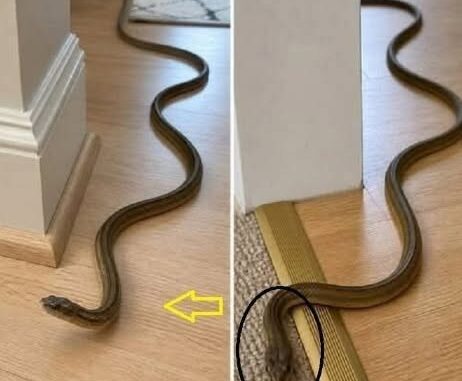
Few household surprises create as much immediate concern as discovering a snake inside your home. Whether it appears in a garage, basement, kitchen, bathroom, or living room, the sight of a snake can be startling and often triggers feelings of fear, anxiety, or confusion.
For many people, the first question is simple: Why is a snake inside my house?
Some immediately wonder whether the appearance has a special meaning or symbolic significance. Others worry about safety, especially if they are unsure what type of snake they are dealing with.
In reality, snakes that enter homes are usually motivated by practical reasons rather than anything mysterious. Most often, they are searching for food, shelter, water, or a comfortable place to rest. Understanding why snakes sometimes enter buildings—and knowing how to respond safely—can help transform a frightening experience into a manageable situation.
Why Snakes Enter Homes
Snakes do not typically seek out human interaction.
In fact, most species prefer to avoid people whenever possible. They generally spend their time searching for food, regulating body temperature, and finding safe places to hide from predators.
When a snake enters a home, it is usually responding to environmental conditions rather than intentionally choosing to live alongside humans.
Several factors can attract snakes indoors.
These include:
- Availability of prey
- Shelter from weather
- Warm temperatures
- Access to water
- Easy entry points
Homes often provide many of these resources without residents realizing it.
Following Food Sources
One of the most common reasons snakes enter buildings is the presence of food.
Many snake species feed on:
- Mice
- Rats
- Small mammals
- Insects
- Lizards
- Frogs
If rodents or insects are living in or around a home, snakes may follow them.
Basements, garages, crawl spaces, sheds, and storage areas can sometimes provide ideal environments for small animals. Where prey is abundant, predators often follow.
For this reason, controlling rodent populations can be one of the most effective ways to reduce the likelihood of snake encounters.
A snake is often less interested in people than it is in the mouse hiding behind a wall.
Seeking Shelter
Like all animals, snakes need safe places to rest.
During periods of extreme heat, cold weather, heavy rain, or drought, homes can offer protection from environmental conditions.
A cool basement may provide relief during hot summer months.
A warm garage or crawl space may offer shelter when temperatures drop.
Because snakes are cold-blooded reptiles, they rely on external conditions to regulate body temperature.
This makes finding suitable shelter particularly important.
Even small protected spaces can become attractive hiding spots.
How Snakes Get Inside
Many homeowners are surprised by how easily snakes can enter buildings.
A snake does not need a large opening.
In many cases, surprisingly small gaps are sufficient.
Common entry points include:
- Cracks in foundations
- Gaps beneath doors
- Open vents
- Utility openings
- Damaged screens
- Unsealed windows
- Open garage doors
Older homes may be particularly vulnerable if maintenance issues have created small access points over time.
Because snakes can flatten portions of their bodies and move through narrow spaces, openings that seem insignificant to people may be large enough for a snake.
The Importance of Staying Calm
If you discover a snake indoors, the most important first step is to remain calm.
Panic often increases the risk of injury.
Most snakes prefer retreat over confrontation.
Sudden movements, attempts to chase the snake, or efforts to corner it may cause the animal to feel threatened.
When threatened, even nonvenomous snakes may bite in self-defense.
Remaining calm allows you to assess the situation more safely and make better decisions.
Remember that the snake is likely just as interested in escaping the encounter as you are.
Keep Children and Pets Away
Once a snake is spotted, protecting family members and pets becomes a priority.
Children may be curious and attempt to approach the animal.
Pets, especially dogs and cats, may investigate aggressively.
Both situations increase the potential for injury.
If possible:
- Move children to another area of the home.
- Keep pets secured away from the snake.
- Avoid creating loud disturbances.
- Maintain a safe distance.
Creating space reduces stress for both the animal and the people involved.
Containing the Situation
If it can be done safely, try to limit the snake’s movement within the home.
Closing interior doors may help prevent it from moving into additional rooms.
However, avoid actions that require getting too close to the animal.
The goal is not to trap the snake personally but to reduce the area where it can travel until professional help arrives.
Keeping visual contact from a safe distance can also assist wildlife professionals when they arrive.
Avoid Trying to Handle the Snake
One of the most important safety recommendations is to avoid touching or attempting to capture the snake yourself.
Many bites occur when people try to remove snakes without proper training.
Even experienced individuals can have difficulty identifying species accurately.
A nonvenomous snake may be mistaken for a venomous one, while certain venomous species may be incorrectly assumed harmless.
Because identification can be challenging, especially for people unfamiliar with reptiles, experts generally recommend treating all unknown snakes with caution.
Trying to kill the snake can also increase risk.
Many bites occur during attempts to harm or handle snakes.
Professional removal remains the safest approach.
Contact Wildlife Professionals
In most situations, the best course of action is to contact:
- Animal control services
- Wildlife removal professionals
- Local conservation agencies
- Trained snake relocation experts
These professionals have experience handling reptiles safely.
They can identify the species, remove it appropriately, and relocate it when necessary.
Professional assistance reduces the likelihood of injury while ensuring humane treatment of the animal.
Many communities offer resources specifically designed for wildlife encounters.
After the Snake Is Removed
Once the immediate situation has been resolved, it is important to investigate how the snake entered the home.
Identifying and addressing entry points can help prevent future visits.
Homeowners should inspect:
- Foundation cracks
- Door thresholds
- Window seals
- Vent openings
- Utility penetrations
- Crawl spaces
Simple repairs can often significantly reduce opportunities for wildlife to enter.
Door sweeps, weather stripping, screens, and sealants are commonly used to improve protection.
Making Your Property Less Attractive to Snakes
The area surrounding a home can also influence snake activity.
Snakes are more likely to remain near properties that provide food, water, and shelter.
Reducing attractive conditions may include:
- Keeping grass trimmed
- Removing debris piles
- Limiting rodent activity
- Storing firewood properly
- Clearing dense vegetation near foundations
- Managing outdoor clutter
A well-maintained yard offers fewer hiding places and fewer opportunities for prey animals to thrive.
As a result, snakes may be less likely to spend time nearby.
The Role Snakes Play in Nature
Although many people fear snakes, they serve important ecological functions.
Snakes help control populations of rodents and other small animals that can damage crops, spread disease, or create household problems.
In many ecosystems, they are valuable predators that contribute to natural balance.
Without snakes, populations of certain pests could increase significantly.
For this reason, wildlife experts often emphasize coexistence and conservation whenever possible.
Most snakes encountered around homes are not aggressive and simply want to avoid confrontation.
Understanding their role in nature can help reduce fear and encourage safer responses during encounters.
Common Myths About Snakes
Several myths continue to circulate regarding snakes.
One common misconception is that snakes actively chase people.
In reality, most species prefer retreat whenever possible.
Another myth suggests that a snake entering a home is always a sign of infestation or bad luck.
In most cases, the explanation is far simpler: the snake found a convenient opening and was attracted by environmental conditions.
While cultural traditions may assign symbolic meanings to snake encounters, wildlife experts generally focus on practical factors such as food availability, shelter, and access points.
Understanding these realities helps homeowners respond more effectively.
The Bottom Line
Finding a snake inside your home can certainly be unsettling, but it is usually not a cause for panic.
Most indoor snake encounters occur because the animal is searching for food, warmth, shelter, or water—not because it wants to interact with people.
The safest response is to remain calm, keep children and pets away, avoid handling the snake, and contact qualified wildlife professionals for assistance.
After removal, inspecting the home for entry points and making basic property improvements can significantly reduce the likelihood of future encounters.
Although snakes may seem intimidating, they play a valuable role in controlling pest populations and maintaining ecological balance. By understanding why snakes enter homes and knowing how to respond appropriately, homeowners can handle these situations safely and confidently.
With patience, professional help, and preventive maintenance, a snake in the house becomes a manageable challenge rather than a major crisis.
Leave a Reply