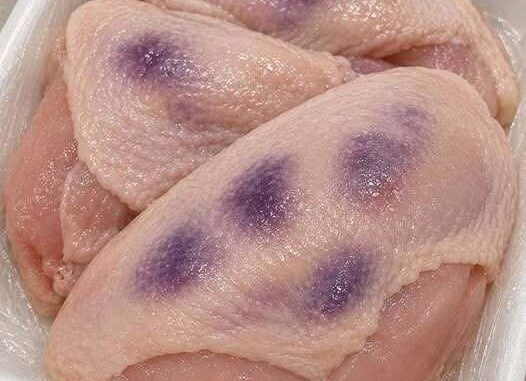
Few kitchen discoveries can cause concern as quickly as opening a package of chicken and noticing unusual discoloration beneath the skin. Purple patches, dark spots, or reddish staining can seem alarming, especially if the chicken appeared completely normal before being frozen.
Many people immediately wonder whether the meat has spoiled or if it is still safe to prepare and eat.
Fortunately, unusual coloring does not automatically mean that chicken has gone bad. In many cases, purple discoloration is a natural result of freezing, thawing, or changes that occur within the meat itself. Understanding the difference between harmless color variations and genuine spoilage indicators can help you make informed food-safety decisions while avoiding unnecessary waste.
Why Does Chicken Sometimes Develop Purple Discoloration?
Chicken naturally contains proteins and pigments that influence its color. One of the most important is myoglobin, a protein responsible for storing oxygen in muscle tissue.
Although chicken contains less myoglobin than red meat, certain parts of the bird naturally have higher concentrations. Dark meat such as thighs and drumsticks often appears darker because those muscles are used more frequently during the animal’s life.
When chicken is frozen and later thawed, changes in moisture and cell structure can affect how these pigments appear. As a result, dark patches, reddish areas, or purple tones may become more noticeable even though the meat remains perfectly safe.
This type of discoloration is usually a cosmetic change rather than a sign of spoilage.
The Role of Freezing in Color Changes
Freezing can have a significant impact on the appearance of pultry.
As water inside the meat freezes, tiny ice crystals form throughout the tissue. These crystals can damage cells and release pigments that were previously less visible.
When the chicken thaws, these pigments may collect in certain areas, creating blotches or darker spots beneath the skin.
Because freezing affects different parts of the meat unevenly, the discoloration may appear only in isolated sections rather than across the entire piece.
Many consumers mistake these natural changes for spoilage when they are actually a normal result of the freezing process.
Bone Marrow Staining: A Common Explanation
Another frequent cause of purple or reddish patches is bone marrow leakage.
During freezing, small structural changes can occur around bones and surrounding tissues. As the meat thaws, pigments from the bone marrow may seep into nearby areas, producing purple, red, or dark-colored staining.
This phenomenon is particularly common in younger chickens because their bones are softer and more porous than those of older birds.
Although the appearance may be unexpected, bone marrow staining generally does not affect taste, texture, or food safety when the poultry has been stored properly.
Why Color Alone Is Not a Reliable Safety Indicator
Many people assume that any unusual color automatically means food has spoiled.
In reality, appearance is only one factor to consider.
Fresh poultry can naturally vary in color depending on:
- Age of the bird
- Muscle type
- Packaging conditions
- Oxygen exposure
- Freezing and thawing history
Because of these variables, color changes alone rarely provide enough information to determine whether chicken is safe to eat.
Food safety experts generally recommend evaluating multiple factors before making a decision.
Signs That Chicken May No Longer Be Safe
While purple spots are often harmless, other warning signs deserve closer attention.
If several spoilage indicators appear together, the safest choice is usually to discard the product.
Common signs of spoiled chicken include:
Unpleasant Odor
Fresh chicken should have little to no noticeable smell.
A sour, rotten, or ammonia-like odor is often one of the strongest indicators that spoilage has occurred.
Slimy Texture
Chicken should feel slightly moist but not slippery.
A sticky or slimy surface may indicate bacterial growth and should not be ignored.
Unusual Surface Changes
While purple patches can be normal, widespread gray, green, or dull discoloration may signal deterioration.
Any fuzzy growth or unusual residue should also be considered a warning sign.
Questionable Storage Conditions
Even chicken that looks normal may become unsafe if it has been stored improperly or left at unsafe temperatures for extended periods.
Proper storage history is just as important as appearance.
The Importance of Smell and Texture
When evaluating thawed poultry, smell and texture often provide more useful information than color.
A piece of chicken with a few purple spots but no odor and a firm texture may still be completely acceptable for cooking.
On the other hand, chicken that smells unpleasant or feels slimy should be discarded regardless of its color.
Many food-safety professionals consider smell and texture among the most reliable household indicators available to consumers.
Safe Thawing Practices Matter
The method used to thaw chicken can influence both appearance and safety.
The safest thawing method is refrigeration.
Allowing chicken to thaw slowly in the refrigerator helps preserve texture, minimizes bacterial growth, and often reduces dramatic color changes.
Another safe option is cold-water thawing.
For this method:
- Keep the chicken in a sealed, leak-proof bag
- Submerge it in cold water
- Replace the water every 30 minutes
- Cook promptly after thawing
Thawing chicken on a kitchen counter is generally discouraged because room-temperature conditions can encourage rapid bacterial growth.
Can You Cook Chicken With Purple Spots?
In many situations, yes.
If the chicken:
- Smells normal
- Feels firm
- Has been stored correctly
- Shows no additional signs of spoilage
Then isolated purple patches are often simply pigment changes caused by freezing or marrow staining.
Many cooks prepare such chicken without any issues.
The key is ensuring that the poultry is cooked thoroughly before consumption.
Proper Cooking Temperature Is Essential
Regardless of appearance, all poultry should be cooked to a safe internal temperature.
Food safety guidelines recommend that chicken reach an internal temperature of 165°F (74°C).
Using a food thermometer is the most reliable way to verify doneness.
Relying solely on color or texture can be misleading, as properly cooked poultry may vary in appearance.
A thermometer removes uncertainty and helps ensure safe preparation.
How Packaging Influences Appearance
Packaging can also affect how chicken looks after freezing and thawing.
Vacuum-sealed products often maintain a more consistent appearance because oxygen exposure is limited.
Packages with damaged seals or freezer burn may develop more noticeable discoloration.
While freezer burn primarily affects quality rather than safety, it can create dry patches and color variations that some consumers mistake for spoilage.
Inspecting packaging before purchase and freezing poultry promptly can help preserve quality.
Tips for Buying Better Poultry
Choosing quality chicken from the beginning can reduce confusion later.
When shopping:
- Check expiration or use-by dates carefully
- Avoid leaking or damaged packages
- Select products with consistent coloring
- Purchase from reputable retailers
- Refrigerate or freeze promptly after purchase
Good storage practices help maintain both quality and safety.
Final Thoughts
Finding purple blotches on thawed chicken can be surprising, but in many cases the discoloration is completely normal. Natural muscle pigments, freezing-related changes, and bone marrow staining are among the most common explanations.
Rather than focusing solely on color, consumers should evaluate the overall condition of the poultry. Smell, texture, storage history, and proper handling practices provide much more reliable information about safety.
When chicken smells fresh, feels normal, and has been stored correctly, isolated purple patches are often nothing more than a cosmetic change. By understanding these common causes, home cooks can make confident decisions, reduce unnecessary food waste, and maintain safe food-handling habits in the kitchen.
Leave a Reply